Packaging Designer Job Description
Designing the boxes, bags, tags and labels clothing is sold in — structure, print and brand at the point of sale
A packaging designer designs what clothing is sold and carried in: boxes, shopping bags, hangtags, labels, tissue, gift packaging and the mailers of online retail. In fashion this is a brand discipline as much as a print one — packaging is the part of the product a customer holds first, photographs, keeps and judges, and for many brands the bag or box carries the logo further through the world than any advertisement. The work combines graphic design, structural design and print production knowledge. This page explains the packaging designer's role in the apparel industry and how it is entered.
More Design Job Descriptions by Letter:
What a Packaging Designer Does
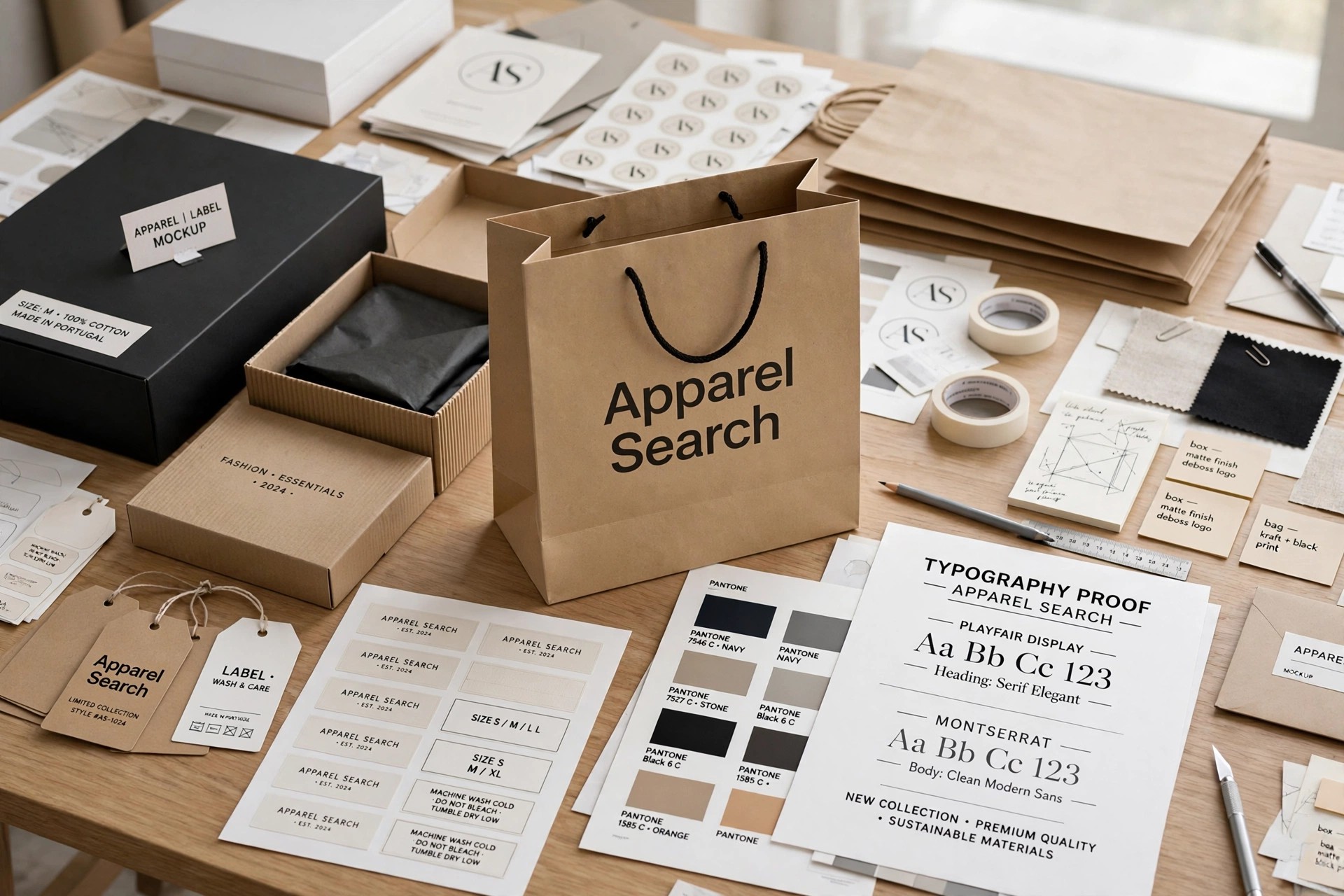
Work begins with a brief from brand, marketing or product teams: a new bag for a store group, a box for a footwear or accessories line, hangtags for a rebranded range, seasonal gift packaging. The designer develops concepts as physical mockups early — packaging is judged in the hand, at shelf distance and in a customer's photograph, not on a screen — working through structure, size, material and graphic treatment together. Approved concepts are drawn as precise cutter guides and artwork files showing every panel, fold, glue area and print position.
Production is the larger half of the job. The designer specifies board and paper grades, print processes, finishes such as foil, embossing, spot varnish and ribbon or cord handles, proofs artwork, checks colour and registration on press samples or supplier proofs, and approves the finished article against the mockup the brand signed off. Packaging also carries legal and practical content — care and fibre information on tags and labels, barcodes, pricing and security formats — which must be accurate, legible and placed where production can apply it consistently across millions of units.
Structure, Materials and Print Production
Structural literacy distinguishes the packaging designer from a general graphic designer. Boxes must protect the product, stack and ship efficiently, assemble at production speed and open the way the brand intends; bags must carry real weight on handles that are tested, not hoped for. The designer learns how board behaves when creased and folded, how a cutter guide translates to a finished form, and how to design flat artwork that reads correctly across folds, gussets and seams — skills acquired fastest by making mockups and visiting the suppliers who manufacture the real thing.
Materials and sustainability now sit at the centre of the brief. Brands are reducing plastic, moving to certified and recycled papers and boards, and designing packaging customers can recycle or reuse; the designer researches material options and their print behaviour, balances the premium feel a fashion brand expects against waste and cost, and avoids green claims the material cannot support. Print knowledge completes the technical base: process and spot colour, foil and emboss behaviour on different stocks, minimum type and line weights that survive each process, and the cost steps between a simple printed bag and a fully finished one.
Skills and Abilities the Role Requires
Graphic craft comes first — typography, layout, colour and brand-system discipline — because packaging ranges must hold together as a family across dozens of formats while each piece still works alone. Three-dimensional thinking is the second requirement: visualising flat artwork as folded form, anticipating how a design wraps a corner or sits across a bag's gusset, and presenting ideas as convincing physical mockups.
The professional skills are production accuracy and supplier fluency. A misplaced barcode panel or an unprintable foil area multiplies across a whole production run, so files are checked with a proofreader's patience. Designers work with printers and packaging manufacturers, often overseas, writing specifications that survive distance, sampling in rounds, and judging honestly when a finish must change for cost or feasibility. Commercial sense — knowing what each upgrade adds to unit cost at the quantities fashion actually orders — decides whether designs survive the meeting after the presentation.
Qualifications, Training and Career Path
Packaging designers usually train in graphic design, sometimes with packaging or print specialisation, and are hired on portfolios showing produced packaging — mockups and finished pieces, cutter-aware artwork, brand families across formats — rather than screen design alone. Entry comes through junior roles in brand design teams, packaging and print studios, and retail head-office creative departments, where print processes and supplier routines are learned on live production.
Progression runs to senior packaging designer owning a brand's packaging system, then to design leadership across brand and packaging, or into specialist packaging consultancies serving many fashion clients. The skills also transfer into brand identity and retail design, where physical brand expression is the product. It is a corner of fashion design where the work is quite literally carried through the street by customers — and where craft accuracy is visible in every unit that leaves a store.
Common Questions
What does a packaging designer design for fashion brands?
The physical packaging of clothing retail: shopping bags, boxes, hangtags, labels, tissue and gift packaging, and e-commerce mailers — structure, materials, graphics and finishes, produced as cutter guides and print-ready artwork and approved through production samples.
How is packaging design different from general graphic design?
The design must work as a manufactured object. Structure, board behaviour, folding, handles and assembly, print processes on real materials, and legal content like barcodes and care information all constrain the graphics — mockup and production skills are core, not extras.
How do you become a packaging designer?
Train in graphic design, build a portfolio of produced packaging with physical mockups and brand families across formats, and enter through junior roles in brand teams, packaging studios or retail creative departments, learning print production on live work.