Visual Merchandise Manager Job Description
The manager accountable for how stores look every trading day — directives, teams, standards and results
A visual merchandise manager is the person answerable for the standard of presentation across a store, a group of stores or a region. This is a management job first and a styling job second: the manager receives the brand's visual direction, converts it into instructions ordinary store teams can execute, trains and checks the people who do the work, controls the budget for fixtures and props, and is measured on whether every branch a customer walks into looks like the same brand on the same day. (The role's own file name keeps a long-standing spelling; the job itself is the visual merchandising manager's job.)
More Design Job Descriptions by Letter:
Accountable for Standards Across Every Store
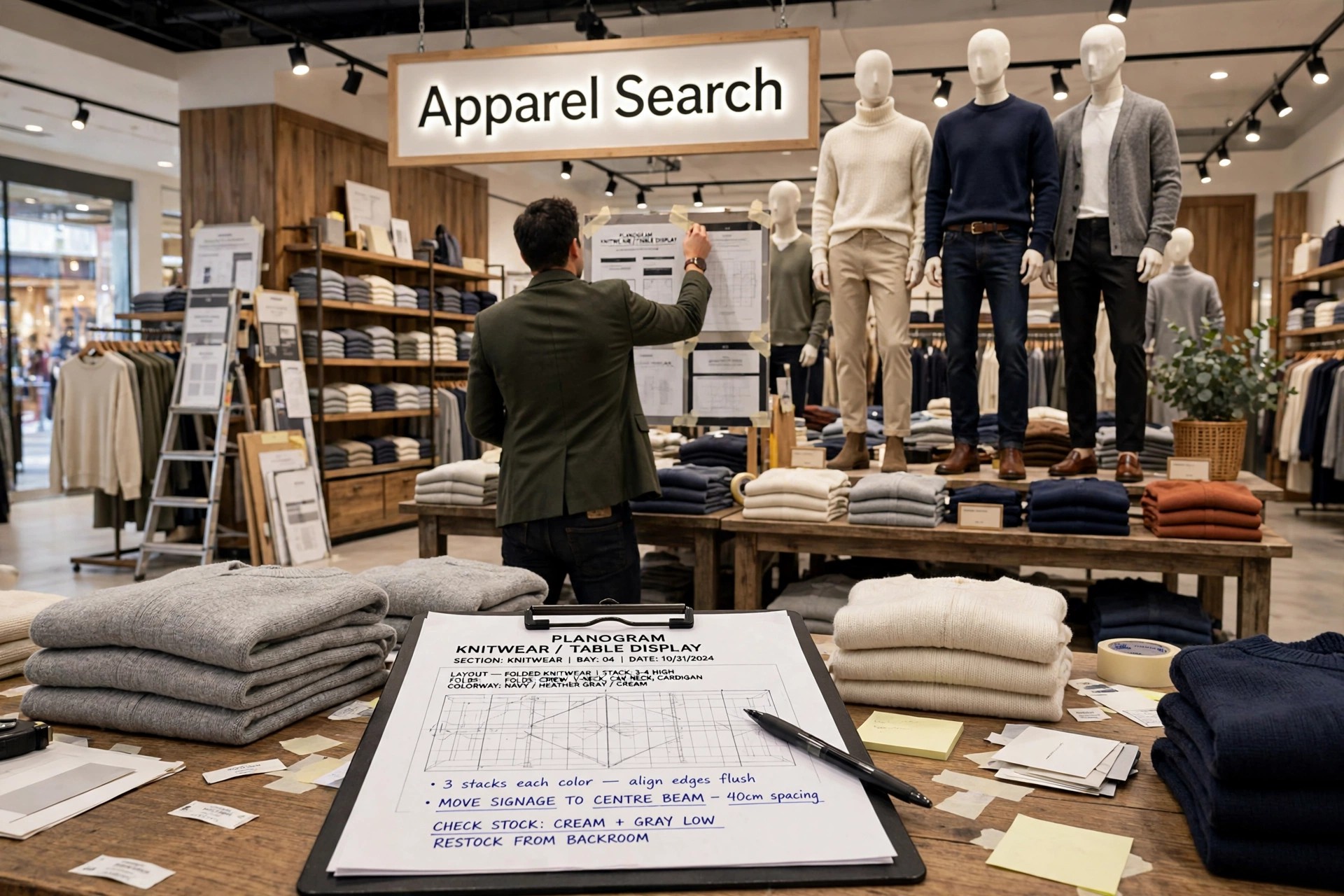
The manager owns the gap between the flagship photograph and the smallest branch on a wet Tuesday. That means writing and issuing implementation guidance for each campaign and season change, setting deadlines for window and in-store changeovers, and then verifying execution — through store visits, structured audits and the photo reports branches submit after each set-up. Where a store falls short, the manager diagnoses why: staffing, training, missing fixtures, late stock, or a directive that did not survive contact with a real floor plan, and fixes the cause rather than simply criticising the result.
Because no two stores share a shape, the manager adapts central direction to local reality without breaking brand consistency: which fixture substitutes for the one a small store lacks, how a campaign story compresses into a single window, where a best-selling local category earns extra space. Those judgement calls, documented and shared back to head office, are how a visual function learns what its directives cost in practice.
Leading Visual Teams and Store Staff
People management fills much of the week. The manager recruits, trains and schedules in-store visual merchandisers and window staff, develops store managers' and associates' presentation skills through workshops and side-by-side set-ups, and builds a bench of staff who can be deployed to new-store openings and major refits. Appraisals, rota planning and coaching conversations are unglamorous and central: presentation quality in retail is a labour standard before it is an artistic one, and it holds only where the manager has taught people what good looks like and why it matters commercially.
Openings and refits are the role's peaks. The manager plans the visual critical path for a new store — fixture installation order, stock dressing sequence, window build, signage — coordinates with construction, operations and buying teams, and leads the hands-on dressing days that end with a store ready for its first customer. Travel is built into the job, often several days a week across a region, with early starts on changeover days.
Budgets, Fixtures and Commercial Results
The manager controls real money: budgets for mannequins, fixtures, graphics, props and print, plus the maintenance and storage that keep a fixture estate usable season after season. Ordering, inventory and repair decisions are tracked like any other retail cost line. Alongside cost sits return — the manager reads the commercial evidence for presentation work, comparing sales of featured product before and after changeovers, reviewing what window features converted into footfall, and using those findings to argue for, or trim, the next campaign's visual spend.
Reporting closes the loop. The manager feeds structured results to the head of visual merchandising: compliance scores by store, photographs, fixture issues, directive feedback and sales observations from the field. That field intelligence is how central teams discover that a fixture fails in small stores or a colour story reads badly under certain lighting — the manager is the brand's eyes in its own estate.
Skills a Visual Merchandise Manager Needs
The foundation is proven hands-on visual merchandising craft — nobody manages this work credibly without having dressed windows and built displays themselves — but the differentiating skills are managerial: planning multi-store rollouts, training adults with mixed experience, giving direct feedback on site, managing budgets and suppliers, and writing instructions clear enough to be executed identically by strangers. Driving, stamina for physical set-up days, and comfort with spreadsheets, photo reporting tools and presentation plans are practical requirements rather than extras.
Qualifications and Training Routes
Employers typically expect several years of in-store visual merchandising experience, including senior or supervisory responsibility, before appointment to a manager title; formal qualifications in visual merchandising, retail design or fashion retail help but rarely substitute for a store record. Training is largely employer-built — brand visual academies, management development programmes — supplemented by the manager's own portfolio of audited improvements and opening projects. Evidence of developing other people's skills is weighted heavily at interview, because the job multiplies through teams.
Work Environment and Career Path
The base may be a head office, a flagship or simply a car and a laptop between stores; the environment is retail-real, with stockrooms, ladders and delivery cages alongside planning meetings. Hours flex around trading patterns, with changeovers frequently worked before opening or after closing. Career progression runs to area or regional visual manager, head of visual merchandising for a brand, or into retail operations and store development, where fixture and layout knowledge is prized. Some managers move agency-side, running presentation for several retail clients.
Common Questions
What does a visual merchandise manager manage, exactly?
Presentation standards across one or more stores: the visual team and trained store staff, the implementation of brand directives, fixture and prop budgets, audit and reporting, and the visual side of openings and refits.
How is this different from being a visual merchandiser?
A visual merchandiser executes display work in a store. The manager plans and controls that work across stores, trains and audits the people doing it, owns the budget, and answers for consistency and results — management responsibility, not only craft.
How much travel does the role involve?
For multi-store and regional versions, a great deal — several days a week visiting branches, with concentrated on-site periods for openings, refits and seasonal changeovers. Single-flagship versions of the job travel far less.
More to Explore
- Fashion Trend Forecasting
- Merchandising Clothing
- Fashion Artists Guide
- Computer Assisted Design
- Visual Merchandising
- VP Merchandising
- Fashion Employment Agencies
- Employment Search Engines
- Fashion Job Description Directory
- Fashion Industry News
- Fashion Directory
- Fashion Schools and Education
- Fashion Careers