Young Men's Designer Job Description
Designing for the young men's market — trend-fast casualwear, denim, street and graphic-led clothing for younger male customers
A young men's designer designs clothing for the younger male market — teenagers and men in their late teens and twenties, depending on the brand. It is menswear's most trend-responsive desk: the customer is the most fashion-aware and the least loyal in the men's market, his influences arrive through music, sport, gaming and street culture, and his budget is the tightest, so design must be fast, sharp and honestly priced. Young men's ranges lean casual — denim, jersey, fleece, shirting, outerwear and graphic product — with smart clothing reinterpreted rather than traditional. This page explains a desk that runs on cultural fluency as much as on craft.
More Design Job Descriptions by Letter:
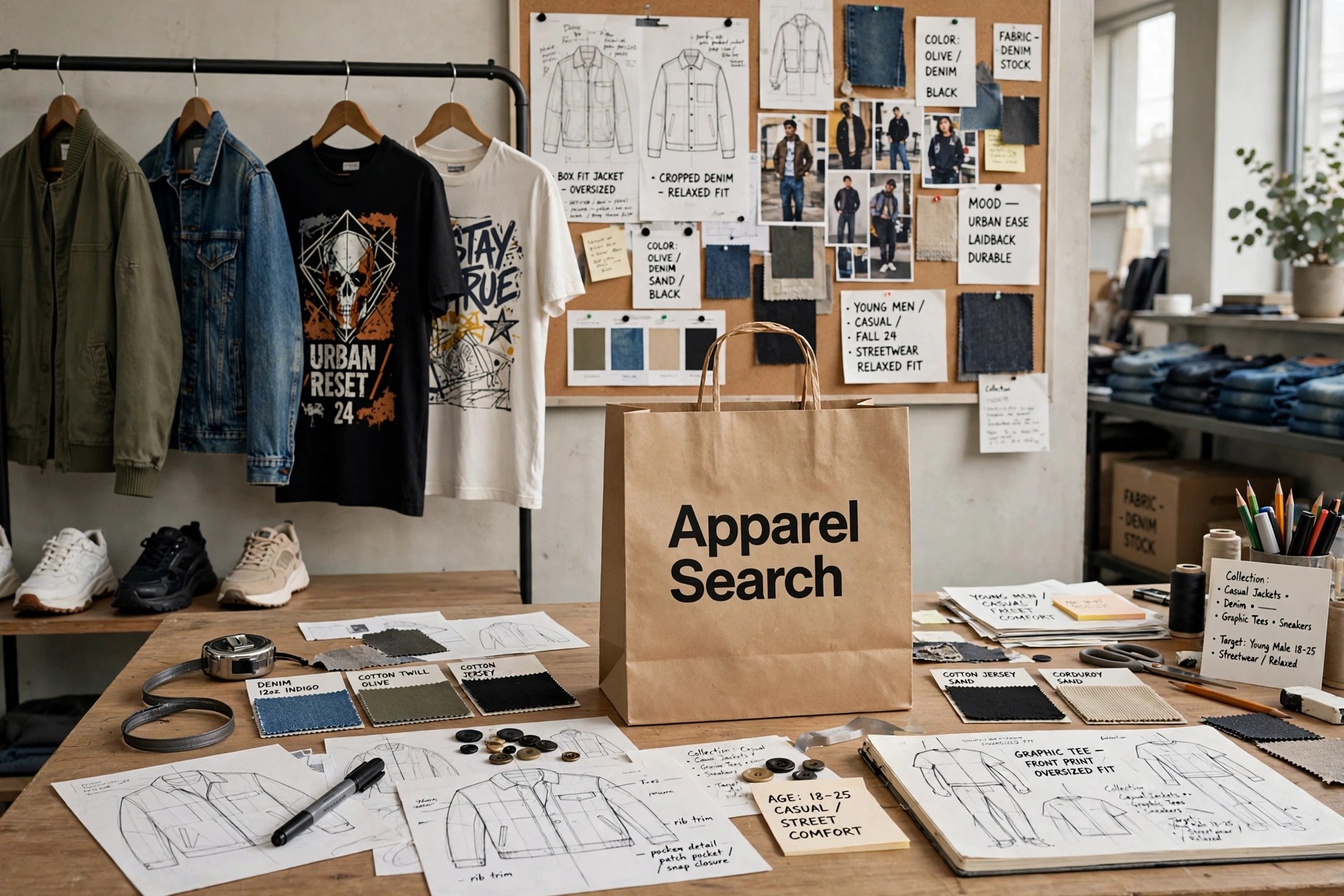
What a Young Men's Designer Does
Research on this desk is cultural before it is catwalk. The designer tracks what the customer actually wears and wants: street and skate style, sportswear crossovers, music and festival dressing, vintage and resale influences, and the social feeds where young men's trends now break first. From that research the range is built at speed — many young men's brands work on shorter cycles and in-season drops, refreshing graphic stories, colours and key casual styles far more often than traditional menswear, because the customer visits often, buys small and moves on quickly.
Development follows the young men's category structure. Denim is designed by fit and wash; jersey and fleece by graphic, branding and fabric weight; shirting and smart-casual pieces are slimmed, shortened and styled away from their traditional menswear origins; outerwear borrows from sport and street. The designer specifies graphics and branding prominently — placement prints, embroidery, logos and washes carry much of this market's design identity — fits samples on younger fit models, and costs everything hard, because the young men's price architecture leaves no room for expensive construction habits learned on adult ranges.
A Different Customer from Menswear
Designing for young men is not designing smaller menswear. The customer is still growing into adult sizing in the teen years, carries himself differently, and buys on different logic: identity and belonging first, durability a distant second, price always immediate. Fits are closer and proportions shorter; branding is worn openly as a badge rather than quietly as a reassurance; and whole categories that anchor adult menswear — formal tailoring, classic shirting — shrink to occasion pieces, re-cut in the market's own language. The designer who designs down from adult ranges produces clothing this customer can smell as borrowed, and rejects.
The work environment reflects the market's pace: young men's teams sit inside youth brands, high-street retailers' young men's divisions and streetwear labels, working closely with graphic designers, buyers who trade weekly, and marketing teams fluent in the same culture. Research trips mean festivals, gigs, skate parks and resale platforms as much as trade shows. It is one of fashion's most enjoyable desks for a designer genuinely plugged into youth culture, and an unforgiving one for a designer performing an interest they do not have — the customer detects both instantly.
Skills and Abilities the Role Requires
Cultural fluency is the headline skill and it cannot be faked: an instinct for what the young men's customer will want next season, earned by living in his media and retail world. Underneath it sit the standard design crafts pointed at this market's categories — denim fits and washes, jersey and fleece development, graphic and branding design direction, and fit work for younger bodies. Speed is a skill in itself: this desk designs, samples and reacts faster than traditional menswear, and the designer must keep quality of judgement while the calendar compresses.
Price engineering is the other distinguishing discipline. Young men's clothing is designed backwards from low retail prices, so the designer learns to spend design effort where the customer sees it — wash, graphic, fit, branding, fabric handle — and to simplify invisibly elsewhere. Presenting ranges in the market's own visual language, reading rapid sales and social response as design evidence, and collaborating with graphic and marketing colleagues whose work is inseparable from the product complete the profile.
Qualifications, Training and Career Path
Young men's designers train in fashion design like other designers, and portfolios for this desk should show the market itself: young men's ranges with denim, graphics and casual categories designed for a young customer at realistic prices, not adult menswear scaled down. Entry is through assistant and junior designer roles in youth brands and retailers' young men's teams, where the pace, price discipline and graphic-led development process are learned on live ranges.
Progression runs to senior young men's designer and design leadership of young men's divisions, and the cultural instincts the desk builds transfer into streetwear, sportswear-lifestyle and youth-brand direction roles. Designers also cross into adult menswear carrying an understanding of where the mainstream customer is heading — because today's young men's customer is tomorrow's menswear market, this desk is where the future of men's clothing is usually visible first.
Common Questions
How is young men's design different from menswear design?
The customer, pace and price all differ: young men's design is casual- and graphic-led, reacts to street and music culture in shorter cycles, fits younger bodies in closer proportions, and is engineered to much lower price points than traditional menswear.
What categories dominate young men's ranges?
Denim by fit and wash, jersey and fleece with graphics and branding, casual shirting, street- and sport-influenced outerwear, and smart pieces re-cut in a young fit and styling for occasions.
How do you become a young men's designer?
Study fashion design and build a portfolio of genuine young men's ranges — denim, graphics and casualwear at realistic prices for a young customer — then enter youth brands or retailers' young men's teams in junior design roles.