Marketing Assistant Job Description
The entry-level engine of a fashion marketing team — calendars, samples, assets and reports kept moving
A marketing assistant is the entry-level support role inside a fashion brand's or retailer's marketing team — the person who keeps the department's calendars, samples, image assets and reports organised so that campaigns actually happen on time. It is a doing job rather than a deciding one: the assistant does not set strategy or own a budget, but almost everything the team produces passes through their hands in some form. Because of that, it is also the best seat in the department for learning how fashion marketing really works, and the standard first step toward coordinator, manager and specialist roles.
More Marketing Job Descriptions by Letter:
What a Marketing Assistant Does Day to Day
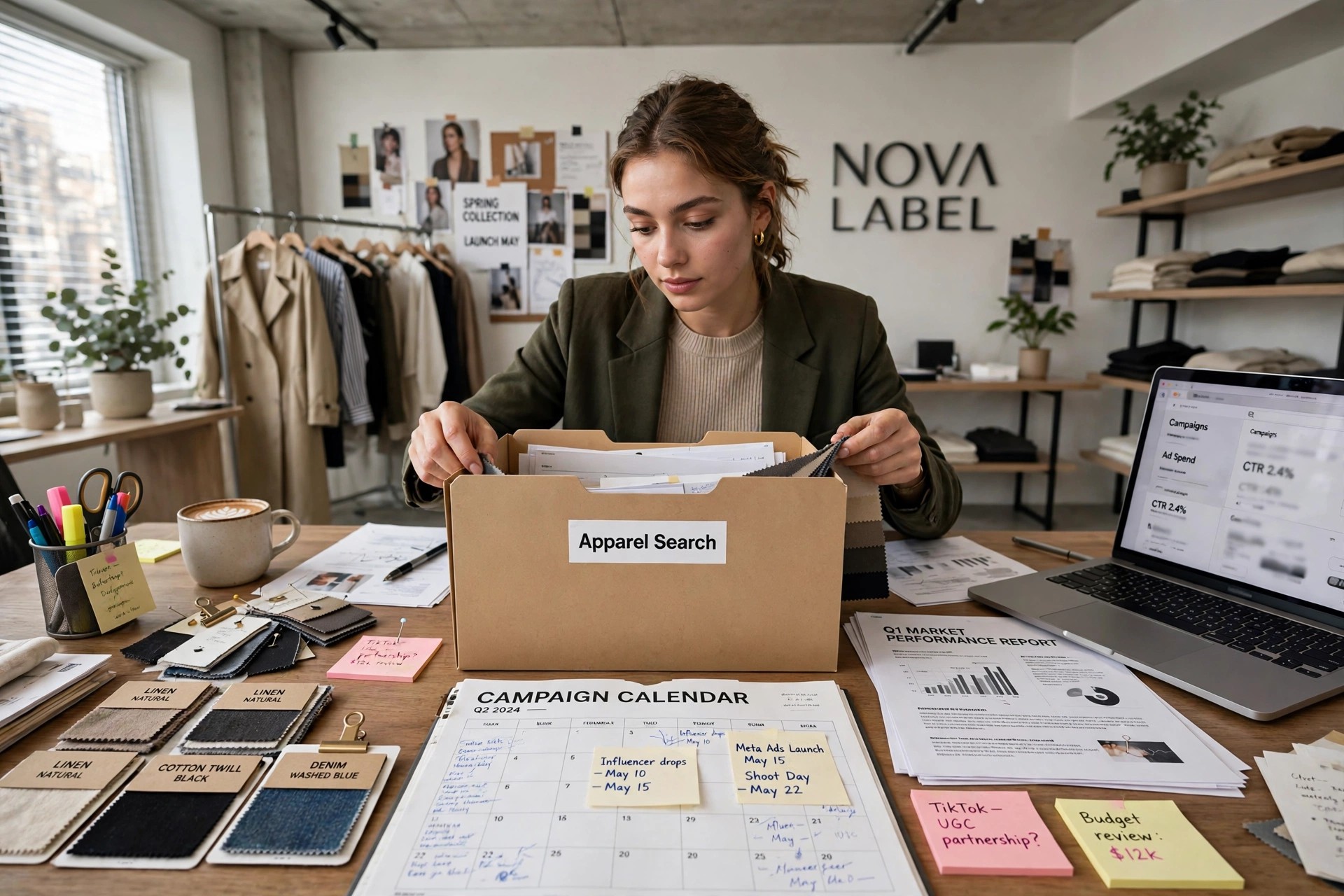
The assistant's week is built around the team's calendar. They schedule and prepare meetings, maintain the marketing calendar of launches, shoots, press days and deadlines, circulate agendas and notes, and chase the small deliverables — copy, images, approvals, samples — that each date depends on. They keep shared drives and asset libraries in order, naming and filing photography, campaign artwork and copy so the whole team can find the current version instantly. When a date moves, as dates in fashion constantly do, the assistant is usually the one who updates everyone affected.
Reporting is the other steady duty. The assistant gathers the numbers the team runs on — campaign results, social and email performance, coverage logs, sample and budget trackers — and assembles them into the weekly and seasonal reports managers review. The work sounds administrative, and much of it is, but it is administration with visibility: the assistant sees every campaign's inputs and results, learns which activities the business values, and builds the spreadsheet and presentation fluency that every later marketing role assumes.
Samples, Shoots and Event Support
Fashion marketing runs on physical product, and the assistant is often its keeper. They request, log, pack and track the clothing samples that move between the office, photographers, press, stylists and events, making sure the right garments are in the right place for a shoot or a press day and that they come back. Losing a sample that an editor needs is a small catastrophe, so careful logging — what went out, to whom, when it returns — is a genuine part of the job, not a formality.
Shoots and events bring the assistant out from behind the desk. On a campaign or lookbook shoot they may book travel and catering, prepare call sheets, steam and organise garments, and keep the day running to schedule. At press days, launches and fashion week activity they help set up rails and displays, manage guest lists and sign-ins, and capture content for the team's channels. These days are long and unglamorous, and they are also where assistants meet the photographers, stylists, editors and creators they will work with for the rest of their careers.
Skills and Abilities the Role Requires
Organisation is the headline skill: many simultaneous small tasks, each with an owner waiting on it, tracked without anything being dropped. Close behind come accuracy and written communication — the assistant drafts emails, briefs and report text that other people rely on — and confident handling of spreadsheets, presentations and shared file systems. Social platform familiarity matters because assistants often schedule posts, pull engagement figures and monitor comments, and a genuine eye for fashion imagery helps when selecting or cropping assets under direction.
The temperament employers look for is reliability under cheerful pressure. Campaign weeks compress deadlines, samples go missing, and the assistant is the team's first call for a fix; staying methodical and good-humoured in that noise is the quality managers remember at promotion time. Discretion counts too, because assistants handle unreleased collections, prices and campaign plans. None of this requires senior experience — it requires evidence, from any setting, that the candidate can be trusted to run a list to completion.
Qualifications, Training and Career Path
Marketing assistants are hired from degrees in marketing, communications, fashion business and related subjects, from apprenticeships and internships, and from retail and showroom jobs that prove fashion fluency and reliability. Employers read applications for demonstrated organisation — part-time jobs, society or event roles, a personal project run properly — more than for marketing theory. Short courses in social media tools, analytics and design software strengthen an application, and a placement inside a marketing team is the single most valuable line on the CV.
The established next step is marketing coordinator or a junior specialist post — social media assistant, PR assistant, advertising coordinator — taking ownership of a defined area rather than supporting all of them. From coordinator, the path continues to marketing manager and beyond, and assistants who discover a love for one channel often specialise early. The assistant years are short but formative: they teach the calendar, the asset flow and the reporting discipline on which every senior marketing career in this category is built.
Common Questions
Is a marketing assistant an entry-level job?
Yes — it is the standard entry point into a fashion marketing department. The role supports campaigns, samples, assets and reporting rather than owning strategy or budgets, and it is designed as the training ground for coordinator and specialist roles.
What is the difference between a marketing assistant and a marketing coordinator?
Scope of ownership. An assistant supports the whole team's work as directed; a coordinator owns a defined area — a channel, a campaign workstream or a market's routine output — and is accountable for its delivery.
Do marketing assistants need a marketing degree?
Not strictly. Degrees in marketing, communications or fashion business help, but employers weigh internships, retail or showroom experience and clear evidence of organisation and reliability at least as heavily for this first role.