PR / Public Relations Job Description
Earning attention and protecting reputation — media relations, press strategy and the fashion brand's public voice
Public relations — PR — is the discipline of earning attention and trust for a fashion brand rather than buying them. Where advertising pays for space and controls the message exactly, PR persuades the people who command audiences — magazine and newspaper editors, broadcasters, stylists, creators and commentators — to feature, wear, photograph or talk about a brand because it deserves their audience's interest. The work blends media relations, storytelling, events and reputation management, and in fashion it is unusually powerful, because editorial endorsement and a stylist's choice carry a credibility no advertisement can purchase. This page describes the PR function and the work of the people who practise it.
More Marketing Job Descriptions by Letter:
What Fashion PR Does
The core activity is media relations: building and maintaining working relationships with the journalists, editors and stylists whose pages, programmes and feeds a brand needs to appear in, and giving them stories and product worth using. PR practitioners pitch collection news, designer profiles, trend angles and product stories matched to each outlet's audience; they service the practical machinery behind coverage — sending samples for shoots, supplying images and prices, answering fact-checks against deadline — and they track the coverage that results, reporting its reach and quality to the business as advertising's earned counterpart.
Around that core sits press strategy. PR decides which stories a brand will tell each season and to whom first, how a launch is sequenced across long-lead magazines, newspapers, broadcast and social channels, and how the brand's spokespeople are prepared for interviews. Strategy also covers the defensive half of the discipline: monitoring what is said about the brand, correcting errors, preparing responses for problems — a product fault, a campaign misjudged, a store incident — and handling genuine crises calmly, honestly and fast enough to protect the reputation the positive work built.
Showrooms, Events and the Fashion Calendar
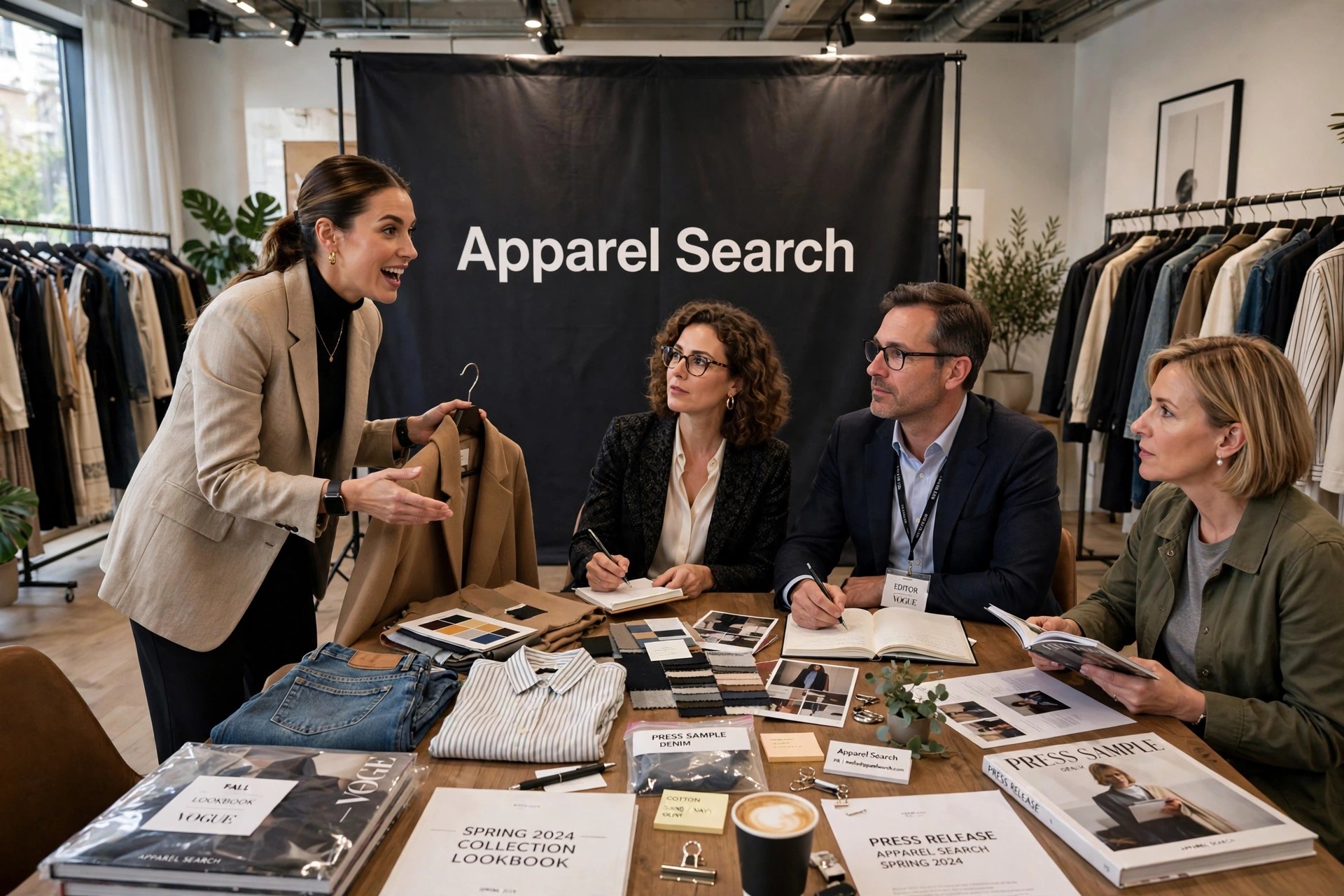
Fashion PR is practised in physical places as much as in inboxes. The press showroom, where editors and stylists view collections and borrow samples, is the function's home ground, and press days, launch events, store openings and fashion shows are its set pieces — each one planned as a story an attendee will retell. Practitioners host editors through a collection, place product on the people whose wearing of it will be photographed, and manage the guest lists, seating and photography through which a show becomes coverage rather than merely an evening.
The calendar is unforgiving: long-lead magazines work months ahead of publication, newspapers and digital outlets work in hours, and fashion weeks compress a season's relationship work into days. A PR practitioner's week moves between pitching, sample logistics, event preparation, coverage reporting and the constant maintenance of a contact network that is the function's real capital. The environment suits people who enjoy people — PR is a relationship business conducted at deadline speed — and who can be organised about samples and lists while being charming about everything else.
Skills and Abilities the Role Requires
Writing and storytelling lead: press releases, pitches, briefing documents and statements, all in a brand's voice and an editor's language, produced quickly and accurately. News sense is the instinct underneath — knowing what makes a story for a particular title, what an editor needs this week, and when a brand has nothing to say and should stay quiet. Knowledge of the media landscape, from legacy titles to creator platforms, and of how each is produced and scheduled, is the function's technical base.
Relationship and judgement skills carry the rest. PR people are trusted by journalists with deadlines and by brands with reputations, so honesty in both directions — never promising coverage that cannot be delivered, never hiding a problem an editor will find anyway — is the profession's working ethic. Resilience matters: pitches are refused daily, crises arrive unannounced, and the practitioner who stays courteous, quick and useful under that pressure is the one editors call back and brands promote.
Qualifications, Training and Career Path
Fashion PR recruits from communications, journalism, media, fashion promotion and marketing degrees, and from editorial and showroom work that proves media fluency; internships in press offices and agencies are the common proving ground, because the work can only be learned inside real media relationships. Entry is typically as a PR assistant, handling samples, lists and clippings, progressing to executive or account roles that own pitching and client or brand areas, and then to management of teams, budgets and strategy.
Senior fashion PR careers run in-house — leading a brand's communications function — or in agencies, where practitioners serve several fashion clients and may build towards account direction and agency leadership. The skills transfer widely into communications, brand and celebrity and influencer relations roles. What distinguishes the people who rise is a contact book that answers, a record of coverage that mattered, and a reputation for straight dealing on both sides of the editor's desk.
Common Questions
What is the difference between PR and advertising?
Advertising buys media space and controls the message exactly as paid content. Public relations earns coverage by persuading editors, stylists and creators that a brand merits their audience's attention — less control over the result, but an endorsement value money cannot buy directly.
Is fashion PR mostly events and fashion shows?
Events and shows are the visible peaks, but the daily substance is media relations: pitching stories, servicing sample requests, supplying images and facts to deadlines, maintaining editor and stylist relationships, and reporting and learning from the coverage that results.
How do you get into fashion PR?
Study communications, journalism, media or fashion promotion, take press-office or agency internships, and enter as a PR assistant — then build the contact network and coverage record on which every later step in the field depends.