Retail Controller Job Description
Financial control for a clothing retailer — accurate accounts, protected stock and cash, and numbers the business can trust
A retail controller is the senior accounting professional responsible for the accuracy and control of a clothing retailer's finances. Where store and buying teams create the trading numbers, the controller makes sure those numbers are recorded correctly, completely and on time — that sales, stock, margin, cash and costs in the accounts are the same business the company actually traded. It is a role built on precision and scepticism: the controller runs the accounting operation, guards the company's assets through internal controls, and produces the financial reporting on which executives, lenders and auditors rely.
More Miscellaneous Job Descriptions by Letter:
What a Retail Controller Does
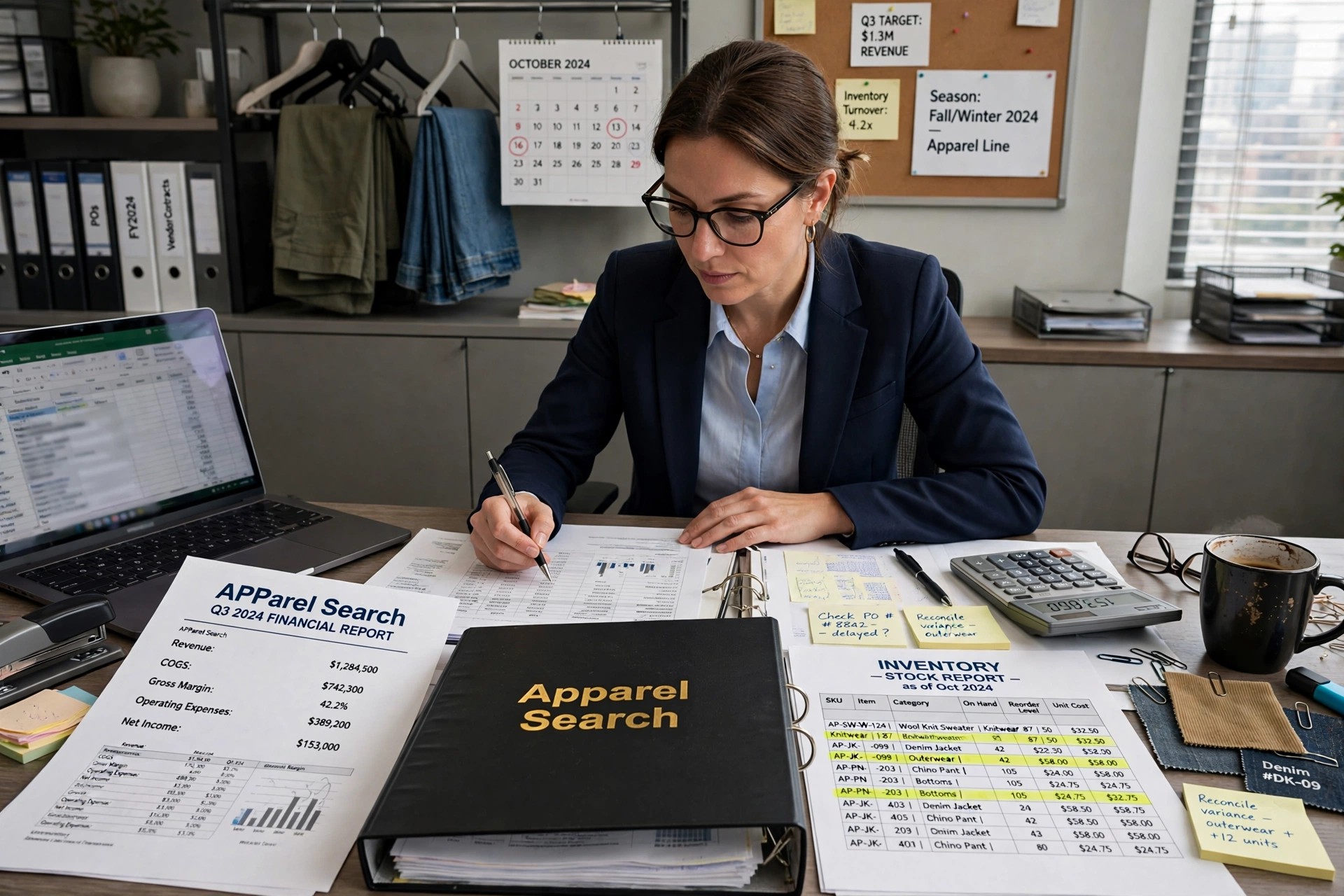
The controller owns the accounting cycle. They run the monthly and year-end close — the disciplined process that turns a month of trading into a profit-and-loss account, balance sheet and cash reporting the business can act on — and they supervise the accountants and accounts staff who post sales, purchases, payroll, rent and expenses to get there. Accounts payable and receivable, bank reconciliations, fixed assets and accruals all sit inside the controller's operation, managed to deadlines that the whole company's reporting calendar depends on.
Retail gives that cycle its own specialisms, and inventory is the largest. Clothing stock is usually the biggest asset a retailer owns, and it moves constantly between warehouses, stores and markdown. The controller accounts for stock at cost and at retail value, provides for shrinkage — stock lost to theft, damage and error between physical counts — and values markdowns and obsolescence honestly, because overstated stock flatters profit until the count exposes it. Margin reporting by department, reconciling what buyers planned against what stores actually earned, is the controller's other retail signature.
Controls, Audit and Compliance
Control is in the job title for a reason. The controller designs and maintains the internal controls that protect cash and stock: who may approve a payment or a refund, how tills and banking are reconciled, how stock movements are authorised, and how duties are separated so no single person can both create and conceal an error or a fraud. Store audits, cash counts and investigations of discrepancies follow from that design, and the controller works with store and loss-prevention teams when the numbers point to a problem.
Compliance completes the remit. The controller prepares the company for its external audit, answers auditors' questions with evidence, and keeps the business current on its obligations — sales tax collected across the jurisdictions it trades in, payroll taxes, statutory filings and the accounting standards its reporting must follow. In a multi-store, multi-channel fashion business those obligations multiply quickly, and the controller is the person expected to know which rule applies where, before a deadline or an inspector raises it.
Skills and Abilities the Role Requires
Technical accounting mastery is non-negotiable: double-entry discipline, reconciliations that actually reconcile, inventory valuation, and the judgement to treat unusual transactions correctly rather than conveniently. Retail controllers add fluency in the industry's measures — sell-through, shrinkage, markdown and margin at retail value — and in the systems that produce them, from point-of-sale and merchandise systems to the general ledger, because most control failures in retail begin as data failures between systems.
The temperament is as specific as the technique. Controllers are hired for integrity under pressure: the close must be right even when a better-looking number is wanted, and a discrepancy must be pursued even when pursuing it is unwelcome. Organisation and calm deadline management matter — the close calendar does not move — as does the ability to explain accounting consequences plainly to buyers, store managers and executives who do not speak in debits and credits.
Qualifications, Training and Career Path
Controllers are qualified accountants. The usual foundation is a degree in accounting or finance plus a professional accounting qualification earned through examinations and supervised experience, preceded by years in accounting roles — staff accountant, senior accountant, assistant controller — where the close, the audit and the ledger were learned from inside. Public accounting experience, auditing retailers among other clients, is a respected route in, because it teaches both the standards and the scepticism the role runs on.
Progression runs upward through finance: from controller of a division or a smaller retailer to corporate controller of a group, and on to vice president of finance or chief financial officer, where the emphasis widens from accuracy and control to funding, strategy and investor communication. Controllers also move sideways into financial planning and analysis leadership. Every step keeps the same foundation — a reputation for numbers that other people can safely build decisions on.
Common Questions
What is the difference between a retail controller and a bookkeeper?
Scope and accountability. Bookkeeping records transactions; a controller owns the whole accounting function — the close, financial reporting, inventory valuation, internal controls, audit and tax compliance — and answers for the accuracy of the company's accounts as a whole.
Why is inventory accounting so important for a retail controller?
Stock is usually a clothing retailer's largest asset, and it constantly moves, is marked down and shrinks through loss and error. Valuing it correctly — including shrinkage and markdown provisions — is what keeps reported profit honest.
What qualifications do retail controllers need?
A degree in accounting or finance and a professional accounting qualification, built on years of progressive accounting experience such as senior accountant or assistant controller roles, often including audit experience.