Market Trends Analysis Job Description
Reading the market before it moves — identifying which trends are real, how long they will run, and what they mean for the range
A market trends analyst — often shortened to trend analyst — studies the fashion market as it changes and tells the business, in plain commercial language, what is coming, what is fading, and what it should do about it. The work sits upstream of buying and planning: before a buyer commits to a silhouette or a planner funds a category, someone has to establish whether the movement behind it is a durable shift in what customers want or a brief flare that will be over before the goods arrive. That judgment, evidenced and timed, is what this role sells inside the company.
More Planning Job Descriptions by Letter:
Reading the Market: Signals, Sources and Evidence
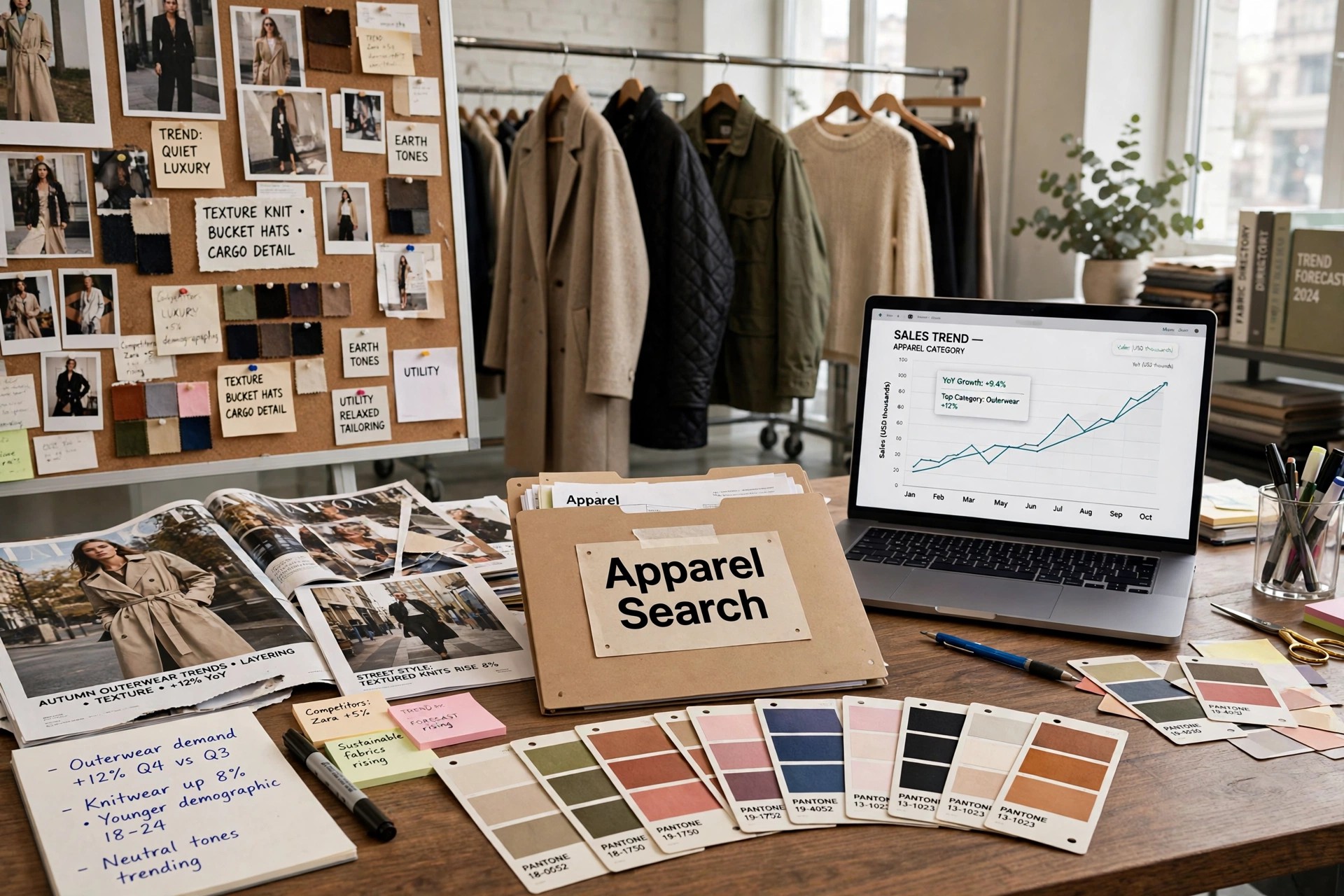
The analyst's raw material is signals, gathered constantly and from many directions at once. Retail signals come from the shop floor and the screen: which styles, colors and price points are selling through early, what competitors are promoting, which categories are expanding in rival ranges and which are quietly shrinking. Cultural signals come from runways, street style, social platforms, entertainment and the wider consumer mood — a shift toward outdoor clothing, say, or toward occasion dressing returning after quiet years. Economic and demographic signals frame both: spending confidence, age-group behavior and regional differences decide how far a trend can travel.
Collecting signals is the easy half. The analyst's discipline is weighing them: separating a trend with commercial depth — seen across price levels, repeated by independent sources, and already visible in early sales data — from a look that is loud online but thin in stores. Each finding is tracked over time, because a trend's position in its life cycle matters as much as its existence. A movement just emerging can be tested in small depth; one at its peak needs commitment but carries markdown risk if the business arrives late; one in decline should be bought shallowly and exited cleanly, however well it sold last season.
Turning Analysis into Range and Planning Decisions
Analysis earns its place when it changes a decision. The trend analyst writes and presents the reports, boards and briefings from which buyers shape ranges and planners set category budgets: the colors rising for next season and the ones to retire, the silhouette shift inside a core category, the price architecture competitors are moving toward, the consumer group growing fastest and what it buys. Good reporting is specific and timed to the buying calendar — a brilliant trend summary delivered after orders are placed is decoration, so the analyst works to the deadlines of range reviews, sign-off meetings and planning cycles.
The role works closest with three neighbours, and differs from each. Buyers choose the actual products; the analyst supplies the market case for and against. Forecast analysts quantify how much demand a trend will produce; the trend analyst's job ends where that quantification begins, having established that the trend is real and commercially relevant. Merchandise planners then fund the decision in budgets and open-to-buy. A trend analyst who understands those handoffs — what a buyer needs in a briefing, what a planner needs in numbers — is heard; one who only describes what is fashionable is background reading.
Skills and Abilities the Role Requires
Curiosity with a commercial edge is the core skill: a genuine, sustained interest in clothes and consumers, joined to the habit of asking what a signal means for sales, margin and stock. Research skills follow — comparative shopping, market and competitor monitoring, reading sell-through and market data without being misled by a single strong week, and building an evidence file that can survive a skeptical buyer asking why the business should back this look with real money. Presentation is inseparable from analysis here: findings are delivered as boards, decks and short written briefs, and the analyst must make a complex, uncertain picture clear enough to act on.
Judgment about timing and audience completes the profile. The same trend means different things to a value retailer, a premium brand and a specialist — pace, depth and price all change — and the analyst who works inside one business learns its customer's appetite precisely: how early she adopts, what she rejects, which risks this brand can take and which it cannot. Honesty about uncertainty is a professional requirement: the analyst who flags a weak signal as weak, and a strong one as strong, builds the credibility the role runs on.
Qualifications, Training and Career Path
Trend analysts commonly arrive from fashion buying, merchandising, planning support, fashion journalism or market research, and degrees in fashion merchandising, marketing, business or related subjects are common without being universal. Employers screen for demonstrated market knowledge — a portfolio of trend reports, comparative shopping work or research projects carries real weight — together with strong writing and presentation skills and enough data literacy to argue from sales evidence as well as from images. Subscriptions and trend services are tools of the trade, and analysts are trained on the house reporting cycle and categories.
Progression leads to senior trend analyst and market insights or strategy manager roles, where the coverage widens from categories to the whole business and the audience reaches executive level. Analysts also move toward the forecasting services and agencies that sell trend intelligence to many companies at once, or sideways into buying and range planning, carrying the market judgment with them. It is a role for people who watch the market compulsively and can convert watching into decisions other people can use.
Common Questions
What does a market trends analyst do in fashion?
They monitor retail, cultural and consumer signals, judge which trends are commercially real and where each sits in its life cycle, and report that analysis to buyers and planners in time for range and budget decisions.
How is a trend analyst different from a forecast analyst?
Sequence and subject. The trend analyst establishes what is changing and why it matters; the forecast analyst then quantifies the demand that change will produce, in units and sizes, for ordering. One judges direction, the other measures volume.
What background do trend analysts come from?
Usually buying, merchandising, planning support, fashion journalism or market research, often with a fashion merchandising, marketing or business degree. A portfolio of trend or market research and clear presentation skills matter most at hiring.
More to Explore
- Fashion Employment Agencies
- Employment Search Engines
- Fashion Job Description Directory
- Fashion Directory
- Fashion Industry News
- Fashion Schools and Education
- Fashion Careers
- Apparel Industry Links
- Clothing Merchandising
- Merchandise Mart
- Fashion Trend Forecasting
- Forecast Analyst (Fashion) Job Description
- Merchandise Planner Job Description
References & Further Reading
More Job Description Categories
- Buying Job Descriptions
- Design Job Descriptions
- Marketing & PR Job Descriptions
- Miscellaneous Job Descriptions
- Planning & Allocation Job Descriptions (current)
- Production & Sourcing Job Descriptions
- Sales & Selling Job Descriptions
- Transportation & Warehouse Job Descriptions