Fit Model Job Description
The technical fitting role — wearing sample garments in fit sessions so pattern makers can perfect fit before production
A fit model is a technical member of the product development team, not a photographic model. Brands and manufacturers develop every garment on a standard set of body measurements for their target customer, and the fit model is the person whose measurements match that standard. In scheduled fit sessions, the fit model wears prototype garments — toiles and pre-production samples — while pattern makers and garment technologists assess how each garment sits, moves and feels, pin adjustments, and record the corrections that become the approved pattern. The work is closer to quality engineering than to fashion modelling: consistency, clear communication and professionalism are what get a fit model rebooked season after season.
More Production Job Descriptions by Letter:
What Happens in a Fit Session
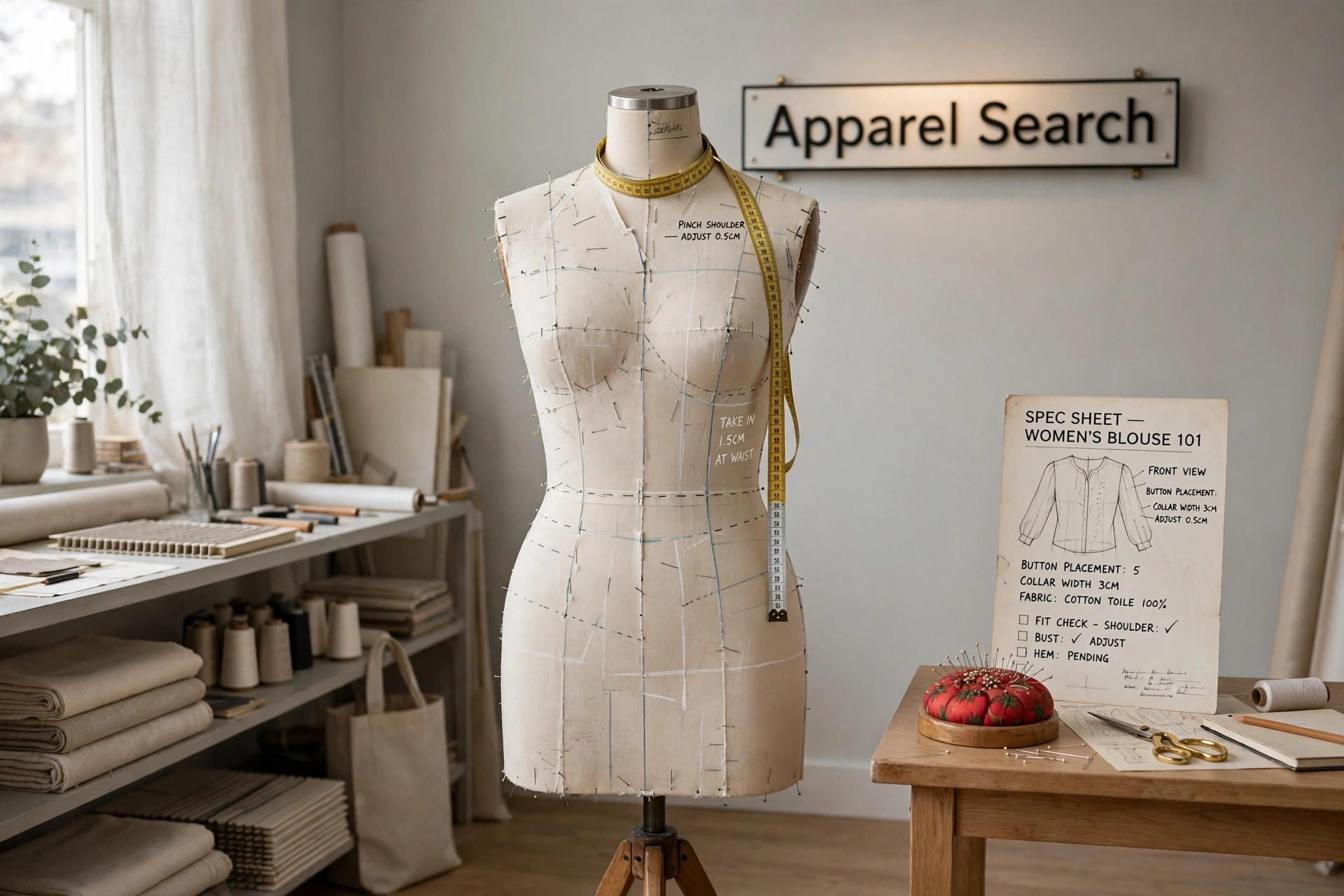
A fit session is a working meeting around a garment. The fit model puts on the sample — often a rough toile in plain cloth — and stands, sits, walks, bends and raises their arms as the technical team directs, so the garment can be judged in movement as well as at rest. Pattern makers check balance, ease and seam placement, pin excess fabric, mark where a neckline gapes or a waist sits wrong, and photograph the garment for the fit record. Several styles may be fitted in one session, each with its own sample and correction list.
The fit model's contribution is structured feedback. How a garment feels is data the team cannot get from measurements alone: where a sleeve restricts reaching, whether a waistband digs when sitting, how a skirt behaves on stairs. Good fit models describe sensation precisely — tight across the back on a forward reach, pulling at the second button — rather than in general impressions, and they distinguish fit problems from the roughness of an unfinished sample, which may have scratchy seams and no lining by design.
Measurements, Consistency and the Fit Log
A fit model is booked for a measurement set — height, bust, waist, hip and the secondary measurements a brand specifies — and the professional core of the job is keeping those measurements stable and honestly reported. Brands re-measure their fit models regularly, and a drift of even a centimetre at a key point changes what a fitted sample proves. Fit models therefore treat measurement maintenance as part of the work, and raise changes proactively rather than letting a session discover them.
Each session produces a fit log: the styles seen, the corrections agreed, and the model's comments, filed with the sample's measurements and photographs. Returning fit models review how the previous corrections came back — whether the revised sample actually fixed the pulling shoulder or the tight hip — which makes them an early-warning system for patterns that are drifting across a season. Reliability rounds out the record: fit sessions sit on the critical path to production, with factories waiting on approvals, so punctuality and availability at short notice are genuinely part of the specification.
Skills and Qualities the Work Requires
The technical qualities are patience, body awareness and communication. Sessions involve standing still while being pinned and measured, repeating movements on request, and changing in and out of samples efficiently — a fitting room runs on a modest, matter-of-fact professionalism in which the garment is always the subject. Fit models work with pins near the skin, chalk marks and partially constructed garments, and must stay comfortable and communicative throughout.
No garment skill is required — the fit model does not sew or cut — but an interest in how clothes are made helps a model give better feedback and often grows, over seasons, into real fit knowledge that technical teams come to rely on. Agencies and brands also expect straightforward administration: current measurement cards, honest availability, and the discretion to treat unreleased designs seen in the fitting room as confidential, which they are.
Training, Getting Booked and Career Path
There is no formal qualification for fit modelling. Entry is by measurement: brands and fit-model agencies recruit people whose measurements match a needed size standard — which across the industry covers the full range of sizes a brand sells, including petite, tall, plus and men's and children's standards (children's fit work is arranged and supervised under strict safeguarding through agencies and parents). A trial fitting assesses movement, communication and professionalism alongside the tape measure.
Work is typically freelance or agency-booked by the session or half-day, and a fit model in steady demand usually serves several brands whose size standards they match. Career development runs toward becoming a brand's principal fit model on retainer, combining fit work with showroom or technical-assistant work, or — for those who develop the interest — moving into garment technology, where first-hand knowledge of fit sessions is a genuine head start. It is best understood as skilled session work within product development: less visible than photographic modelling, and valued by the teams who depend on it.
Common Questions
How is a fit model different from a fashion model?
A fashion model presents finished garments to cameras and audiences. A fit model wears unfinished samples in private technical sessions so pattern makers can correct fit before production. Fit models are chosen for matching a brand's standard measurements and for clear fit feedback, not for photographic work.
Do fit models need to be a particular size?
They need to match the size standard of the brand booking them — and brands develop many size standards, from petite to plus, men's and tall ranges. The requirement is consistency with the specified measurements, verified by regular re-measuring, rather than any single ideal size.
What should a fit model wear to a session?
Close-fitting, plain underlayers that do not distort the sample's fit, the footwear the technical team specifies for the garment type (heel height changes how trousers and dresses hang), and minimal jewellery. Agencies and brands brief the specifics; the principle is that nothing of the model's own wardrobe should interfere with judging the garment.
More to Explore
Sizing & Fitting References
References & Further Reading
More Job Description Categories
- Buying Job Descriptions
- Design Job Descriptions
- Marketing & PR Job Descriptions
- Miscellaneous Job Descriptions
- Planning & Allocation Job Descriptions
- Production & Sourcing Job Descriptions (current)
- Sales & Selling Job Descriptions
- Transportation & Warehouse Job Descriptions