Printer — Printing Clothing Job Description
Printing designs onto finished garments — the print shop side of the clothing trade
A clothing printer prints onto garments that already exist. Where the textile printer decorates cloth by the roll, the clothing printer takes finished T-shirts, hoodies, sweatshirts, caps and workwear and puts the design exactly where it belongs — centred on a chest, across a back, down a sleeve. The work lives in print shops serving brands, sports clubs, events, merchandisers and local businesses, and it is order work: every job is a named design, a garment style and colour, a set of sizes and a deadline, and the printer's craft is delivering all of them looking identical to the approved sample.
More Production Job Descriptions by Letter:
Setting Up a Garment Print Job
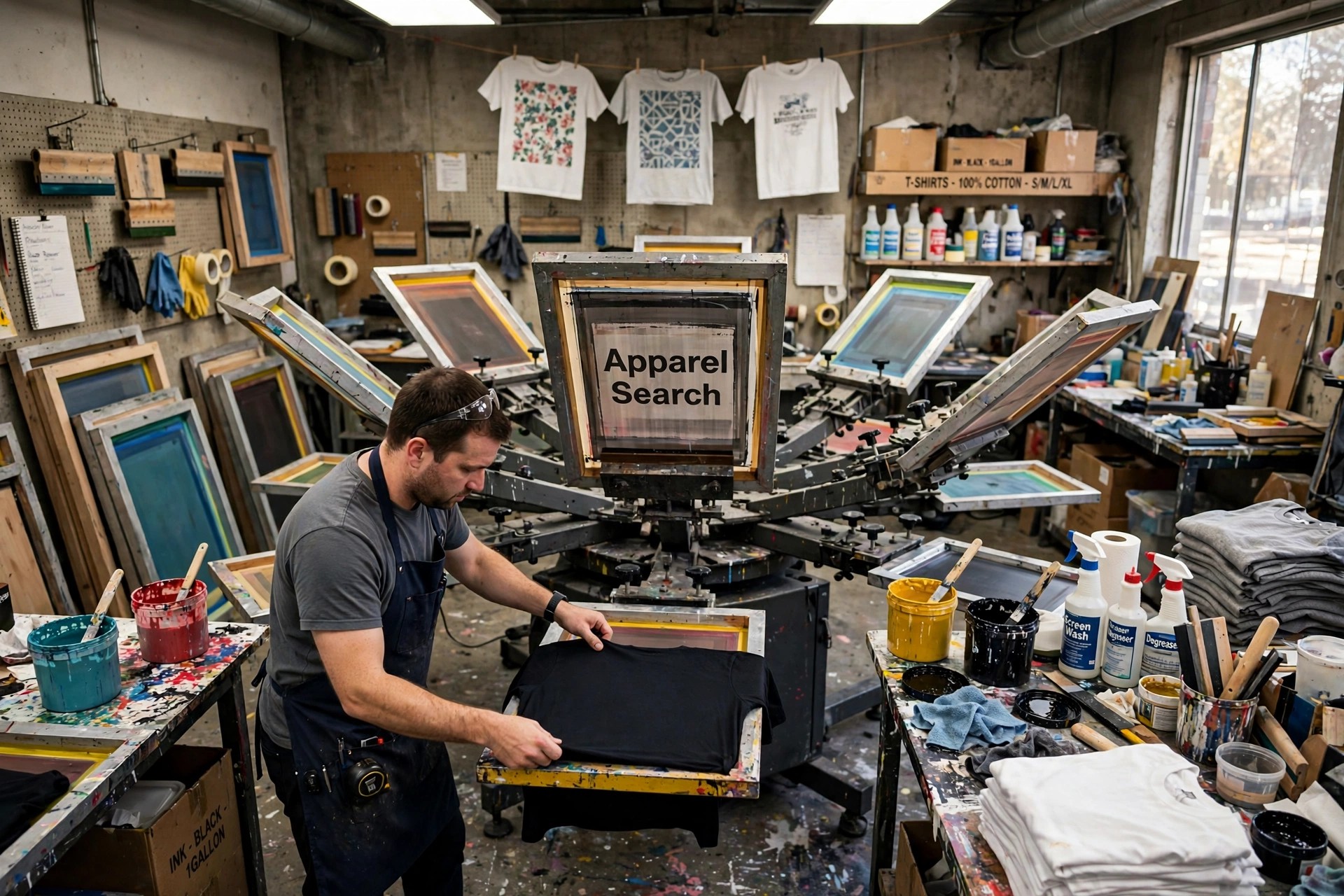
Every job starts away from the press. The artwork is separated into one screen per colour, screens are coated, exposed and washed out, and inks are chosen and mixed for the garment in hand — a white plastisol on black fleece, a soft water-based ink on a fashion tee, a speciality puff or metallic for an effect print. The printer loads a test garment, sets the print position against the customer's placement specification, and prints the proof that everything else is judged by. On direct-to-garment digital machines the setup is file-based instead: garment pre-treatment, colour profiling and a test print on the actual garment colour.
Setup judgment is where garment printing is won or lost. A print positioned two centimetres low looks wrong on every body; a screen slightly out of register blurs every unit; an ink that cures beautifully on cotton may crack on a stretch fabric. Experienced clothing printers read a job ticket the way pilots read a flight plan — garment, sizes, colours, placement, deadline — and catch the impossible instruction at setup rather than at the customer's door.
Printing the Run: Presses, Placement and Curing
On a manual carousel the printer loads each garment onto a platen, aligns it, pulls the squeegee across each screen in turn and flashes the print between colours; on automatic presses the machine prints while the printer loads and unloads at speed, watching registration and ink coverage across hundreds of pieces. Hoodies with pockets, caps, sleeves and garments with seams crossing the print area each demand their own loading technique, and multi-location orders — chest and back, front and sleeve — multiply the handling without multiplying the deadline.
Curing finishes the job and decides its life. Garments pass through a tunnel dryer at a temperature and dwell time matched to the ink system: under-cured prints crack and wash out, over-cured prints scorch or lose their colours. The printer tests cure with stretch and wash checks, counts and folds against the order, and separates any misprints immediately — a print shop's reputation is built on the discipline that the fifty-first shirt matches the first, and the faulty one never reaches the box.
Orders, Customers and the Print Shop Workflow
Clothing printers work to other people's occasions. A team's kit is needed for Saturday, a festival's merchandise for the gates opening, a brand's drop for a launch date — the shop's schedule is a wall of promises, and the printer sequences jobs by deadline, garment availability and colour changes, grouping work to minimise wash-ups and screen changes. Blank garment stock is checked in against orders, because printing the right design on the wrong garment colour is an error no press skill can undo.
Many clothing printers also face the customer directly: advising which print method suits a design, explaining why a photographic image needs digital printing or a process separation, quoting quantities and turnaround, and showing garment options. In small shops the printer is also the sales desk, the artwork checker and the delivery packer, and the role's variety is exactly why it attracts people who would be bored by a single machine in a large works.
Skills, Training and Career Path
The clothing printer's core skills are screen preparation, colour mixing, registration and the physical rhythm of loading, printing and unloading consistently at speed. An eye for placement and symmetry matters more here than in almost any other printing trade, because the wearer's body displays the result. Digital garment printing adds software, colour management and machine maintenance skills that grow more valuable every year.
Most garment printers train in a print shop, beginning with catching, folding, screen cleaning and reclaiming, then printing simple one-colour work under supervision. From senior printer the paths run to print shop supervisor or manager, into artwork and separation specialisms, or — the classic route — into owning a shop: the step from manual carousel to automatic press has started many small printing businesses. Printers who want the yardage side of the trade instead will find it described on the Textile Printer page, which covers printing fabric before it is made into clothing.
Common Questions
What is the difference between a clothing printer and a textile printer?
A clothing printer prints onto finished garments — T-shirts, hoodies, caps — placing each design on a made item, usually in order-sized runs. A textile printer prints the fabric itself by the roll, before garments are cut and sewn.
What printing methods do clothing printers use?
Mainly screen printing, on manual or automatic carousel presses, and direct-to-garment digital printing for short runs and photographic designs. Heat transfers and vinyl are also used for names, numbers and very small quantities.
How do you become a garment printer?
Usually by starting in a print shop on catching, folding and screen work, then learning setup and printing under a senior printer. Employers test practical press work and placement judgment; many senior printers go on to run or own shops.
More to Explore
Clothing Printing Resources
References & Further Reading
More Job Description Categories
- Buying Job Descriptions
- Design Job Descriptions
- Marketing & PR Job Descriptions
- Miscellaneous Job Descriptions
- Planning & Allocation Job Descriptions
- Production & Sourcing Job Descriptions (current)
- Sales & Selling Job Descriptions
- Transportation & Warehouse Job Descriptions