Customs Attorney Job Description
The lawyer for clothing imports — classification, valuation, origin and trade compliance for apparel companies
A customs attorney is a lawyer who specialises in the law of importing — and in the apparel trade that law touches every garment before it reaches a store. Clothing is classified line by line under the tariff schedule, valued under customs rules, labelled for fibre content, care and country of origin, and admitted under duty rates that vary sharply with what a garment is made of and where it was made. Customs attorneys advise importers, brands and retailers on getting those questions right, defend them when customs disagrees, and build the compliance programmes that keep an import operation out of trouble. This page describes the role in general terms; it is not legal advice.
More Transportation & Warehouse Job Descriptions by Letter:
Classification, Valuation and Origin: The Core Advice
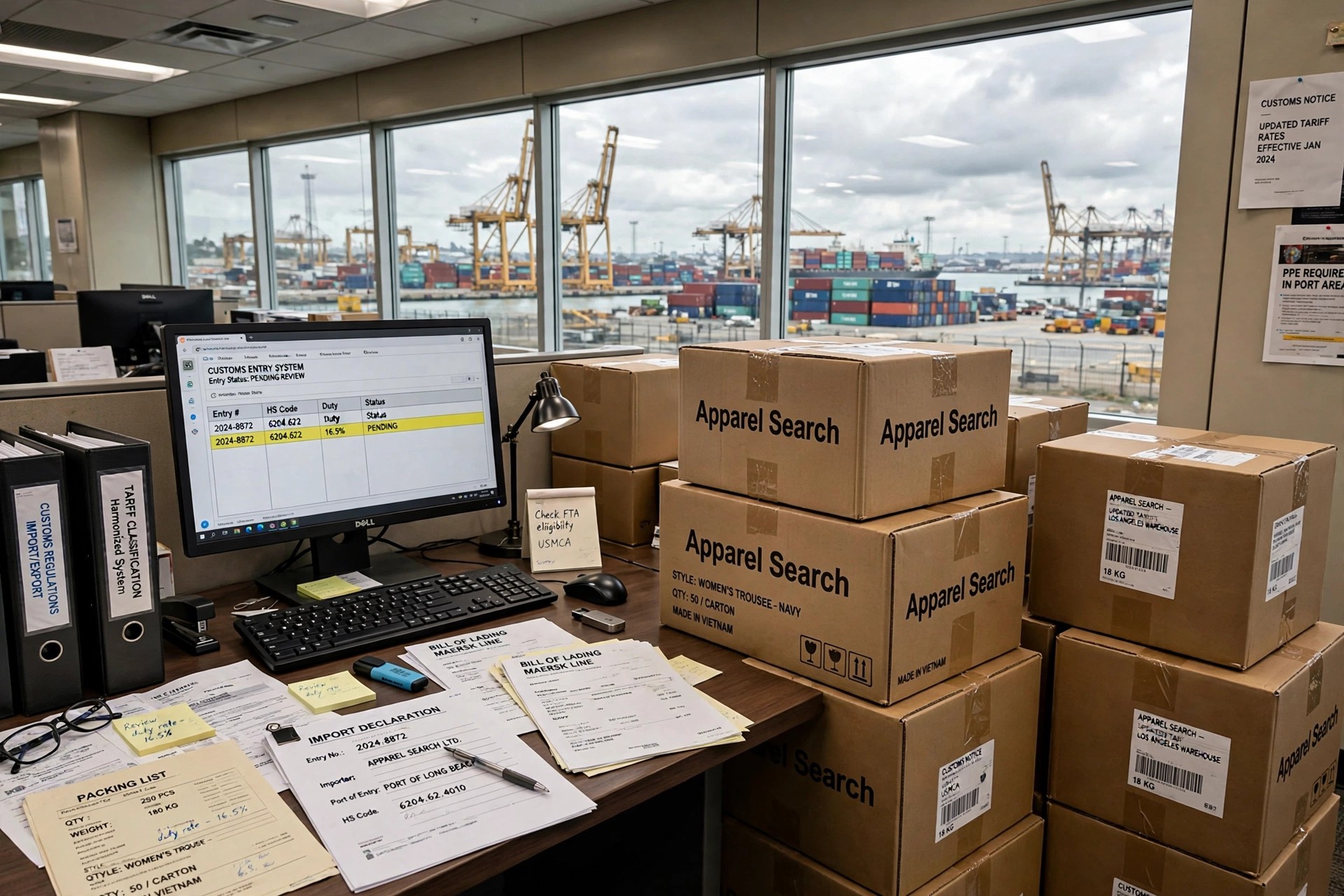
Classification is the foundation. Every imported garment must be assigned its tariff classification, and for apparel the answer turns on exacting details — fibre composition, knit or woven construction, the gender and age of the wearer, closures, linings and special features. A small construction change can move a garment to a different line with a different duty rate, so attorneys work with product teams before production, reviewing samples and specifications, seeking binding rulings where the answer is genuinely uncertain, and documenting the reasoning so the classification can be defended years later.
Valuation and origin complete the triangle. Customs value is generally built on the price paid for the goods, with defined adjustments and rules for related-party transactions, assists and royalties that apparel deals frequently raise. Origin determines both the duty programme and the marking: where a garment was made is decided by substantial-transformation rules across cutting and sewing in different countries, and preferential trade programmes add their own origin rules that an importer must prove, with records, to claim the lower rate.
Labelling, Admissibility and Compliance Programmes
Apparel carries more mandatory labelling than most imports: fibre content, country of origin and care instructions under textile rules, plus flammability and product-safety requirements for categories such as children's sleepwear. The customs attorney checks that a client's labelling and documentation satisfy the requirements before goods ship, because a labelling failure discovered at the port means held freight, re-labelling costs or refused entry — the most expensive classroom in the trade.
The larger practice is preventive. Attorneys design import compliance programmes for apparel companies: classification databases, valuation procedures, origin documentation files, broker instructions and internal audits that test entries against the underlying commercial documents. They train the client's import, sourcing and product staff, because most customs errors are born in a purchase order or a tech pack long before a broker files an entry, and the attorney who only sees finished entries is practising too late.
Audits, Penalties and Disputes
When customs examines an importer — through focused assessments, audits, requests for information or penalty proceedings — the attorney leads the response: gathering the entry records, explaining the client's methodology, correcting what is genuinely wrong and contesting what is not. Disclosure strategy is central to this work; a voluntary prior disclosure of errors, made before customs finds them, is treated very differently from errors discovered by the government, and advising on that decision is among the role's most consequential judgements.
Disputes also arise shipment by shipment: a classification challenged at entry, a value questioned, an origin claim denied, goods detained over labelling. The attorney argues protests and ruling requests, negotiates with the port and agency counsel, and litigates in the trade courts when administrative routes fail. Throughout, the apparel context matters — the attorney who knows how garments are constructed, costed and sourced argues a classification or a valuation from the product outward, which is why the specialism exists at all.
Settings, Qualifications and Career Path
Customs attorneys practise in three main settings: specialist trade and customs law firms serving many importers; the in-house legal and trade-compliance departments of large apparel brands and retailers, where the client is one import operation seen from inside; and consulting and brokerage organisations, where legal advice sits beside entry filing. The daily work mixes written advice, document review, agency meetings and product sessions with sourcing and design teams — a notably commercial practice, close to the goods themselves.
Qualification is the standard legal route plus specialisation: a law degree, admission to the bar, and then customs and international trade law learned in practice — tariff classification, valuation, trade programmes and agency procedure, often alongside a licensed customs broker's practical knowledge of how entries actually move. Experience inside the apparel industry, on any side of the import transaction, is prized because the products are the evidence. Progression runs to partner in a trade firm, to head of trade compliance or senior counsel in-house, and into the advisory roles that shape how whole companies source and import.
Common Questions
What does a customs attorney do for an apparel company?
Advises on the law of importing clothing: tariff classification of garments, customs valuation, rules of origin and trade-programme claims, textile labelling and admissibility, builds import compliance programmes, and represents the importer in audits, penalty matters and classification or valuation disputes.
How is a customs attorney different from a customs broker?
A broker is licensed to transact customs business — preparing and filing entries — but does not practise law. An attorney gives legal advice, designs compliance strategy, handles disclosures and disputes, and represents clients before the agency and the trade courts. Importers commonly use both, for different work.
What qualifications does a customs attorney need?
A law degree and bar admission, then specialist knowledge of customs and international trade law: classification, valuation, origin rules, trade programmes and agency procedure. Apparel-industry experience is valued because garment construction and sourcing facts decide the legal answers.
More to Explore
Customs and Import Resources
References & Further Reading
More Job Description Categories
- Buying Job Descriptions
- Design Job Descriptions
- Marketing & PR Job Descriptions
- Miscellaneous Job Descriptions
- Planning & Allocation Job Descriptions
- Production & Sourcing Job Descriptions
- Sales & Selling Job Descriptions
- Transportation & Warehouse Job Descriptions (current)