Forklift Operator Job Description
Moving clothing on pallets and at height — trucks, racking, docks and warehouse safety
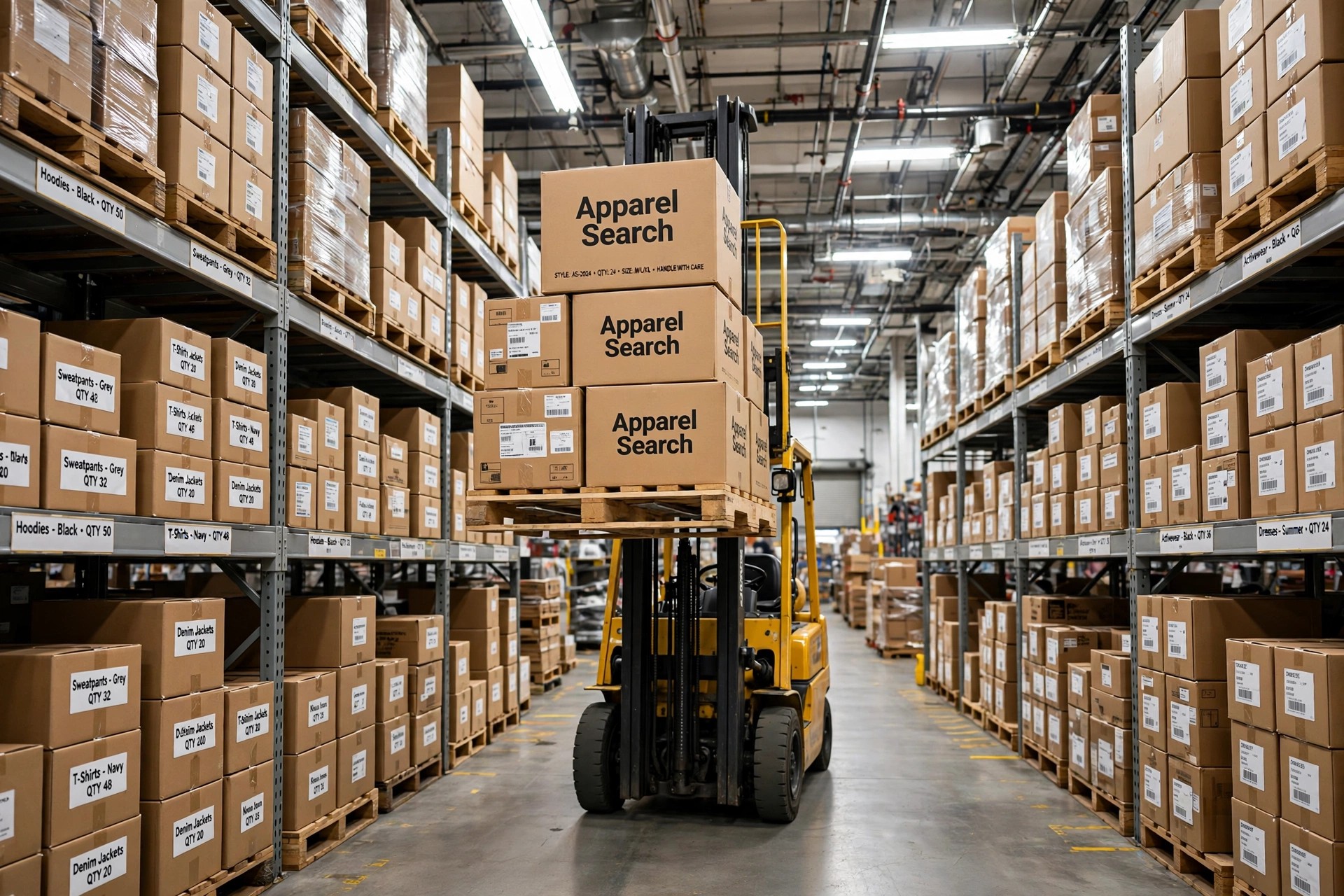
A forklift operator moves the clothing industry's stock at its heaviest scale: whole pallets of garments in and out of vehicles, up into high racking and back down again as the warehouse needs them. Picking and packing get the attention in apparel distribution, but none of it works unless pallets flow — inbound trucks unloaded, stock put away where the system expects it, pick faces replenished before they empty, outbound loads built and loaded in route order. The operator is the licensed, checked and safety-accountable driver of the trucks that make that flow happen.
More Transportation & Warehouse Job Descriptions by Letter:
The Work: Vehicles, Racking and Replenishment
The shift divides into three kinds of movement. First, the docks: unloading inbound vehicles of palletised cartons and hanging-garment equipment, checking pallet condition and labels as they come off, and staging loads where the receiving team directs. Second, the racking: putting pallets away into their system-assigned locations, working at height with reach trucks in narrow aisles, and retrieving full pallets as orders and replenishment demand them. Third, the floor: moving stock between areas, feeding the packing and despatch stations, and loading outbound vehicles in the order the route requires — a load built backwards is a delivery driver unloading the truck at every stop.
Apparel loads have their own character. Garment cartons are comparatively light but bulky and crushable, so stacking patterns, pallet quality and wrap security matter more than raw weight; a pallet leaned on by a careless lift arrives as creased, unsaleable clothing. Hanging garment rails and cages move alongside the pallets. The operator reads the load before moving it — weight, balance, stability, damage — because the truck will move whatever it is given, well or badly.
Safety: The Licence Behind the Job
Forklifts are among the most dangerous machines in any warehouse, and the operator's authority comes with that accountability. Every shift starts with pre-use checks of the truck — forks, mast, hydraulics, brakes, steering, horn, tyres and, on electric trucks, battery and charging state — with defects reported and the truck taken out of service rather than nursed through the day. Loads are travelled with low and tilted back, speed is set by the building and not the deadline, and pedestrians always have right of way: in a clothing warehouse, pickers on foot share the aisles all shift long.
Training and assessment are formal. Operators are trained and authorised for each truck type they drive — counterbalance, reach, powered pallet trucks and order pickers are separate competencies — with refresher and re-assessment cycles, and safe systems of work for battery charging or fuel handling, working at height from order pickers, and reporting racking damage the moment a truck touches a beam. An operator who reports a clipped upright has done the warehouse a service; the culture that managers build around that honesty is what keeps the building safe, and experienced operators are its carriers.
Accuracy, Systems and Damage Control
Modern warehouses direct truck work by terminal and scanner. The operator confirms each pallet's identity and its from-and-to locations as the system directs, because a pallet put away into the wrong slot is, to every other process in the building, a pallet that does not exist — until a stock count finds it weeks later, usually during the season that can least afford the search. The same scan discipline applies at loading: the right pallets, in the right order, onto the right vehicle, with the documentation to prove it.
Damage and problems are reported, not hidden. Crushed cartons, split wrap, a pallet collapsing in the rack, stock found in the wrong location — the operator is the building's eyes at height and at the dock, and supervisors rely on those reports to protect both the stock and the next person sent to retrieve it. Care with other people's work is a visible habit: the operator who leaves an aisle blocked, a pallet overhanging or a load unlabelled has created someone else's accident or error further down the shift.
Skills, Qualifications and Career Path
Employers require accredited forklift training and a current authorisation for the truck types in use — through the recognised training schemes or an employer's own assessed programme — plus the physical fitness for the truck type, including work at height where order pickers are used. Beyond the licence, the valued qualities are steadiness, spatial awareness, patience in congested aisles, and the reliability to work a scan-directed queue without cherry-picking the easy moves. Warehouse experience helps; many operators come from warehouse worker roles and add truck licences as their first formal qualification.
The path from the truck seat is practical: multi-truck authorisations and instructor or assessor roles, team leader and warehouse supervisor posts, goods-in and despatch coordination, and into the warehouse management ladder that this category's W and A pages describe. Forklift skill is also portable across every distribution operation in the industry, which makes a well-kept licence record one of the most employable documents in warehousing.
Common Questions
What does a forklift operator do in a clothing warehouse?
Drives the warehouse's forklift trucks: unloading and loading vehicles, putting palletised garment cartons away into racking, retrieving pallets and replenishing pick locations, and moving stock between receiving, storage, packing and despatch — all against pre-use checks and scan-confirmed locations.
What training does a forklift operator need?
Accredited training and a current authorisation for each truck type driven — counterbalance, reach truck, powered pallet truck and order picker are assessed separately — with refresher cycles. Employers also expect the physical fitness for the equipment used and a clean, careful safety record.
Why does apparel warehousing need care from its forklift drivers?
Garment cartons are bulky but crushable: bad stacking, poor pallets or a careless lift turn saleable clothing into creased, damaged stock. The operator reads every load for weight, balance and stability before moving it, and reports damage and racking strikes instead of hiding them.
More to Explore
Warehouse Equipment and Freight Resources
Transportation & Warehouse Directory Pages by Letter
References & Further Reading
More Job Description Categories
- Buying Job Descriptions
- Design Job Descriptions
- Marketing & PR Job Descriptions
- Miscellaneous Job Descriptions
- Planning & Allocation Job Descriptions
- Production & Sourcing Job Descriptions
- Sales & Selling Job Descriptions
- Transportation & Warehouse Job Descriptions (current)