Fork Lifts and Pallet Trucks
The guide to fork lifts, pallet jacks and pallet trucks for moving pallets of clothing and textiles.
This section is a guide to fork lifts, pallet jacks and pallet trucks for the clothing and textile warehouse — the machines that move pallets of clothing and fabric around a warehouse or factory. Some of the equipment also helps with moving individual cartons of clothing. Apparel Search provides this directory of pallet trucks and fork lifts as a general guide: for the specific detail and utilisation of each truck, contact the supplier or manufacturer, who can match a machine to your loads, your building and your operators.
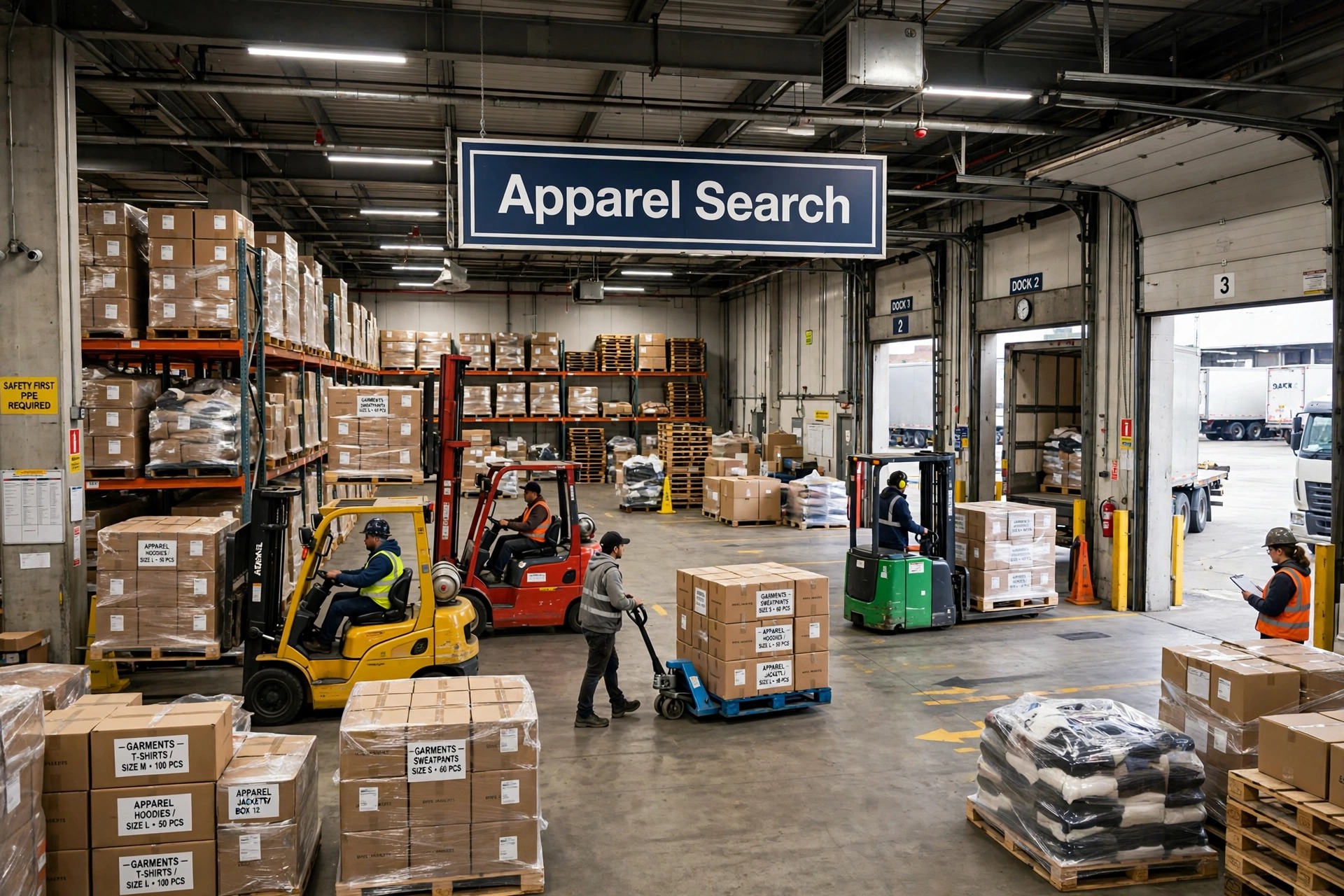
Fork Lift & Pallet Truck Types
- Counter Balanced Trucks
- Cushion Tire Truck
- Electric Rider Trucks
- Hand Pallet Trucks (Manual)
- Hand Pallet Trucks (Motorized)
- Narrow Isle Pallet Trucks
- Order Picker Trucks
- Pallet Trucks / Pallet Jacks
- Pneumatic Tire Truck
- Reach Trucks
- Side Loaders
- Stackers
- Stock Selectors
- Straddle Trucks
- Used Fork Lifts
The Truck Types in This Guide
Fork lifts and pallet trucks divide by how the load is carried and how high it must go. Counter balanced trucks carry the load on forks balanced by a rear counterweight and handle dock work and general lifting. Cushion tire and pneumatic tire trucks are the two tire families for indoor floors and outdoor yards. Reach trucks, straddle trucks and stackers lift pallets into racking, each trading aisle width against complexity. Narrow aisle trucks work the tightest racking layouts of all.
At floor level, pallet trucks — also called pallet jacks — move pallets without lifting them into storage: manual hand pallet trucks for short, light work, motorized hand trucks for powered walking work, and electric rider trucks for long dock runs. Order pickers and stock selectors take the operator up to the shelf to pick individual items rather than whole pallets. Side loaders carry long loads — fabric rolls, piping, rolled goods — sideways along the aisle.
Each type has its own page in this section, linked below, with the suppliers that were listed for that type. Used forklifts have their own page too, for warehouses equipping on a budget.
Choosing Equipment for a Clothing Warehouse
Start with three facts about your own building: the weight of your heaviest pallet, the height of your highest rack beam, and the width of your narrowest aisle. Those three numbers eliminate most of the catalogue. A warehouse receiving palletized import cartons and storing them four levels high needs a lifting truck; a stockroom moving cartons between a dock and a packing bench may need nothing more than hand pallet trucks.
Then consider the floor and the route. Smooth indoor concrete suits cushion tires and small pallet truck wheels; yards and rough docks need pneumatic tires. Long travel distances favour rider machines; short, intermittent moves favour walkies and manual trucks. Electric equipment needs charging space; engine equipment needs ventilation and is usually kept out of garment storage areas.
Finally, think in fleets rather than single machines. Most apparel warehouses end up with a mix — a counter balanced truck on the dock, hand pallet trucks at the packing benches, and a reach truck or stacker working the rack — because each type is cheapest and safest at its own job.
Related Warehouse Equipment
Pallet handling connects to the equipment around it. Pallet conveyors and general conveyors move cartons and pallets on fixed paths between work areas, and palletizers build the pallet loads themselves — all covered in the warehouse machinery pages linked below. Slip sheets offer an alternative to wooden pallets for some import freight, and factories moving goods between cutting, sewing and finishing use the same pallet equipment inside the plant.
For the pallets themselves, this site's pallet pages cover sizes, guides and definitions — a truck is only as useful as the pallet it can pick up, and fork entry, pallet size and carton overhang all affect how safely a load travels.
One rule covers every type in this guide: powered trucks are operated only by people trained and authorised for that type, pedestrians and loads are never carried on forks, and loads travel low and tilted back. The individual pages note the training and safety points specific to each machine, from the walkie's reversing switch to the order picker's harness.
Common Questions
What is the difference between a fork lift and a pallet truck?
A fork lift (forklift) lifts loads to height — into racking, onto mezzanines or stacked — using a mast. A pallet truck, or pallet jack, raises a pallet only a few inches, just enough to move it across the floor. Warehouses use pallet trucks for horizontal movement and forklifts and reach trucks when pallets must be stored at height.
Which truck does a small clothing warehouse need first?
Usually a hand pallet truck for floor-level moves, plus access to a lifting machine — owned, shared or rented — for racking work. As volume grows, a counter balanced forklift or a stacker is normally the first powered lifting purchase, because those types cover the widest range of everyday apparel warehouse work.
Does Apparel Search sell fork lifts or pallet trucks?
No. This section is a directory and guide: it explains the truck types and lists suppliers and manufacturers. For specifications, prices and advice on a particular machine, contact the supplier directly — the right truck depends on your loads, rack heights, aisle widths and floors.