Pneumatic Tire Pallet Trucks
Air-filled tires for yards, docks and rough ground — the outdoor forklift.
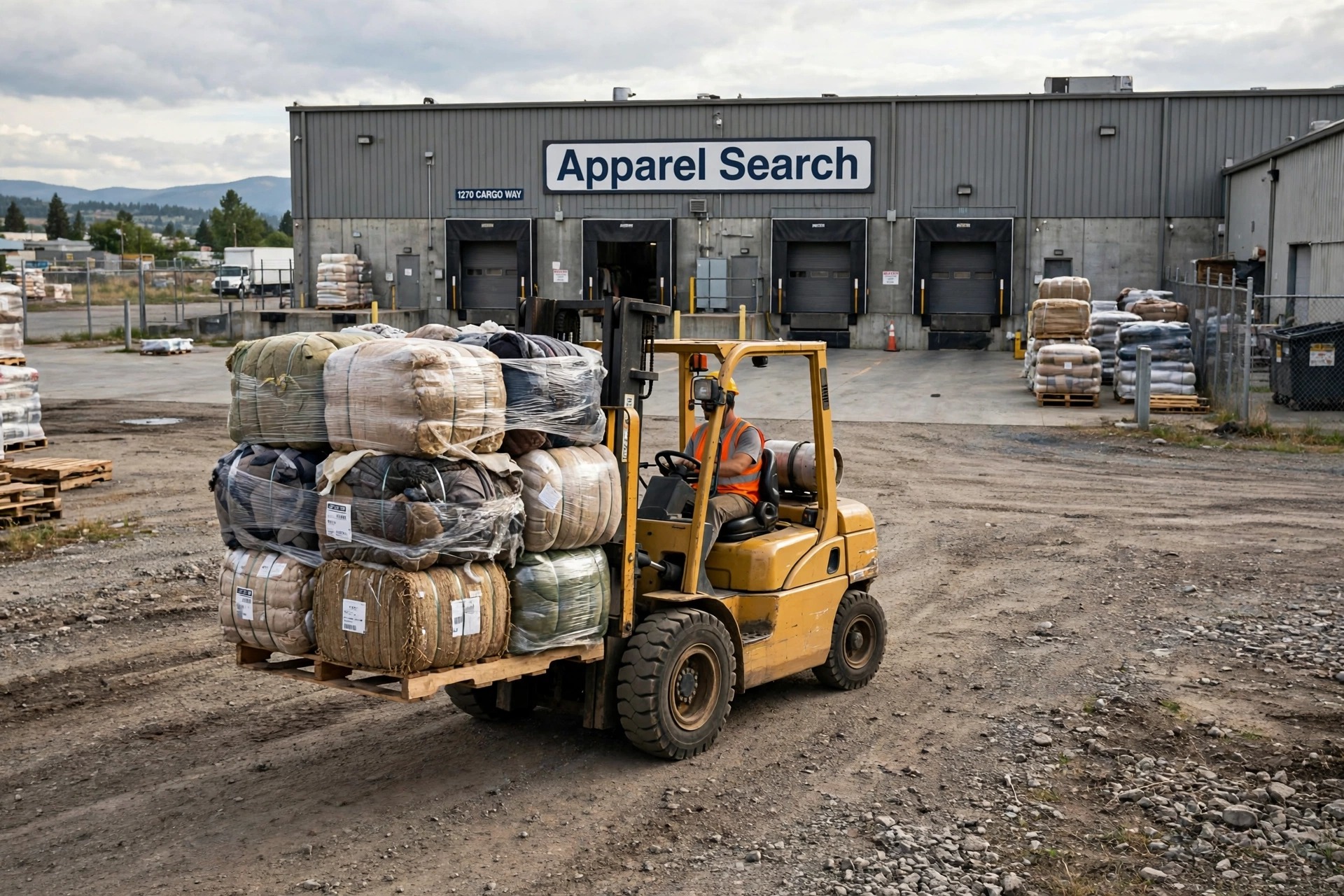
A pneumatic tire truck runs on air-filled tires with real tread — the outdoor counterpart to the cushion tire's smooth solid wheel. The air in the tire is the suspension: it absorbs the bumps of yard concrete, dock aprons, gravel and uneven ground that would jar a solid-tired truck and its load apart. For a clothing warehouse, the pneumatic tire forklift is the machine that works the outside half of the job — unloading in the yard, crossing rough docks, moving textile bales and palletized freight between buildings.
Fork Lift & Pallet Truck Types
- Counter Balanced Trucks
- Cushion Tire Truck
- Electric Rider Trucks
- Fork Lifts and Pallet Trucks
- Hand Pallet Trucks (Manual)
- Hand Pallet Trucks (Motorized)
- Narrow Isle Pallet Trucks
- Order Picker Trucks
- Pallet Trucks / Pallet Jacks
- Reach Trucks
- Side Loaders
- Stackers
- Stock Selectors
- Straddle Trucks
- Used Fork Lifts
Air-Filled Tires and What They Buy You
Pneumatic tires are larger in diameter than cushion tires, which gives the truck more ground clearance and a longer wheelbase. The tread grips wet and loose surfaces, the air cushions both machine and load over rough joints and debris, and the truck can climb modest ramps and dock transitions that stop a low-slung cushion tire machine. Solid pneumatic variants — resilient tires that mimic air-filled behaviour without puncture risk — are common in warehouse fleets that want the ride without the flats.
The costs are size and upkeep. A pneumatic tire truck is a bigger machine that needs more room to turn, which is why it is rarely the first choice inside tight racking aisles. Air-filled tires need pressure checks and can puncture; even solid variants cost more per wheel than cushion tires. In industry terms these are Class V trucks when engine-powered — the yard and dock counterpart to the indoor Class IV cushion tire machines.
Power follows the workplace: LPG and diesel dominate outdoor and mixed work, gasoline appears on older fleets, and electric pneumatic tire trucks serve yards where emissions rules or noise limits apply. Capacities run from a few thousand pounds to very heavy machines far beyond apparel needs — garment warehouses typically work in the 3,000 to 8,000 pound range.
Pneumatic Tires Around the Apparel Site
The typical apparel site has more outdoor material handling than the building plan suggests: containers dropped in the yard, fabric deliveries on flatbeds, baled textiles and waste moving to compactors, pallets shuttling between a warehouse and a nearby factory or laundry building. A pneumatic tire truck handles all of it without caring about the surface, and doubles as the indoor truck in simple single-storey buildings with generous aisles and rough floors.
Load protection is a genuine advantage for fashion freight. Cartons of finished garments crush at the corners when loads are jolted; the pneumatic tire's cushioning, plus the slower, steadier travel it encourages outdoors, arrives with fewer damaged boxes than a solid-tired truck bouncing across a yard would. Operators still secure tall or light loads — air tires do not fix a badly built pallet.
Weather belongs in the plan. Tread grips in the wet but yard work in rain soaks cartons, so pneumatic trucks in apparel service often work under canopies or between dock shelters, and loads are wrapped before outdoor moves. Cold weather hardens tires and thickens hydraulic oil; the daily check — pressures, forks, mast chains, leaks — matters more outdoors where debris hides damage.
Companies Supplying Pneumatic Tire Pallet Truck
Clark Manufacturing
Clark's broad line includes pneumatic tire trucks among capacities from 1,500 to 16,500 pounds, with LPG, gasoline, dual fuel and diesel power represented alongside electric riders and powered hand trucks. The company reports over 250,000 trucks operating in North America and 350,000 worldwide, with dealer support at more than 230 North American locations and 550-plus locations in over 80 countries.
Supplies: Pneumatic tire forklifts, 1,500–16,500 lb lines
Komatsu Ltd.
Komatsu builds pneumatic tire forklifts across electric, gasoline, LPG and diesel ranges from 2,000 to more than 35,000 pounds. Founded in Japan in 1921, it has made forklifts since 1945; American sales began through a California company in 1976, United States manufacturing followed at La Palma in 1987, and the operations combined as Komatsu Forklift U.S.A. in 1993, distributing through over 145 dealers.
Supplies: Pneumatic tire forklifts in four power types
TCM Fork Lifts
TCM, one of the world's leading lift truck producers, is recognised worldwide for research and development in lift trucks and other material handling products, applying current technology and customer input to keep improving its products — including the pneumatic tire trucks in its range.
Supplies: Pneumatic tire lift trucks
Yale Materials Handling Corporation
Yale's Class V pneumatic tire trucks complete a line that runs from electric riders and narrow aisle machines to cushion tire models, all sold, serviced and supported through authorised dealers. The Yale brand belongs to the NACCO Materials Handling Group, whose manufacturing spans the United States, the United Kingdom, the Netherlands, Brazil, Ireland, Italy, Japan, Mexico and Scotland.
Supplies: Class V pneumatic tire trucks
Pneumatic Tire or Cushion Tire?
Decide by surface and by where the truck spends its hours. Indoors on smooth concrete all day: cushion tire, compact and puncture-free. Outdoors, on yards and rough docks, or split between the two: pneumatic tire, accepting the larger turning circle. The cushion tire page in this section makes the indoor case in full.
Large distribution sites usually settle the argument by owning both, with a handover at the dock door: pneumatic trucks feed the dock from the yard, cushion tire electrics take the pallets inside.
Common Questions
Can pneumatic tire forklifts work indoors?
Yes, if the aisles are wide enough — the truck is larger and turns wider than a cushion tire equivalent, and engine-powered models bring exhaust and noise indoors, which is why garment storage areas usually use electric cushion tire trucks. Electric pneumatic tire trucks are a good compromise for buildings with rough floors or indoor-outdoor routes.
Do pneumatic forklift tires puncture?
Air-filled tires can puncture, and yard debris — screws, pallet nails, metal strapping — makes it a real risk around loading docks. Many warehouses specify solid pneumatic (resilient) tires instead: they ride almost like air-filled tires but cannot go flat, at some cost in cushioning. Daily tire inspection catches cuts before they become failures.
What size pneumatic tire truck does a clothing warehouse need?
Most apparel work — palletized cartons, fabric rolls, baled goods — sits comfortably in the 3,000 to 8,000 pound capacity range. Size for the heaviest load at its real load centre: a long fabric roll shifts weight forward and derates the truck, and yard attachments such as bale clamps reduce capacity further.