Side Loaders
Sideways handling for long loads — fabric rolls, bolts and bundled materials.
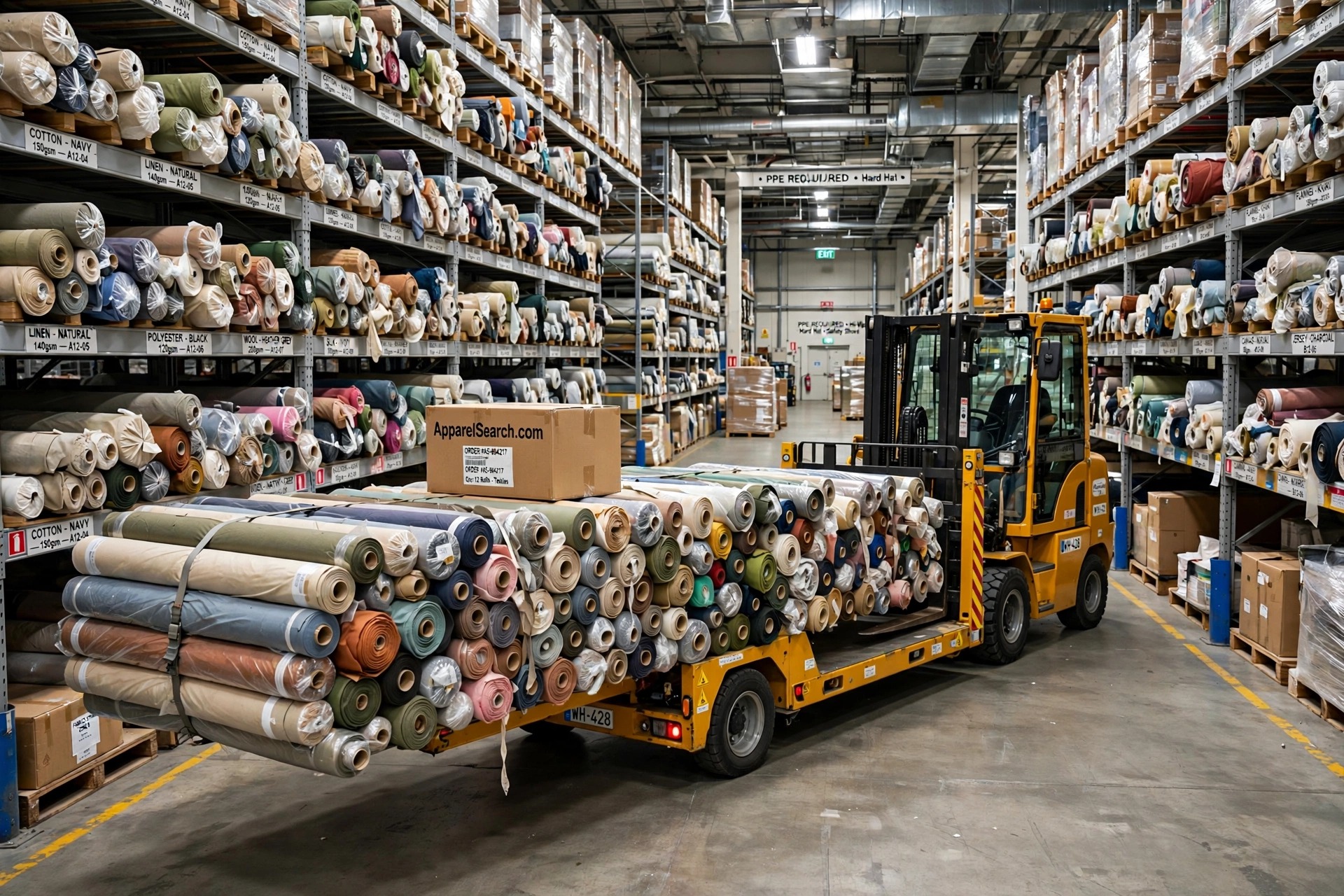
A side loader carries its load on a deck along the side of the truck, with forks that reach out sideways to pick the load from rack or floor. The arrangement exists for one reason: long loads. A side loader travels down an aisle carrying a 20-foot fabric roll, a bundle of piping or a pack of timber-length textile boards parallel to the direction of travel, in an aisle little wider than the load is long — where a conventional forklift carrying the same load crosswise would need an aisle as wide as the load itself.
Fork Lift & Pallet Truck Types
- Counter Balanced Trucks
- Cushion Tire Truck
- Electric Rider Trucks
- Fork Lifts and Pallet Trucks
- Hand Pallet Trucks (Manual)
- Hand Pallet Trucks (Motorized)
- Narrow Isle Pallet Trucks
- Order Picker Trucks
- Pallet Trucks / Pallet Jacks
- Pneumatic Tire Truck
- Reach Trucks
- Stackers
- Stock Selectors
- Straddle Trucks
- Used Fork Lifts
Long Loads, Sideways
The truck's forks extend from the side of the chassis, lift the load onto the deck, and retract, so the load rests on the deck — not balanced on fork tips — for the whole journey. That support along the load's length stops long, flexible loads sagging, bending or slipping, which is exactly what happens to rolls and bundles carried on ordinary forks. Guide rollers and, in rack installations, guidance systems keep the truck centred in aisles designed around it.
In textile warehousing the classic loads are rolls of fabric and carpet, bolts on long cores, and bundled materials for cutting and manufacturing — stock that is long, heavy in aggregate and easily damaged by bending or crushing. Side loaders also serve long carton and garment-rail storage in a few specialist apparel installations, but their natural home is wherever the product's length exceeds its pallet.
Capacities are substantial — the deck spreads weight along the chassis — and the machines are usually electric for indoor work or diesel for yard and timber-style applications. They are specialist machines: more expensive than a forklift of similar capacity, and worth it only where long loads are a daily flow rather than an occasional problem solved with care and a wide aisle.
Side Loaders in Textile and Apparel Plants
A fabric warehouse shows the type at its best: rolls arrive, are weighed and inspected, and must be stored by style and lot in long racks, then brought to cutting in sequence. The side loader drives the aisle once, deck loaded with rolls riding lengthwise, placing and retrieving without ever turning — fast, undamaging cycles that a forklift with a roll clamp or a carpet pole approximates only in much wider aisles.
Safety practice centres on load stability and visibility. Long loads must be centred on the deck, banded or wrapped as units, and carried fully retracted; overhang beyond the deck ends is a striking hazard for racking and pedestrians, and travel routes are planned so the load's sweep at aisle ends is understood. Operators are trained on the machine's unusual sight lines — the load sits beside, not in front of, the driving position.
For the clothing warehouse without long stock, the side loader is a page to understand rather than a machine to buy: standard pallets of cartons belong on the counter balanced, reach and pallet trucks covered elsewhere in this section.
Companies Supplying Side Loaders
Raymond Corporation
Raymond manufactures side loaders among a range that includes hand pallet jacks, walkie pallet trucks and stackers, end and centre rider pallet trucks, counterbalanced forklifts, Reach-Fork trucks, order selecting and swing-reach narrow aisle trucks and dual-purpose pallet handling and case picking trucks. In business since 1922 and the maker of the first narrow aisle truck (1951), Raymond also offers warehouse layout consulting with its trucks.
Supplies: Side loaders and a full narrow aisle and pallet truck range
Alternatives for Occasional Long Loads
Warehouses with only occasional long loads usually manage with forklift attachments — carpet poles and roll rams for fabric rolls, fork extensions within their legal derating limits — or with multi-directional forklifts that can travel sideways with a load on their forks. Both keep one general machine for all work; the dedicated side loader wins when long loads are the work, all day, in aisles built for density.
If the long load is people-height picking rather than bulk rolls, look instead at the order picker and stock selector pages.
Common Questions
What loads need a side loader?
Loads whose length defeats ordinary forks: fabric and carpet rolls, long bolts and bundles, piping, long boards and similar stock. A side loader carries such loads lengthwise on a deck, in aisles barely wider than the load, without the sagging and damage that carrying them crosswise on forks causes.
Can a side loader handle standard pallets?
It can lift pallets from the side, but it is a specialist bought for long loads; using one as a general pallet truck wastes its cost and its aisle design. Standard pallet work belongs to counter balanced trucks, reach trucks and pallet trucks, which are cheaper, faster and easier to staff.
Are side loaders electric or diesel?
Both exist. Indoor textile warehouses usually run electric side loaders for clean, quiet operation around fabric; diesel models serve yards and heavy outdoor long-load work such as timber. The choice follows the same indoor-outdoor logic as the cushion and pneumatic tire pages in this section.