Counter Balanced Pallet Trucks
The general-purpose forklift for clothing warehouses — counterweight design, capacities and dock work.
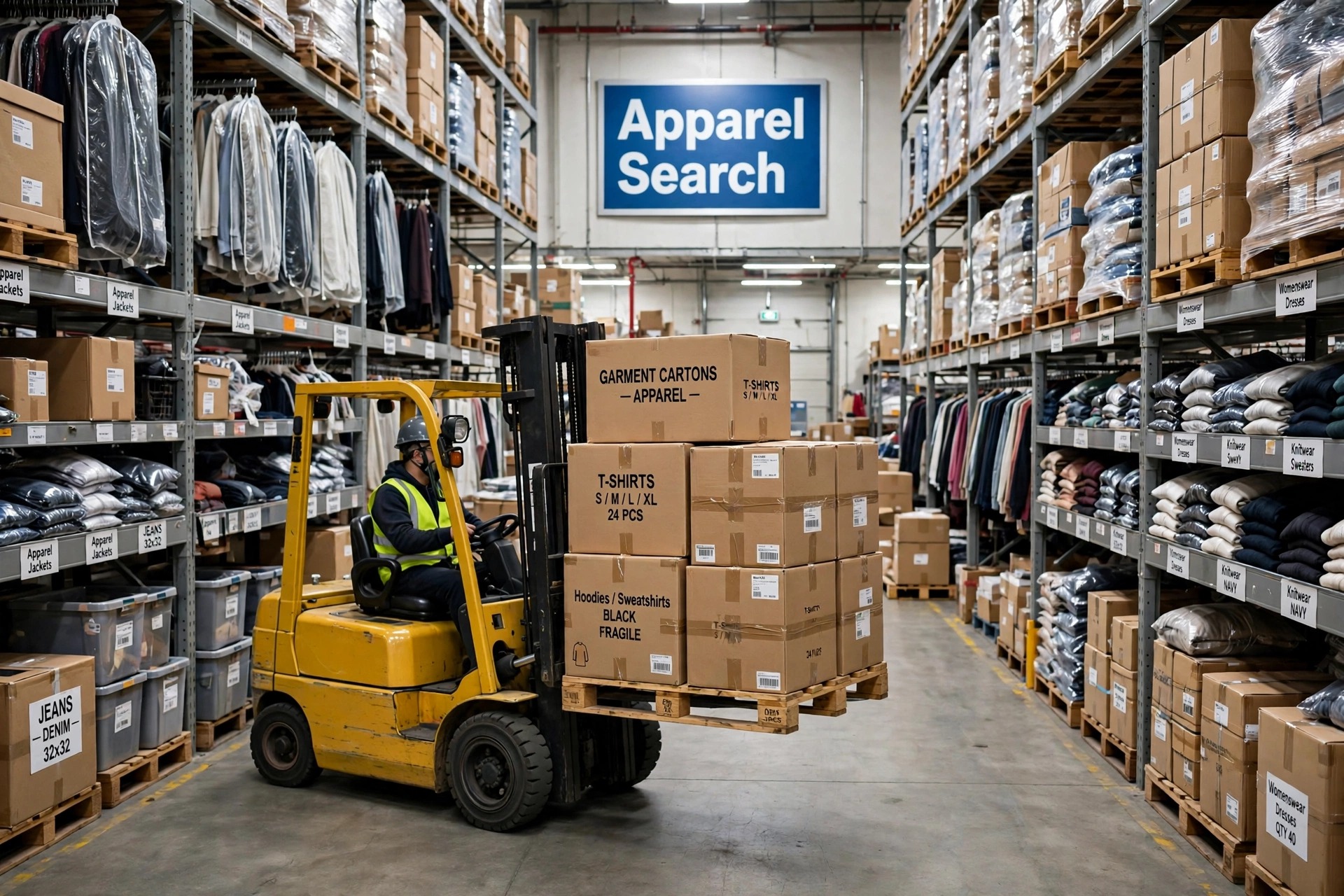
A counter balanced truck carries its load on forks in front of its front wheels and balances that load with a heavy counterweight built into the rear of the machine. That simple arrangement makes the counter balanced design the most familiar forklift in the clothing warehouse: it drives straight up to a pallet, a rack face or a dock plate, lifts, and carries the load away without outrigger legs that need room to straddle the pallet first. For apparel distribution — where inbound cartons arrive palletized, and outbound orders leave the same way — it is the general-purpose machine for dock work, trailer loading and put-away.
Fork Lift & Pallet Truck Types
- Cushion Tire Truck
- Electric Rider Trucks
- Fork Lifts and Pallet Trucks
- Hand Pallet Trucks (Manual)
- Hand Pallet Trucks (Motorized)
- Narrow Isle Pallet Trucks
- Order Picker Trucks
- Pallet Trucks / Pallet Jacks
- Pneumatic Tire Truck
- Reach Trucks
- Side Loaders
- Stackers
- Stock Selectors
- Straddle Trucks
- Used Fork Lifts
How Counter Balance Works
The physics are in the name. A pallet of garments on the forks creates a forward tipping moment around the front axle, and the cast counterweight at the back of the truck — often much of the machine's own body mass, including the battery on electric models — creates an equal moment the other way. As long as the combined centre of gravity stays inside the wheelbase, the truck lifts safely. That is why capacity is always quoted at a stated load centre: a bulky carton load that pushes the weight further forward than the standard 24-inch load centre reduces what the truck may legally and safely lift.
Counter balanced trucks come in sit-down rider form for dock and aisle work and in smaller walkie form — the walkie counter balanced stacker — for lighter lifting where a full rider truck is too much machine. Power is electric for indoor apparel work, where clean, quiet running matters around fabric, or engine-driven (LPG, gasoline or diesel) where trucks work yards and docks as well as aisles. Three-wheel electric models turn in a tighter circle; four-wheel models feel steadier with tall loads.
In a clothing warehouse the counter balanced truck earns its keep at the interfaces: unloading inbound trailers, moving pallets from dock to staging, feeding pallet rack, and loading outbound trucks. Because it needs no straddle room, it handles the mixed pallet sizes common in apparel — import cartons, domestic cartons and garment-on-hanger pallets — without adjustment.
Choosing a Counter Balanced Truck for Apparel Work
Start with the heaviest real load, not the average one: a pallet of denim or wet-process textiles weighs far more than a pallet of tee shirts. Check the capacity plate at your actual load centre and at the lift height you need, because capacity falls as the mast rises. Then check the building: mast lowered height against dock doors and mezzanine clearances, and turning radius against your aisle widths — a counter balanced truck needs more room to turn than the narrow aisle machines covered elsewhere in this guide.
Tire choice follows the floor. Cushion tires suit smooth indoor concrete; pneumatic tires suit yards and rough dock aprons — both types have their own pages in this guide. Electric models need charging space and a battery-handling plan; engine models need ventilation and are generally kept to dock and yard duty in apparel buildings full of lint and fibre.
Operator training and daily inspection are part of the machine's real cost. Counter balanced trucks are stable when loaded correctly and unforgiving when overloaded or driven with a raised load, so load charts, seat belts on rider models, and a no-riders rule belong in every warehouse's routine.
Companies Supplying Counter Balanced Pallet Trucks
Big Joe Manufacturing Company
Big Joe was founded in 1951 with the invention of its first product, the IBH truck, designed to bridge the gap between work too large for a person and work too small to need a full sit-down riding forklift. The company went on to add six further styles of walkie lift truck — more than 250 models in manual and power-drive forms — with lift capacities of 1,000 to 6,000 pounds and lift heights up to 204 inches.
Supplies: Walkie lift trucks and counter balanced walkie stackers, 1,000–6,000 lb capacities
Komatsu Ltd.
Komatsu, founded in 1921 in Japan and based in Tokyo, began building forklifts in 1945 and established its United States forklift company in 1976, starting American manufacturing at La Palma, California in 1987. Its range runs from 2,000 pounds to more than 35,000 pounds across electric, gasoline, LPG and diesel models, sold through more than 145 authorised dealers and distributors in the Western Hemisphere.
Supplies: Counter balanced forklifts in electric, gasoline, LPG and diesel, 2,000–35,000+ lb
Raymond Corporation
Raymond, in business since 1922, introduced the first hydraulic hand pallet truck in 1930 and the first narrow aisle lift truck in 1951, and builds counterbalanced forklift trucks alongside its reach, order picking and pallet truck lines. The company supports its trucks with warehouse planning, operator training and parts and service programmes aimed at lowering the total cost of operation.
Supplies: Counterbalanced forklift trucks, warehouse planning and operator training
Counter Balanced Trucks in the Clothing Warehouse
A typical apparel day shows the type's range: morning inbound pallets come off a trailer at the dock, cartons are staged by size and colour, full pallets go up into rack, and partial pallets feed the picking area. One counter balanced truck can cover all of it, which is why smaller clothing warehouses often own this type first and add specialised machines later.
Where volume grows, the counter balanced fleet usually stays on dock and bulk work while reach trucks, order pickers and hand pallet trucks take over the aisles and the picking faces — each of those types has its own page in this section.
Common Questions
Why is it called a counter balanced truck?
Because a heavy counterweight at the rear of the truck balances the load carried on the forks at the front. The load and the counterweight act on opposite sides of the front axle, and the truck is safe only while their combined centre of gravity stays within the wheelbase — which is why rated capacity depends on the load centre and falls as lift height increases.
Are counter balanced trucks good inside a clothing warehouse?
Yes, especially in electric form. Electric counter balanced trucks run cleanly and quietly around fabric and finished garments, handle dock, staging and rack work without needing straddle room, and suit the mixed pallet sizes typical of apparel. Engine-powered versions are better kept to docks and yards, where ventilation is good.
What capacity does an apparel warehouse usually need?
It depends on the heaviest pallet, not the average one. Cartons of light garments may weigh only a few hundred pounds, while pallets of denim, fabric rolls or footwear can exceed 2,000 pounds. Check the truck's capacity plate at your real load centre and at the height you will lift to, and choose with headroom for the heaviest inbound load.