Pressers Job Description
Steaming and pressing garments in the distribution centre — finishing clothing for shipment to stores
Pressers in this category are the finishing hands of the distribution centre. Clothing that has travelled folded in cartons — from a factory across the world, through a port, to a warehouse — rarely arrives fit to hang in a store. The presser's job is to restore it: steaming out transit creases, pressing seams, collars and pleats back to shape, and sending garments forward to packing clean, smooth and presentable. The work sits between receiving and packing in the warehouse flow, and this page covers that distribution finishing context specifically.
More Transportation & Warehouse Job Descriptions by Letter:
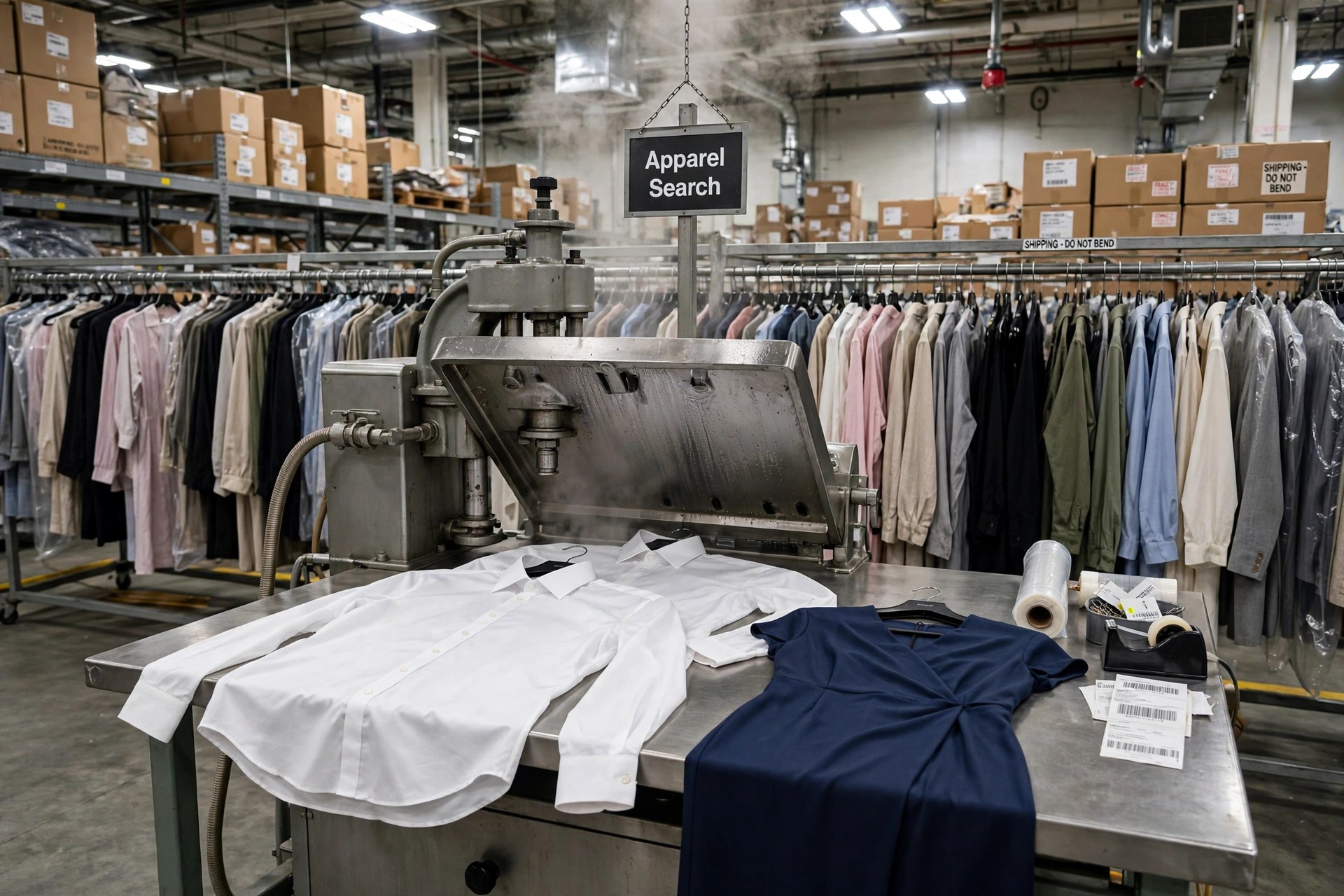
The Finishing Station: Steam, Press and Rail
The presser works at a steam press or with a hand steamer and iron, taking garments from the transit carton or the receiving rail in the order the warehouse flow demands. Each garment is checked as it is handled — a crease pattern that will not steam out, a shine mark, a fault the light reveals — then steamed or pressed according to its fabric: crisp pressure for cotton shirting, careful steam for dresses and blouses, shaped pressing for tailored jackets and trousers whose seams and creases are part of the garment's design. Finished pieces are hung immediately, in size and style order, so the work is not undone by stacking.
Volume defines the distribution setting. A factory presser finishes garments as they are made, style by style; a distribution presser may face a whole container's worth of one style, or a morning of mixed returns and re-ticketed stock, all against the outbound schedule. The station is organised accordingly — garments batched by fabric and setting so the press is not constantly adjusted, rails sequenced to feed the packing benches in the order orders are released, and finished rails protected in bags or covers before they travel to packing.
Fabric Knowledge: Heat, Steam and Care
Pressing is applied fabric knowledge, and in the warehouse it must be fast fabric knowledge. The presser reads the fibre-content label and judges the garment: which fabrics take a hot press and which glaze or scorch, which need steam alone, which synthetics melt at settings cotton shrugs off, and which embellished, printed or delicate pieces should be steamed from the inside or finished by hand. Delicate and high-value garments — silk, embellished occasionwear, pleated pieces whose pleats are heat-set — get individual judgement, not line treatment, because a pressing error destroys value as finally as a cutting error did at the factory.
That judgement is also protective. A presser who spots scorch risk, a weak seam that will not survive handling, or a fabric fault visible only under finishing light is performing quality control the packing bench will rely on. Distribution centres route what pressers reject to the problem-stock process rather than forward to stores, and experienced pressers are consulted on whether a creased shipment can be recovered to presentation standard or should be returned — a decision with real money on both sides.
Presentation Standards and the Retailer's Eye
The standard the presser works to is the retailer's floor. Stores receive garments expecting to hang them with minimal further work, and their vendor guides say so: seams pressed flat, creases where the design puts them and nowhere else, no press shine, no hanger marks, garments bagged without re-creasing. The presser is therefore working to an external specification as surely as the packer is — the difference is that this specification is judged by eye and hand, garment by garment, rather than by scan and label.
Returns and re-presented stock form a second stream of the work. Garments that come back from stores or from e-commerce customers — creased, re-folded, sometimes re-ticketed — pass through finishing again before they can rejoin stock, and the presser decides what can be restored to as-new presentation and what must be graded down. In an era of high return rates, that restoration work is a growing share of the distribution presser's day, and its quality decides how much returned clothing is resold at full price.
Skills, Training and Career Path
Employers train pressers on the station, but they select for a feel for cloth: patience with delicate garments, an eye for finish, steady hands and the stamina for standing work in the warmth a steam station generates. Prior experience is welcomed from any of the trade's pressing settings — garment factories, laundries and dry cleaners, tailoring and alteration workrooms, and retail back rooms — because the core craft transfers; what the distribution setting adds is volume, specification discipline and the shipping calendar. Accuracy of judgement matters more than raw speed, since a scorched garment is a total loss while a slow one is merely late.
Progression runs to senior presser for the delicate and high-value work, to finishing-team leadership where a centre employs several pressers, and sideways into the warehouse's other skilled stations — quality checking, packing supervision and the broader warehouse roles in this category. Two neighbouring pages should not be confused with this one: a general guide to pressers in clothing sits among the section's standalone descriptions, and the production category carries the factory press operator's page. This page is the warehouse filing — the same craft, practised at the distribution end of the trade.
Common Questions
What does a presser do in a clothing warehouse?
Restores garments that arrived creased from transit: steaming and pressing shirts, dresses, blouses and tailored clothing back to retailer presentation standard, hanging and protecting finished pieces, and sending them forward to packing ready for shipment to stores.
How is warehouse pressing different from factory pressing?
The craft is the same but the context differs: the factory presser finishes garments as they are made, style by style, while the distribution presser works at volume against shipping deadlines and retailer presentation standards, including restoring returned stock to as-new condition.
What skills does a distribution presser need?
Fast, accurate fabric judgement — heat and steam settings by fibre, care with delicate and embellished pieces — plus an eye for finish, steady hands and stamina for standing work. Employers train the station routine; experience from factories, laundries or tailoring transfers well.
More to Explore
Pressing and Finishing Resources
Transportation & Warehouse Directory Pages by Letter
References & Further Reading
More Job Description Categories
- Buying Job Descriptions
- Design Job Descriptions
- Marketing & PR Job Descriptions
- Miscellaneous Job Descriptions
- Planning & Allocation Job Descriptions
- Production & Sourcing Job Descriptions
- Sales & Selling Job Descriptions
- Transportation & Warehouse Job Descriptions (current)