Fashion Museums of the World · London
Fashion and Textile Museum
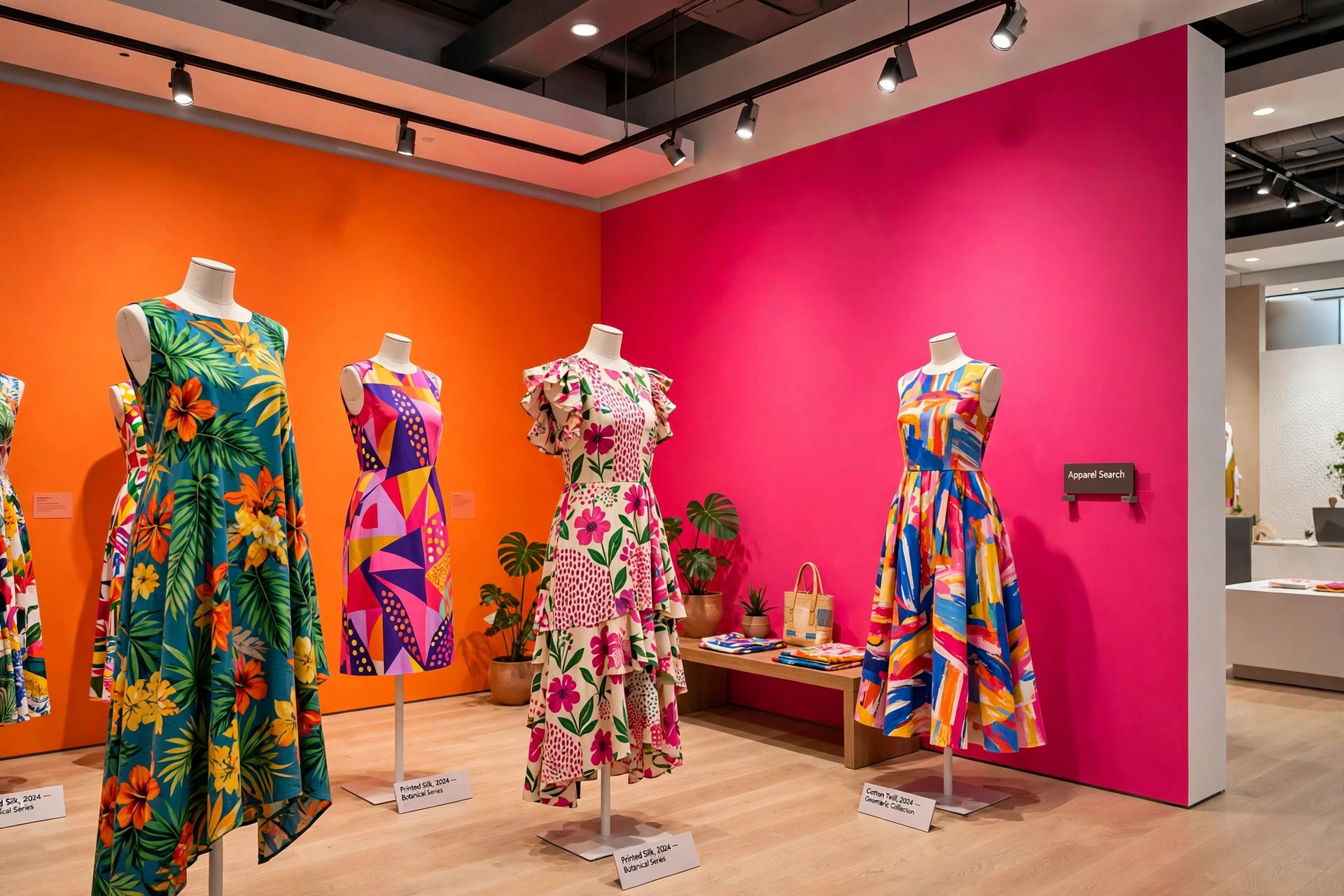
Most fashion museums are built around a collection. London's Fashion and Textile Museum is built around a programme: one exhibition at a time, in a single vivid gallery, in the most unmistakable museum building in Britain — hot pink and burnt orange, on Bermondsey Street. Founded in 2003 by the designer Dame Zandra Rhodes and run today by Newham College, it is the small, intense counterpoint to the V&A across the river: no permanent display, no centuries of storage, just a rolling argument about what fashion and textiles can do.
Museum Label
- Institution
- Fashion and Textile Museum — a museum dedicated to contemporary fashion, textile and jewellery design
- Home
- 83 Bermondsey Street, London
- Founded
- 2003, by Dame Zandra Rhodes
- Collection
- No permanent display: the museum works through rotating temporary exhibitions only, changing several times a year; a small collection gathered in its early years supports its learning programmes
- Operated by
- Newham College, which has run the museum since 2007
- Known for
- Single-subject exhibitions with a designer's eye — and its orange-and-pink Bermondsey Street building by the Mexican architect Ricardo Legorreta
The Institution
One Exhibition at a Time
The Fashion and Textile Museum describes itself as the only museum in the United Kingdom dedicated to showcasing contemporary fashion and textile design, and its method is the opposite of the encyclopedic museums elsewhere in this series. There is no permanent gallery to wander and no chronological march of mannequins. Instead, the whole museum is given over to a single temporary exhibition at a time — a designer, a movement, a craft, a moment — which runs for a season, comes down, and is replaced by something entirely different. Between exhibitions the museum closes while the gallery is stripped and rebuilt, so the building a visitor meets is always, deliberately, a work in progress.
That focus gives the programme its character. Because nothing has to be balanced against a permanent display, an exhibition here can be immersive in a way a mixed gallery cannot: one designer's world, wall to wall. The subjects lean toward the museum's founding passions — printed textiles, British design, the crafts behind the clothes — but the range has widened steadily since Newham College took over the running of the museum in 2007, and the college reports more than thirty major exhibitions staged since then, alongside the courses, talks and workshops that fill the building between the headlines.
Education is not an add-on here; it is the ownership model. Newham College is one of Europe's largest further education colleges, and the museum functions as its most public classroom — a place where fashion and textile students learn inside a working museum, where print and pattern workshops run in the founder's own building, and where a school group and a couture archivist can be looking at the same dress for entirely different, equally valid reasons. For Apparel Search readers, the museum also has a head start on this series: Apparel Search has profiled the museum since long before this guide — you can read our existing Fashion and Textile Museum profile alongside this guide — and it is a pleasure, this time, to give it the full tour it has earned.
What the museum deliberately is not matters too. It does not compete with the V&A's five centuries or the Costume Institute's blockbuster budgets, and it does not try. Its scale is its argument: that a single room, completely committed to one subject and dressed for it from floor to ceiling, can teach more about how fashion is made than a mile of mixed cases.
That argument has a practical side a visitor feels at once. A one-exhibition museum can rebuild its gallery for every subject — walls repainted, cases remade, the room itself recut like a garment — so a show about 1980s club fashion and a show about historic needlework do not merely hang in the same white box; each gets a space designed for it. It also means the museum lives or dies by its choices in a way big institutions never have to: there is nowhere for a weak exhibition to hide, and no permanent collection to carry a quiet season. Two decades in, the record — the queues for Kaffe Fassett's colour, the crowds for Biba — suggests the gamble suits both the museum and its audience.
History in Brief
A Designer's Museum: Zandra Rhodes
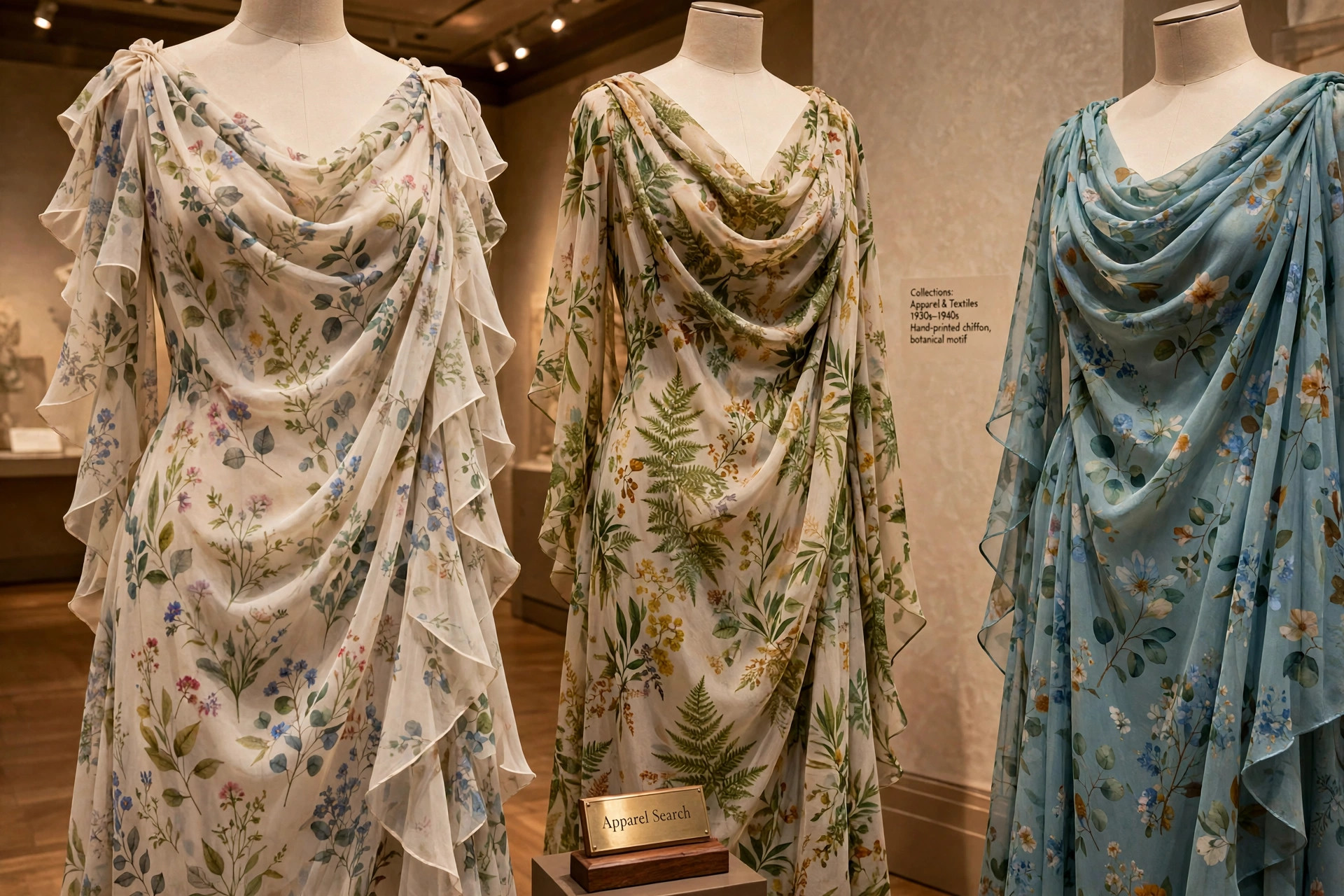
The museum exists because one designer decided British fashion needed a home of its own. Dame Zandra Rhodes was born in Chatham, Kent, in 1940, and fashion was the family trade: her mother had been a fitter at the House of Worth in Paris and later taught at Medway College of Art, where Rhodes herself first studied printed textile design before winning a scholarship to the Royal College of Art, graduating in 1964. Her exuberant hand-drawn prints were, by her own often-told account, considered too outrageous by the conservative British manufacturers of the day — so she became a fashion designer almost by necessity, letting her textiles dictate the clothes: flowing chiffon dresses built around the print, cut and draped rather than conventionally constructed.
With Sylvia Ayton she opened the Fulham Road Clothes Shop in 1968, and in 1969 she launched her own label. Through the 1970s her printed chiffons — and her own appearance, the vivid hair that settled into its famous pink, the theatrical make-up and art jewellery — made her one of the most recognisable figures in British fashion, dressing everyone from Diana, Princess of Wales, to Freddie Mercury. She was appointed CBE in 1997 and made a Dame in 2014, but the project she returned to was institutional: preserving the work of her generation of British designers before the clothes, the patterns and the stories dispersed.
Rhodes's method is worth pausing on, because the museum teaches it to this day. She designs as a textile artist first: the print is drawn by hand, its motifs — feathers, shells, squiggles, stylised landscapes gathered from her travels and sketchbooks — placed to flow across seams rather than sit inside them, and the garment is then draped and pinned around the cloth until print and silhouette agree. It is why her dresses move the way they do, and why a museum founded by her puts the textile, not the sketch or the photograph, at the centre of fashion's story.
The Fashion and Textile Museum opened in May 2003, in a converted warehouse on Bermondsey Street that Rhodes had transformed with the Mexican architect Ricardo Legorreta — a building that doubled as her studio and home as well as her museum. In 2007 the museum's operation passed to Newham College, securing its future as an educational institution while Rhodes remained its founder and presiding spirit. The arrangement has now carried the museum through more than two decades of exhibitions — including, fittingly, the definitive retrospective of its own founder, Zandra Rhodes: 50 Years of Fabulous, in 2019.
The Exhibitions
A Programme With a Point of View
Read the museum's exhibition history and a taste emerges: colour, print and pattern; British design stories told whole; and crafts — needlework, quilting, sequins — given the seriousness usually reserved for painting. The landmark shows:
| Exhibition | Year | What it showed |
|---|---|---|
| Kaffe Fassett: A Life in Colour | 2013 | The textile artist's fifty years of knitwear, patchwork, needlepoint and print — over a hundred works, and the museum at its most joyful. |
| Zandra Rhodes: 50 Years of Fabulous | 2019–20 | The founder's own half-century, staged in her own museum: the prints, the chiffons and the pink. |
| Out of the Blue: Fifty Years of Designers Guild | 2020–21 | Tricia Guild's interiors empire as a textile story — pattern at domestic scale, given museum scale. |
| 150 Years of the Royal School of Needlework: Crown to Catwalk | 2022 | Embroidery from coronation robes to catwalk collaborations — hand skill as the through-line of British luxury. |
| Kaffe Fassett: The Power of Pattern | 2022–23 | Fassett returned, a decade on, with pattern itself as the subject. |
| Andy Warhol: The Textiles | 2023 | The Pop artist's little-known 1950s textile designs — proof that the museum finds fashion where others are not looking. |
| The Biba Story, 1964–1975 | 2024 | Barbara Hulanicki's boutique revolution, the decade London dressed young — told through the clothes themselves. |
| Outlaws: Fashion Renegades of 80s London | 2024–25 | The clubland designers who made 1980s London a fashion capital from the dancefloor up. |
| Textiles: The Art of Mankind | 2025 | A world survey of textile art — the museum's founding subject at its broadest. |
Two threads run through that list, and both trace back to the founder. The first is print: from Rhodes's own textiles through Fassett's patterns, Warhol's forgotten fabric designs and Birtwell's florals, this is the museum that treats a printed textile as a major art form rather than a dress's decoration. The second is London itself — Biba's Kensington, the Outlaws' clubland, the boutiques of the King's Road generation — told not as nostalgia but as design history, with the actual clothes standing as the primary documents. Exhibitions here are documented properly, too: catalogues and accompanying books, including a full volume for the current Clark and Birtwell show, give each season's argument a life after the gallery is stripped.
The current exhibition shows the formula at its best. Ossie Clark + Celia Birtwell, running from 2 October 2026 to 11 April 2027, reunites the partnership that gave late-1960s London its silhouette: Clark, the Royal College of Art graduate whose bias cutting made chiffon move like water, and Birtwell, whose romantic, drifting prints — drawn from botany, art history and the V&A's own collections — were designed for his clothes from their first collections for Alice Pollock's Quorum boutique in 1966. The exhibition brings together more than 120 garments from their years together and their later separate careers, curated by Teresa Collenette with the museum's head of exhibitions, Dennis Nothdruft, who has led the exhibitions team since the museum opened. In the museum's small gallery, the companion display Sequinology spends the same season on a single decorative detail — exactly the kind of sideways subject this museum exists to take seriously.
The Home
The Pink-and-Orange Landmark on Bermondsey Street
You will not walk past this museum by accident. The building at 83 Bermondsey Street announces itself in flat planes of hot pink, burnt orange, yellow and bright blue — the palette of its architect, Ricardo Legorreta, the great Mexican modernist whose work is built on colour, light and massive simple walls. Rhodes commissioned him to convert a 1950s warehouse, and the result was Legorreta's first and only building in Europe: a museum that is itself the first exhibit, visible the length of the street.
Inside, the building was planned as a complete creative ecosystem rather than a gallery with offices attached. Alongside the exhibition space it holds a textile studio and printing workshop — the working rooms of Rhodes's own practice — residential flats above, and Rhodes's studio within the building she founded the museum in. That layering is the point: on Bermondsey Street, the making, the studying and the exhibiting of fashion have always happened under one improbably coloured roof, a few minutes' walk from London Bridge in a street of former leather warehouses that has become one of London's most design-conscious quarters.
Other museums house fashion. This one is dressed by it — the building wears its founder's colours before a single garment comes into view.
Visiting
Visiting as a Fashion Pilgrim
Visiting this museum well means visiting it on its own terms. There is one exhibition, it is the whole visit, and it rewards the time a single subject deserves: plan to go slowly, read the making as well as the silhouettes, and check whether a talk, tour or workshop is running alongside the show, because the learning programme is half of what the museum is for. The current exhibition, Ossie Clark + Celia Birtwell, runs to 11 April 2027 — but treat every date in this guide the way the museum treats its gallery: as the present arrangement, not a permanent one.
Two practical warnings, both consequences of the museum's virtues. First, the museum closes between exhibitions while the gallery is rebuilt, so a visit planned without checking the museum's own site — fashiontextilemuseum.org, listed on the museum's materials as ftmlondon.org — can land in a dark week. Second, there is no permanent display to fall back on: if the current subject is not yours, the right move is to wait for the next one rather than expect a greatest-hits gallery that does not exist. What never changes is the building itself, worth the walk down Bermondsey Street on any day of the year — and our long-standing Apparel Search profile of the museum keeps its directory details alongside this guide.
Exhibitions change and galleries are rehung, so the details here describe the Fashion and Textile Museum as documented for this guide — the museum's own site always carries the latest version.
Common Questions
Common Questions
Who founded the Fashion and Textile Museum?
Dame Zandra Rhodes, the British fashion and textile designer famous for her hand-drawn prints, flowing chiffon dresses and pink hair. She founded the museum in 2003 to preserve and showcase the work of her generation of British designers, commissioning the Mexican architect Ricardo Legorreta to convert a Bermondsey warehouse into its unmistakable orange-and-pink home.
Does the Fashion and Textile Museum have a permanent collection on display?
No. The museum has no permanent display: its gallery is given over entirely to rotating temporary exhibitions, usually one main exhibition at a time, and it closes between shows while the next is installed. A small collection of twentieth-century fashion and textiles gathered in the museum's early years supports its learning programmes rather than a permanent gallery.
What is on at the Fashion and Textile Museum now?
The main exhibition documented for this guide is Ossie Clark + Celia Birtwell, running from 2 October 2026 to 11 April 2027: more than 120 garments exploring the partnership between Clark's bias cutting and Birtwell's prints, which defined a strand of London fashion in the late 1960s and early 1970s. Exhibitions change several times a year, so confirm the current show on the museum's own site before visiting.
Who runs the Fashion and Textile Museum today?
Newham College, one of Europe's largest further education colleges, has operated the museum since 2007. That ownership shapes the museum's character: alongside its exhibitions it runs an extensive programme of courses, talks and hands-on workshops in fashion and textiles, and it has staged more than thirty major exhibitions under the college's stewardship.
What should a fashion lover not miss at the Fashion and Textile Museum?
The current exhibition, taken slowly — with only one show in the building, this museum rewards depth over breadth — and the building itself: Ricardo Legorreta's hot-pink and orange conversion at 83 Bermondsey Street, his only building in Europe. Check the museum's site before you go, because it closes between exhibitions and there is no permanent display to fall back on.
In This Series
Every guide in Fashion Museums of the World, from the section hub.
Museums & Exhibitions on Apparel Search
The site's existing museum coverage, including the term guide this series grows from.
Related on Apparel Search
The industry around the museum, its founder on the runway, and London's own fashion week.
Search Apparel Search