Fashion Museums of the World · Florence
Palazzo Gucci
On Piazza della Signoria, in the palace where Florence's merchants once settled their disputes, Gucci keeps its cultural home: Palazzo Gucci. The house that Guccio Gucci founded in a small Florentine luggage shop in 1921 now tells its own story here, in an exhibition called Gucci Storia — nine rooms across two floors that treat a century of bags, clothes and craft as a museum of museums. The building has carried other names before this one; Palazzo Gucci is the name it answers to now.
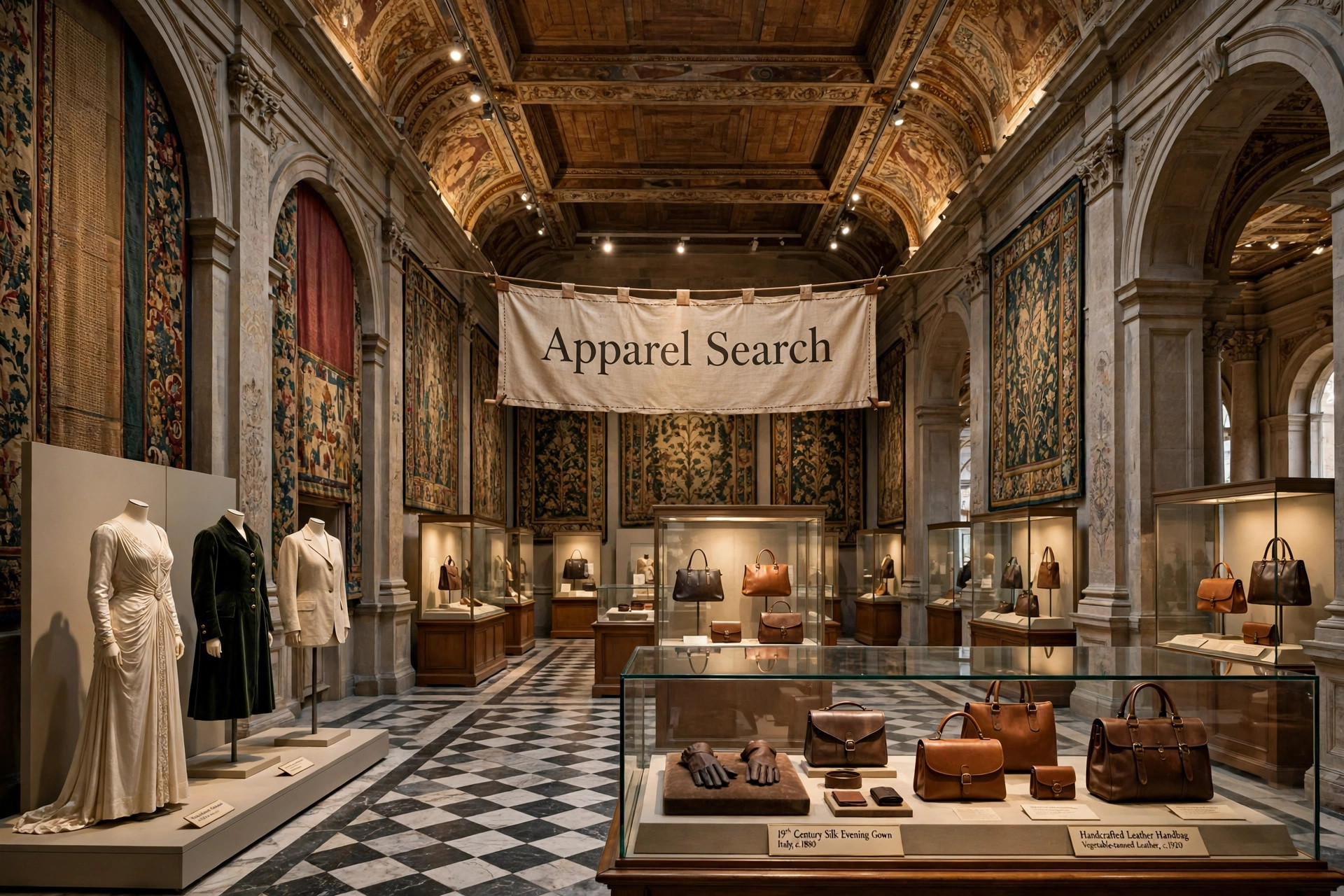
Museum Label
- Institution
- Palazzo Gucci — Gucci's cultural destination in Florence: exhibition, boutique, bookstore, Gucci Osteria and Gucci Giardino
- Home
- Palazzo della Mercanzia, Piazza della Signoria 10, Florence
- Founded
- The house founded in Florence in 1921; this site first opened as a Gucci museum in 2011 and is now Palazzo Gucci
- Collection
- The Gucci archive — garments, leather goods, objects and imagery from 1921 to the present — drawn on for the Gucci Storia exhibition; the working archive itself is kept at Palazzo Settimanni in Florence
- Artistic Director
- Demna, whose direction shapes the current Gucci Storia exhibition
- Known for
- Gucci Storia, its nine-room exhibition retelling 105 years of the house as a sequence of different kinds of museum
The Institution
Gucci's Cultural Home, in the Square That Judged Trade
Palazzo Gucci is not a shop with a gallery attached, and it is not quite a conventional museum either. Gucci presents it as the house's cultural destination: an exhibition across the first and second floors of a historic palace, with a boutique and bookstore on the ground floor, the Gucci Osteria da Massimo Bottura restaurant, and the Gucci Giardino café completing the address. The exhibition is the reason the building matters to fashion history; the rest is the house practising, in one place, the hospitality and retail that its founder learned by watching travellers a century ago.
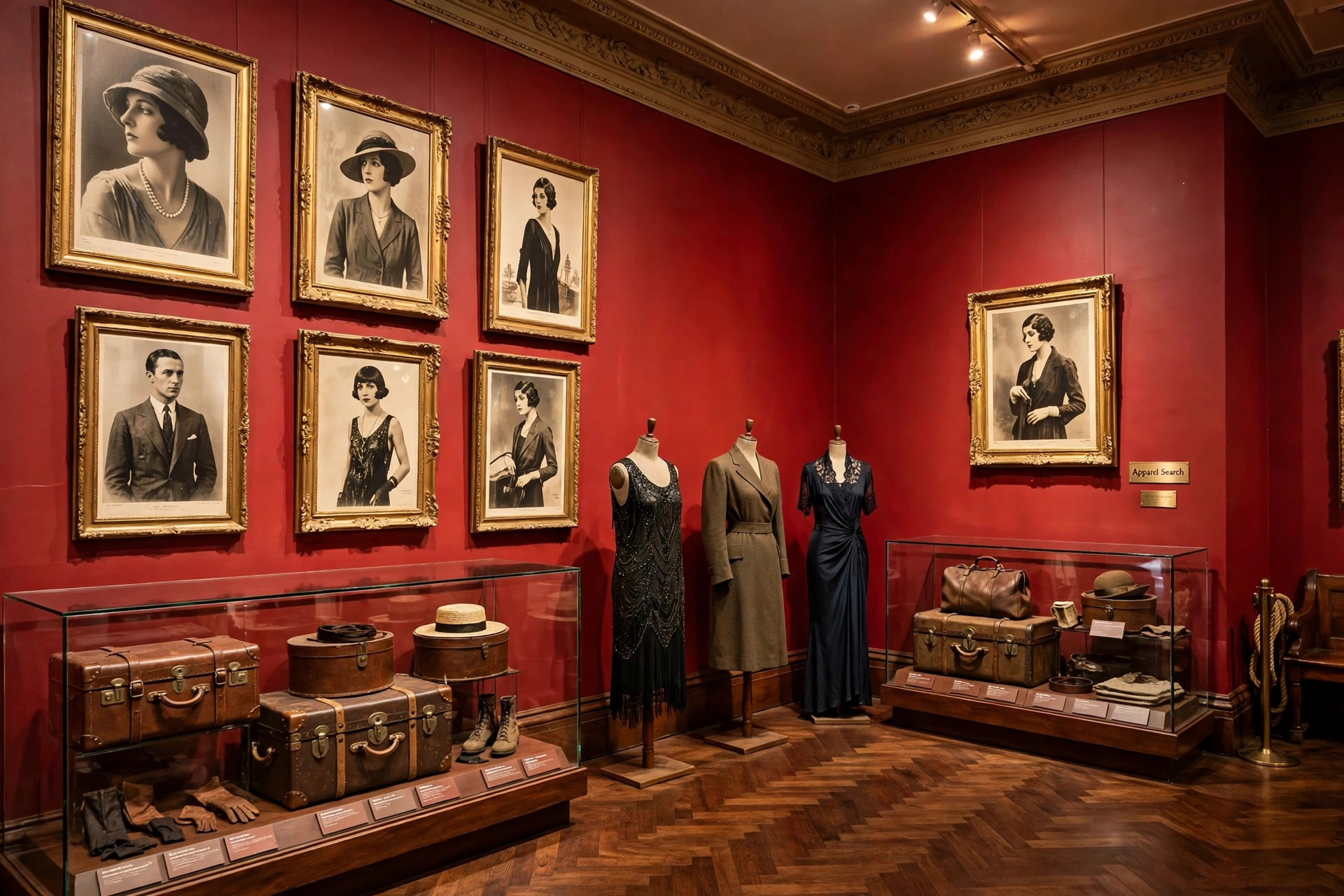
The current exhibition is Gucci Storia, which opened to the public on 27 April 2026 under the direction of artistic director Demna. Its premise is stated by the house itself: at its core lies the idea of a museum of museums — a sequence of spaces in which distinctive worlds converge. A portrait gallery conjures lineage and identity; a gallery of tapestries highlights a Florentine craft with deep ties to the house; a cabinet of curiosities displays artefacts from its archives; and the savoir-faire and innovation of the house unfold across further rooms, alongside cinematic spaces and interactive oracular installations. Each room is a different kind of museum, and the visitor walks through the typologies as much as through the history.
That structure is the point. A single-designer house with 105 years of production behind it — luggage, equestrian goods, ready-to-wear, shoes, jewellery, lifestyle objects from tennis racquets to dog beds — cannot be told as one chronological corridor without flattening it. Gucci Storia instead sorts the story by kind of evidence: the tapestry for deep time, the portrait for identity, the archive drawer for the object, the workshop for the making, the cinema for the image. It is the most considered answer any fashion house has yet given to the question this whole series asks: how do you exhibit a brand without turning the museum into an advertisement? Whether it fully succeeds is for visitors to judge; that it asks the question seriously is what earns Palazzo Gucci its place here. For the house itself, see our Gucci brand profile.
A note on names, because Florence visitors will meet all three. This site opened in 2011 as the Museo Gucci, was relaunched in 2018 as the Gucci Garden, and is today Palazzo Gucci. The older names survive in guidebooks, reviews and older tickets — they all mean this building — but the current institution, and the current exhibition, are Palazzo Gucci and Gucci Storia, and those are the names used throughout this guide except where history is being told.
History in Brief
A Porter, a Luggage Shop, and a Century of Gucci
The story begins, unusually for a fashion house, in a hotel corridor. Guccio Gucci was born in Florence on 26 March 1881. As a young man he moved to London and in 1897 began working as a porter at The Savoy hotel, where — Gucci's own history recounts — his observations of the travelling elite and their luggage formed his ambition: that one day luggage would bear his name. He returned to Florence in 1902, and in 1921 he opened the first Gucci boutique on Via della Vigna Nuova: an artisanal luggage atelier combining Tuscan materials and craftsmanship with the English aesthetic he had absorbed at the Savoy.
The house grew along the lines travel itself suggested. Riding accessories for the Tuscan nobility brought the equestrian codes — the horsebit above all — that still run through Gucci design. The late 1930s added canvas when leather was scarce, and with it the Diamante fabric, its diamond motif a precursor of the later monogram canvas. In the 1950s and 1960s the clientele became international — jet setters, Hollywood stars, dignitaries — and the signatures multiplied: the bag that would become the Jackie 1961, the Flora motif, the horsebit loafer. Ready-to-wear followed in the mid-1960s, a clothing store on New York's Fifth Avenue in 1972, and a widening lifestyle range. The creative-director era then rewrote the house repeatedly: Tom Ford from 1994, Frida Giannini from 2006, Alessandro Michele from 2015, Sabato De Sarno from 2023, and Demna from 2025 — each era distinct enough that Gucci Storia can hang them as separate portraits in one gallery.
The museum chapter of that history is recent, and it has moved fast. In 2011, for the house's ninetieth anniversary, Gucci opened the Museo Gucci in the Palazzo della Mercanzia — a permanent exhibition of the house's classic pieces, arranged thematically, with a contemporary art space, café, bookshop and boutique. In 2018, under Alessandro Michele, the same rooms were reimagined as the Gucci Garden: a more playful, immersive concept with its own exhibition galleries, the Gucci Osteria restaurant and a garden-themed retail space. Both were serious attempts to give the archive a public life, and both are now history: the current chapter, opened in April 2026, is Palazzo Gucci, and its exhibition is Gucci Storia.
Behind all three versions stands the same infrastructure: the Gucci archive, kept at Palazzo Settimanni in Florence — a palace the house acquired in 1953 as a production base — where garments, objects, samples and advertising are preserved as a working resource for designers as well as curators. The public exhibition in Piazza della Signoria is the visible tip of that archival iceberg, which is why its rooms can be rehung so completely when a new artistic director arrives: the collection stays; the reading of it changes.
The Exhibition
Gucci Storia: Nine Rooms, Nine Kinds of Museum
Gucci Storia unfolds across the first and second floors of the palace, in nine rooms. The route the house published at the April 2026 opening runs as follows — read it as a table of contents for the visit, knowing that objects and installations within the rooms rotate:
| Room | Floor | What it does |
|---|---|---|
| 1. The Thread of Time | First | Monumental tapestries retell the house's 105 years in four scenes, from Guccio Gucci's Savoy years through the successive artistic directors to Demna — Renaissance tapestry craft carrying a hyper-modern narrative. |
| 2. La Galleria | First | A traditional portrait gallery: Catherine Opie's portraits for La Famiglia, Demna's debut collection, hung as character studies of the house's extended family. |
| 3. Archivio | First | The cabinet of curiosities: drawers and cases of archive objects, from heritage leather goods to the house's most idiosyncratic lifestyle pieces. |
| 4. The Cinema | First | A screening room in monochrome and velvet, rotating collection films and videos — Gucci's century of image-making watched the way it was meant to be. |
| 5. Generation Gucci | First | Large-scale campaign imagery as an immersive environment — the present-day house at architectural scale. |
| 6. La Manifattura | First | Craftsmanship and production: icons such as the Bamboo 1947, the Jackie 1961 and the Horsebit loafer set against prototypes, tools and the technology of Gucci's ArtLab. |
| 7. La Materia | Second | Material itself as the subject — the substances, from leather to silk, out of which the house's signatures are made. |
| 8. The Room of Truth | Second | Myth, family and record examined — the house interrogating its own legends in a recreated period office setting. |
| 9. L'Oracolo | Second | The Oracle: an interactive installation closing the route, fielding the visitor's curiosity about the house through a digital interface. |
Two rooms carry the argument. The Thread of Time comes first because it sets the terms: tapestry is Florence's own historic textile art, and using it to carry images generated with contemporary technology states the house's whole thesis — heritage and invention in the same object — before a single bag appears. And La Manifattura matters because it refuses the usual separation between the golden past of handcraft and the automated present: archival tools and prototypes share the room with the robotic testing of Gucci's ArtLab in Scandicci, presenting making as one continuous, evolving practice. Between those poles, the portrait gallery, the archive drawers and the cinema do the human work — faces, objects, films.
A museum of museums: tapestry hall, portrait gallery, cabinet of curiosities, workshop and cinema, each asked in turn to tell one house's story.
The Home
Palazzo della Mercanzia: The Merchants' Palace
The building is the argument before the exhibition begins. Palazzo Gucci occupies the Palazzo della Mercanzia on the east side of Piazza della Signoria, at number 10 — a palace dating to the fourteenth century (the present building is dated to 1337 in the house's current accounts; the merchants' institution on the site is older still). The Mercanzia was Florence's merchants' court: the tribunal that regulated the city's guilds and settled the trade disputes of the most commercial city in Renaissance Europe. To place a fashion house's museum here is to claim, architecturally, that Gucci belongs to that lineage — Florentine making, judged and traded in this square for seven centuries.
The square outside does half the curating. Piazza della Signoria is Florence's civic stage: the Palazzo Vecchio, seat of the republic and then of the Medici dukes, rises at its head; the Loggia dei Lanzi shelters its sculpture; the Uffizi begins a few steps away. A visitor arrives at Palazzo Gucci having already walked through the densest concentration of Renaissance public art in the world, and the exhibition's opening move — Renaissance-style tapestries — is pitched exactly at that pitch of expectation. Few fashion museums anywhere are handed a context this strong; the Ferragamo museum across the river, in the medieval vaults of Palazzo Spini Feroni, is the only other one in this series that matches it, and the pairing is no coincidence: Florence built both houses, and both houses built their museums into the city's medieval fabric rather than into new construction.
Inside, the palace works as a sequence of distinct chambers rather than a single white hall, which is what makes the museum-of-museums format physically possible: tapestry room, portrait gallery, archive, cinema and workshop each take a room of a size and character that suits them, over two floors, with the boutique, bookstore, Osteria and Giardino at ground level and around the square. The effect is of visiting several small museums in one old building — which is, of course, precisely what Gucci says it built.
Visiting
Visiting as a Fashion Pilgrim
Palazzo Gucci is at Piazza della Signoria 10, in the centre of Florence — you will likely cross the square for the Palazzo Vecchio or the Uffizi in any case, and the exhibition rewards being taken as part of that same visit rather than as a separate expedition. Allow the rooms their sequence: Gucci Storia is designed as a route, from the tapestries of the Thread of Time to the Oracle at the end, and skipping to the famous bags in La Manifattura misses the argument the earlier rooms are making. The boutique, bookstore, Gucci Osteria and Gucci Giardino are separate pleasures with their own arrangements; the exhibition is the part of the address this guide exists for.
What a fashion visitor should not miss: the Thread of Time tapestries, for the sheer audacity of telling a brand history in Florence's most historic textile medium; the Archivio drawers, where the house's odd, wonderful lifestyle objects live; and La Manifattura's pairing of the Bamboo 1947, Jackie 1961 and Horsebit icons with the machinery that tests their descendants. If older guides or tickets in your hand mention the Museo Gucci or the Gucci Garden, they mean this building in its earlier lives — what you will see inside now is Gucci Storia. Check Gucci's own website for the current exhibition, opening arrangements and tickets before you go; this guide prints no hours or prices, because both change.
Make it a Florentine fashion day: Palazzo Gucci in the morning, the Museo Salvatore Ferragamo — our companion guide in this series — in the medieval vaults of Palazzo Spini Feroni after lunch, and the Italy clothing industry guide in the links below for the industry both houses grew from. Florence invented Renaissance art and modern luxury retail within the same few streets; these two museums, ten minutes apart, are where it keeps the receipts.
Exhibitions change and galleries are rehung, so the details here describe Palazzo Gucci as documented for this guide — the museum's own site always carries the latest version.
Common Questions
Common Questions
Is Palazzo Gucci the same place as the Gucci Garden and the Museo Gucci?
Yes — the same building, in three chapters. Gucci's Florentine cultural home in the Palazzo della Mercanzia on Piazza della Signoria opened as the Museo Gucci in 2011, was relaunched as the Gucci Garden in 2018, and is now Palazzo Gucci. The older names appear in older guides and tickets, but the current institution is Palazzo Gucci, and its current exhibition is Gucci Storia.
What is Gucci Storia?
Gucci Storia is the exhibition at Palazzo Gucci, opened to the public on 27 April 2026 under artistic director Demna. Across nine rooms on two floors it retells the house's 105-year history as a museum of museums: a tapestry gallery, a portrait gallery, an archive cabinet of curiosities, rooms devoted to craftsmanship and material, cinematic spaces and an interactive oracle installation.
Where is Palazzo Gucci?
At Piazza della Signoria 10, Florence, inside the historic Palazzo della Mercanzia — the fourteenth-century palace of the city's merchants' court, on the square that also holds the Palazzo Vecchio and the Loggia dei Lanzi, steps from the Uffizi.
Who founded Gucci, and when?
Guccio Gucci founded the house in Florence in 1921, opening a luggage atelier on Via della Vigna Nuova. As a young man he had worked as a porter at The Savoy hotel in London from 1897, and Gucci's own history credits his observation of the travellers' luggage there with inspiring the house. Our Gucci brand profile tells the fuller story.
What should a fashion lover not miss at Palazzo Gucci?
The Thread of Time tapestries that open Gucci Storia, the Archivio room's cabinet of archive objects, and La Manifattura, where icons such as the Bamboo 1947, the Jackie 1961 and the Horsebit loafer meet the technology of Gucci's ArtLab. Check Gucci's own website for what is on, opening hours and tickets before you go.
In This Series
Every guide in Fashion Museums of the World, from the section hub.
Museums & Exhibitions on Apparel Search
The site's existing museum coverage, including the term guide this series grows from.
Related on Apparel Search
The house's profile, the industry around it, and Florence's other great fashion house.
Search Apparel Search