Retail Technology Solutions for Clothing Stores
The technology stack of a modern clothing retailer: systems, mobile devices, security, intelligence and loss prevention
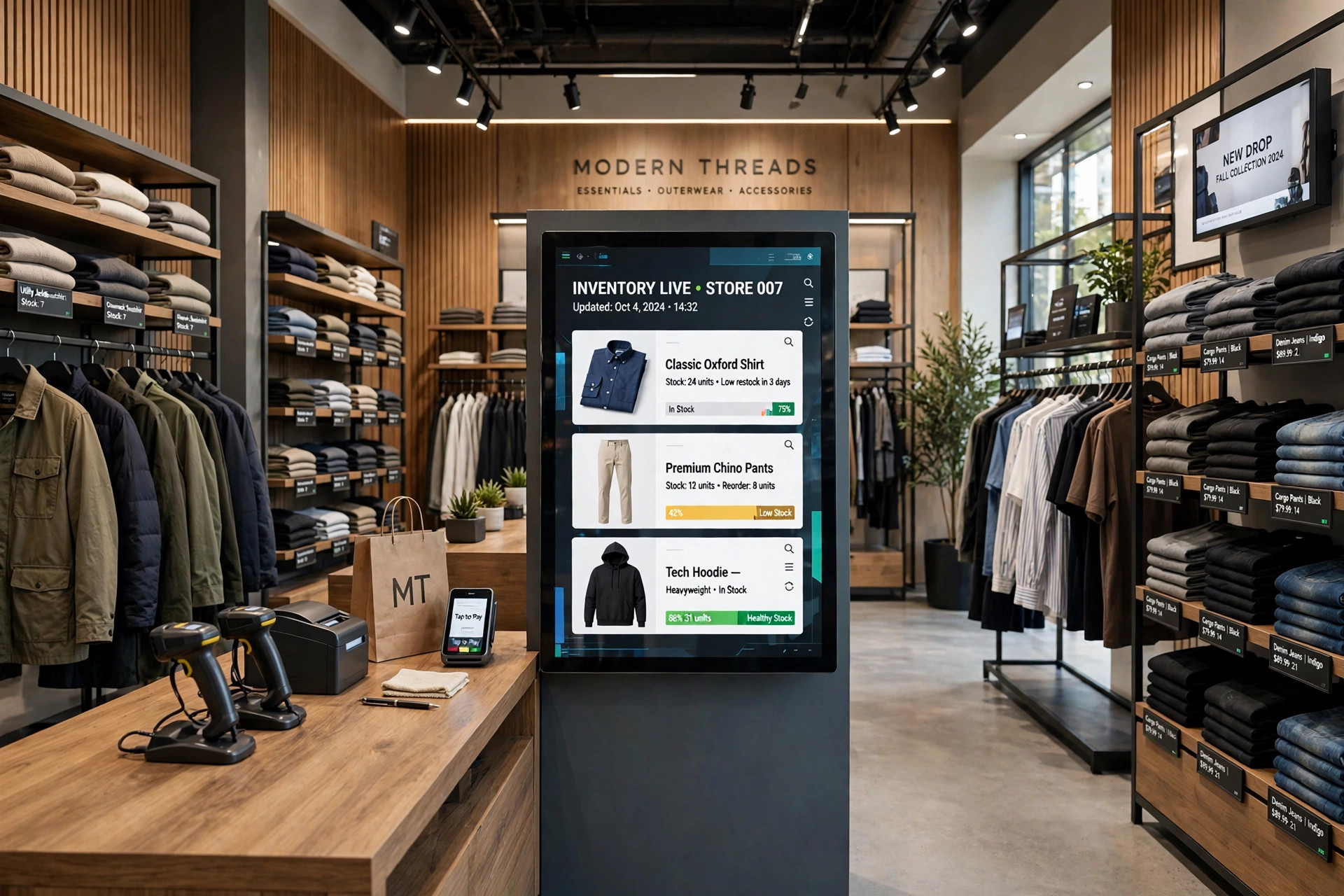
Running a clothing retail business takes more technology than the register. Behind the selling floor sit retail management systems that run merchandising and replenishment, handheld computers that receive stock and count it, networks that must move card data safely, services that connect the retailer electronically to its suppliers, analytics that explain what sold, and loss prevention systems that protect the margin. This page gathers those retail technology solutions in one directory.
The suppliers here span that whole stack, from the enterprise software at the center to the devices and security layers at the edge — the practical infrastructure that decides whether a fashion retailer's systems help it sell or slow it down.
Related Retail Guides
The Connected Store
The center of the stack is the retail management system: one platform running stores and head office — sales, inventory, merchandising, replenishment and financial control — so a chain's decisions are made on one set of numbers. Around it, mobility has moved computing onto the floor: rugged handheld devices that scan barcodes and communicate wirelessly handle receiving, price checks, stock counts and queue-busting at the point of need, purpose-built for mission-critical work in retail and the supply chain behind it.
Connection cuts both ways, which is why security is its own category here. Mobilizing commerce and the enterprise workforce means traffic crossing the store's wireless network and managers reaching systems from outside the four walls; a retail mobile VPN answers by ensuring that nothing but authenticated, encrypted traffic enters or leaves the protected area behind the firewall — the path that keeps cardholder data compliant while legacy wireless equipment migrates to modern platforms.
Intelligence and Loss Prevention
Retail data is only valuable once it is readable. Retail business intelligence takes the data warehouse discipline — historically risky, expensive and slow to implement — and rebuilds it specifically for specialty retail: sales, inventory and customer data structured for the questions retailers actually ask, implemented quickly and at low risk. The output is the analysis behind open-to-buy decisions, store comparisons and assortment changes.
At the other end of the P&L, loss prevention protects what selling earns. The industry-leading portfolios combine electronic article surveillance, detection and analytics sold through authorized channels, backed in Sensormatic's case by more than 1,500 patents — vital technologies for reducing shrink and improving store operations. Between intelligence and prevention sits the connective tissue: e-commerce and EDI services that link small and mid-sized distributors electronically into the retail supply chain, the role eZCom has filled since July 2000.
Retail Technology Suppliers in This Directory
Multidev Technologies' ChainDrive is the retail management platform here — a fully integrated system with which the company has helped retailers and wholesalers capitalize on efficiency and productivity since 1997, including a store budgeting tool among its modules. Janam Technologies supplies the rugged, handheld computing devices: purpose-built mobile computers that scan barcodes and communicate wirelessly for retail, healthcare, hospitality, manufacturing and logistics. QuantiSense, formed in 2001 by experienced data warehousing professionals, provides business intelligence and data warehousing applications exclusively for specialty retailers.
eZCom Software Inc., founded in July 2000, provides e-commerce and EDI solutions for small and mid-sized distributors in the retail supply chain. Sensormatic Electronics Corp., a Tyco company, supplies the loss prevention portfolio described above. Columbitech's Mobile VPN Retail Edition is also recorded here; its website no longer responds, so the entry is kept unlinked. Vendor pages are in the references below.
More Software Guides
- Apparel Industry Software
- Online Clothing Stores
- Apparel Retailers
- Clothing Store News
- Shopping Articles
- Fashion Technology Articles
- Auction Software
- AI Tools for Fashion Retail
- Retail Store Security
- Security Tags
- ERP Enterprise Resource Planning
- PDM Product Development Management
- CRM Software
- Supply Chain Management Software
- Import & Export Software
- Inventory Control Software
- Warehouse Software
- Pattern Making Software
- Embroidery Software
- Costing Software
- Bar Code Software
- Computer Assisted Design (CAD)
- Trade Show Management Software
- Production Management Software
- Retail Software
- Quality Assurance Software
- fashion retailers
Common Questions
What counts as retail technology beyond the POS?
The full store stack: retail management systems, mobile handheld computers for receiving and inventory, secure networks and VPNs for cardholder data, EDI and e-commerce services connecting suppliers, business intelligence for sales analysis, and loss prevention systems against shrink.
Why do clothing stores use rugged handheld computers?
Store work is physical: receiving cartons, counting stock, checking prices on the floor. Purpose-built handhelds from suppliers such as Janam combine barcode scanning and wireless communication in devices that survive drops and daily abuse that consumer tablets often do not.
What does retail business intelligence do that reports cannot?
It structures the retailer's sales, inventory and customer data in a data warehouse built for retail questions, so analysis — store comparisons, sell-through, assortment performance — is fast and consistent instead of depending on hand-built spreadsheets for every question.
References & Further Reading
- Multidev Technolgies Inc.
- eZCom Software Inc.
- Janam Technologies LLC
- QuantiSense
- Sensormatic Electronics Corp.
- Columbitech Mobile VPN Retail Edition — mobile VPN protecting cardholder data for retailers; its website no longer responds, so the entry is kept as a record without a link.