Apparel Search Table of Contents, Page 3
Fashionable short cuts, and how a table of contents helps you find your way
Page 3 of the table of contents works differently from its neighbors. Pages 1 and 2 describe the core directory category by category; this page is the short-cut shelf - a single card of quick links, labeled fashionable short cuts on the guide for years, that jump straight to thirty-one frequently wanted destinations, from apparel industry stocks and auctions to fabrics, fibers, machinery and printing. The card below is the substance of this page: scan it and go.
Because this page is the series' most literal table of contents, it also carries the explanation of what a table of contents is and what one does on a fashion website - the definition, the jobs it performs and the honest limits of the form. Pages 1, 2, 4 and 5 are listed in the series block at the bottom, as on every contents page.
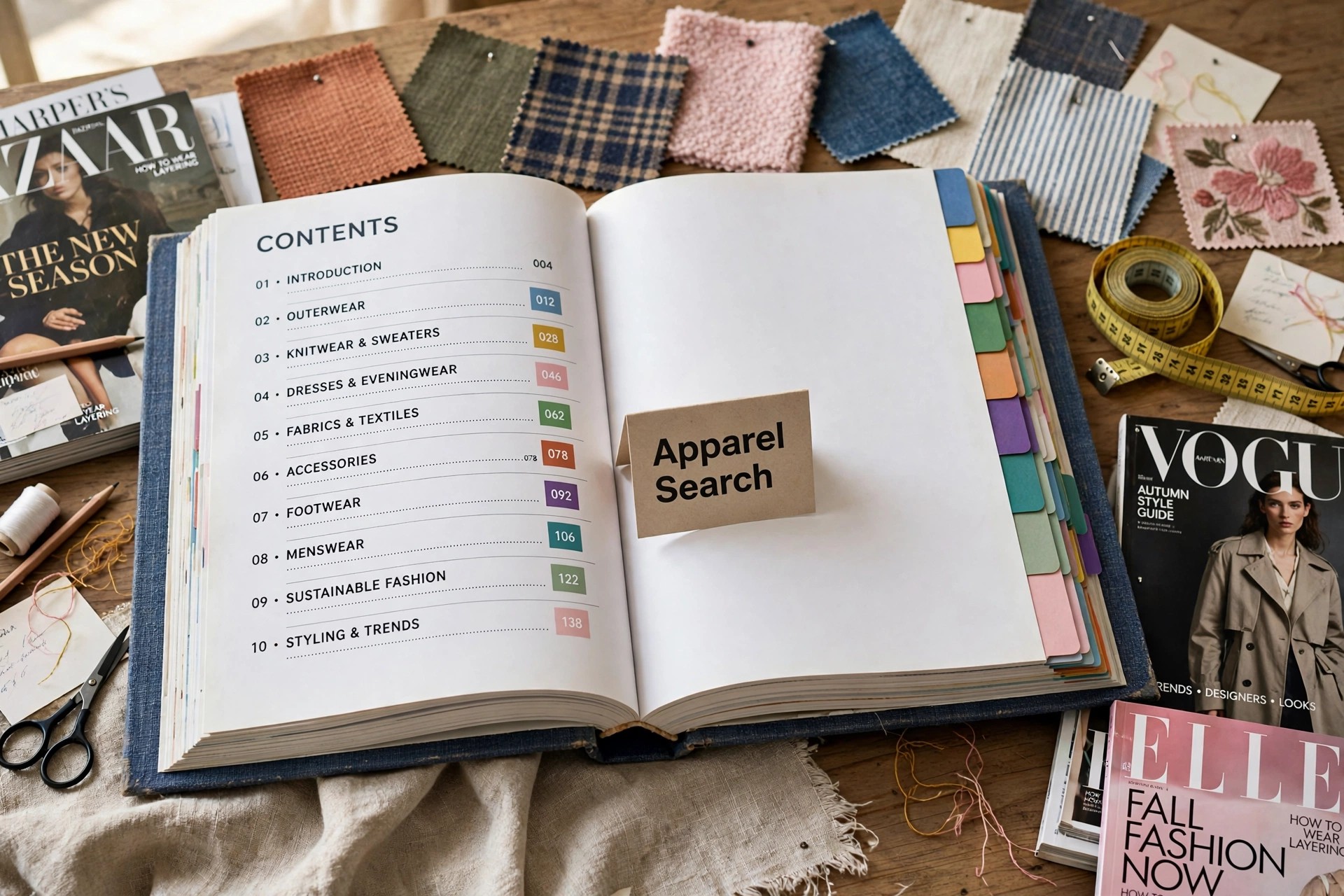
Fashionable Short Cuts
- Apparel Industry Stocks
- Apparel Auctions
- Apparel Shopping
- Buyers Names (iLeads)
- Calculators / Conversions
- Calendar of Events
- Classifieds
- CMT Factory
- Components / Trim
- Countries Database
- Directories / Guides
- Dry Cleaning
- EDI / XML
- Embroidery Industry
- fibers Directory
- fabric Directory
- Fashion Definitions
- Fashion Trend Forecasting
- Hangers
- Hangtags
- Haute Couture Fashion
- Human Rights
- Labels (Garment)
- Machinery Directory
- Message Boards
- NAFTA
- News - Fashion Industry
- Nonwoven Textiles
- Price Tickets
- Printing Industry
- Production Services
What a Table of Contents Is
A table of contents is a list or index typically found at the beginning of a document or publication, such as a book, report or website. It outlines the structure and organization of the content within that document or website, providing readers with a hierarchical list of headings, sections or chapters and their corresponding page numbers or hyperlinks. Its primary purpose is to help users navigate and locate specific information within a document or website quickly - which is exactly the job the card above does for this guide.
On a fashion industry website the form adapts to the material. As a navigation aid, a contents list helps visitors find and access different sections and categories of content - clothing collections, accessories, trends and fashion tips among them. On a shopping site it can categorize products by type, gender, season or style, streamlining the browsing experience, and on a site with articles it can list them by topic or date so readers locate what interests them fast.
How a Contents List Serves Fashion Readers
The same structure organizes learning and looking. For tutorials and guides, a contents list arranges resources by skill level, project type or specific topic - sewing techniques, makeup tutorials and wardrobe organization are the classic examples. For events and lookbooks, it categorizes by season, location or type of event, making past and upcoming collections and fashion shows easy to explore.
The short cuts above follow that logic in miniature. The trade reader can jump to the CMT Factory, Components and Trim, the Machinery Directory, the Embroidery Industry and the Printing Industry. The materials reader gets the fabric and fibers directories and Nonwoven Textiles. The business reader gets stocks, auctions, buyers' names, calculators and the Countries Database - and everyone gets the small essentials, from Hangers and Hangtags to Labels and Price Tickets, that a garment picks up on its way to a store.
Why It Helps - and Where Its Limits Are
Used appropriately, a contents list is highly beneficial. A well-structured one enhances the user experience by simplifying navigation and reducing the time visitors spend searching. Contents lists are particularly helpful for users with disabilities and for visitors using screen readers, because they provide a clear structure and path to content. Making information easier to find increases engagement, keeps visitors on a site longer and can support conversions on shopping pages, and structured contents also help search engines crawl and index a site more effectively.
The caution matters as much as the benefit: a contents list must be designed to be clear, concise and relevant, because a cluttered or overly complex one has the opposite effect, confusing visitors and hindering their experience. That is why this guide's contents lives across five focused pages rather than in one enormous list - and why this page stops at short cuts. The two references below, the Fashion Industry site and the Fashion Blog, are the outside reading this page has long pointed to; everything else here stays inside the guide.
Common Questions
What are the fashionable short cuts?
They are this page's card of thirty-one quick links to frequently wanted destinations across the directory - among them Apparel Industry Stocks, Apparel Auctions, Apparel Shopping, the fabric and fibers directories, the Machinery Directory, Fashion Definitions, Fashion Trend Forecasting and the Countries Database.
How is page 3 different from pages 1 and 2 of the table of contents?
Pages 1 and 2 present the core directory category by category, with a description of each entry. Page 3 skips the descriptions and offers direct jumps instead, and it carries the explanation of what a table of contents is, how one serves a fashion website, and why it has to stay clear and uncluttered to help.
Can a table of contents really help visitors who use screen readers?
Yes. A contents list gives a page a clear, hierarchical structure and an explicit path to content, which is particularly helpful for users with disabilities and visitors using screen readers - one of the reasons this series keeps its link cards structured and consistently labeled.