Men's Pocket Squares Guide
A pocket square is the small square of linen, cotton or silk folded into a jacket's breast pocket - the one accessory that adds color, pattern and finish to a suit or blazer without a tie's formality or jewelry's flash. It is also the most misunderstood small purchase in menswear: which fiber, which fold, and how much show above the pocket change the message completely. This guide covers all three, plus the standing rule that saves the whole thing - a pocket square should complement a tie, never match it exactly.
Shop Men's Pocket Squares Now
Shop Men's Pocket Squares on Amazon Shop Men's Pocket Squares on eBayThe Amazon and eBay links on this page are affiliate links. If you make a purchase through them, Apparel Search may earn a commission.
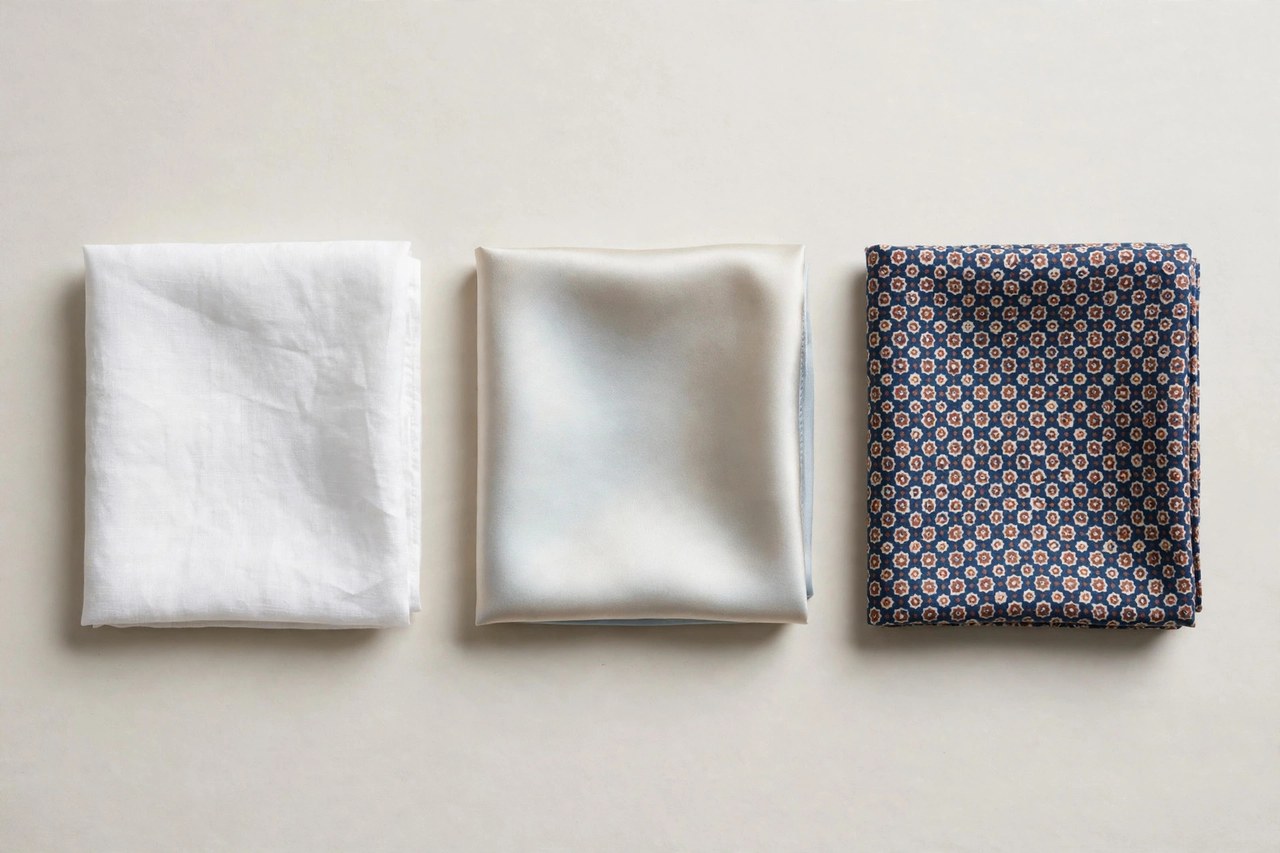
A pocket square is the small square of linen, cotton or silk folded into a jacket's breast pocket - the one accessory that adds color, pattern and finish to a suit or blazer without a tie's formality or jewelry's flash. It is also the most misunderstood small purchase in menswear: which fiber, which fold, and how much show above the pocket change the message completely. This guide covers all three, plus the standing rule that saves the whole thing - a pocket square should complement a tie, never match it exactly. This guide is built around the questions buyers actually ask: which style, which size, which fabric, and what will it look like after a year of real use - answered in order, with the trade-offs stated plainly.
Linen Holds, Silk Billows
Fiber decides the fold's behavior. Linen is the classic: crisp, matte, holding a sharp edge and a straight fold all day, in white above all - the white linen square is the formal anchor of the whole category. Cotton behaves like linen's softer brother, taking prints well and costing less. Silk is the opposite temperament: luminous, slippery, refusing straight lines and made for soft, billowing folds and rich patterns - paisleys, dots, medallions - that linen cannot carry. Size follows fiber: linen and cotton squares run larger, around sixteen to eighteen inches, to hold a fold with enough cloth; silk runs smaller because its bulk in a fold would distort the pocket. Edges are the maker's signature: hand-rolled edges, slightly plump, mark the quality end in every fiber, and contrast or tipped edges add a designed line to an otherwise plain square.
Accessories reward material honesty: solid metal over plated base metal, full-grain leather over bonded scraps, stitching over glue wherever fabric or hide is joined. Work every moving part through its full travel before paying - clasps, hinges, springs, adjusters - because small hardware fails before large materials do. And budget the care with the purchase: conditioner, the right cloth, a dry drawer; an accessory you can maintain will outlast a finer one you cannot.
Folds Are Registers
Folding is register, not origami. The straight fold - a crisp horizontal band of white linen, an eighth to a quarter inch showing - is the formal and business setting. The one-point and two-point folds add a little architecture for a blazer. The puff, silk's home ground, is arranged soft side out with the points tucked down, showing color and sheen without shape. The loose casual fold - square gathered and placed points-up or down - suits odd jackets and no tie at all. Two disciplines govern all of them: the square must look settled, never fussy or symmetrical enough to seem machined; and its colors must converse with the outfit - pick up a secondary color in the tie or shirt, contrast the jacket, and never, ever wear a pocket square in the identical fabric and pattern as the tie, because matched sets read as packaged rather than dressed.
Accessories have exact fits and exact measures: belt length to the middle hole of a belt you own, hat size as head circumference, a watch case within the wrist's width. Makers' accessory charts vary more than apparel charts, so measure and use the chart rather than ordering a habitual letter - ninety seconds with a tape prevents the most avoidable returns in menswear.
A Collection, Not a Piece
Pocket squares care like the fine handkerchiefs they resemble - and they are not handkerchiefs: a square that has been used as one leaves the rotation until washed. Linen and cotton wash cool and iron crisp, points and edges restored with the iron's tip; silk spot-cleans or goes to the cleaner, since water spots its sheen. Store squares flat or rolled in a drawer, sorted by fiber, and rest a silk square after wear so its creases fall out. Rotate by season in spirit: white linen is year-round, silk patterns deepen for evening and winter, cotton prints lighten for summer jackets. A small drawer of a dozen squares - white linen, a few silks, a few cottons - covers every jacket a man owns, which is why this accessory, alone among them, rewards a collection rather than a single best piece.
Store accessories deliberately: leather away from sun and plastic, metal dry, belts rolled or hung by the buckle rather than folded at the same crease forever. Condition leather a few times a year, polish metal with the cloth meant for its finish, and repair hardware early - a loose screw today is a lost cufflink or a failed clasp next month. Rotate daily pieces in pairs and both will outlast a single workhorse.
Common Questions
Should a pocket square match the tie exactly?
No - that is the category's one hard rule. An exactly matching tie-and-square set reads as a boxed gift set rather than a dressed man. The square should complement: echo a secondary or minor color in the tie, pick up the shirt, or contrast both while staying in the outfit's register. White linen matches nothing and therefore works with everything, which is why it remains the safest and most formal choice of all.
Linen, cotton or silk - which pocket square should I buy first?
White linen. It holds the crisp straight fold that suits formality, pairs with every jacket, tie and shirt you own, and never looks like it is trying. Add silk second - a patterned silk puff brings color and sheen for blazers and evenings - and cotton prints third for summer and casual jackets. Size follows fiber: linen and cotton around sixteen to eighteen inches, silk a little smaller so its folds do not bulk the pocket.
How much pocket square should show?
Less than you think. A straight fold shows a band of roughly an eighth to a quarter inch above the pocket - a line, not a flag. Points and puffs show more by nature, an inch or so of arranged cloth, but the effect should look settled and effortless, never stuffed or towering. If the square is the first thing a viewer notices across a room, there is too much of it, or its color is shouting.
More in Men's Clothes Guide P
A Suit Accessory, a Kerchief’s Cousin
This type of fashion accessory is essentially a suit accessory. Its cousin the handkerchief — also called a handkercher or hanky — is a form of kerchief, typically a hemmed square of thin fabric that can be carried in a pocket or purse: the pocket square is that square, refined in fiber and edge and worn to be seen rather than used.
Looking for Men's Clothing Stores?
This guide explains men's pocket squares. To browse where to buy, visit our men's clothing store directory, where you can find retailers that carry them.