Women's Biker Boots Guide
Harness rings, engineer straps and lug soles — how to judge leather, fit and durability in a true moto boot.
Shop Women's Biker Boots Now
Shop Women's Biker Boots on Amazon Shop Women's Biker Boots on eBayThe Amazon and eBay links on this page are affiliate links. If you make a purchase through them, Apparel Search may earn a commission.
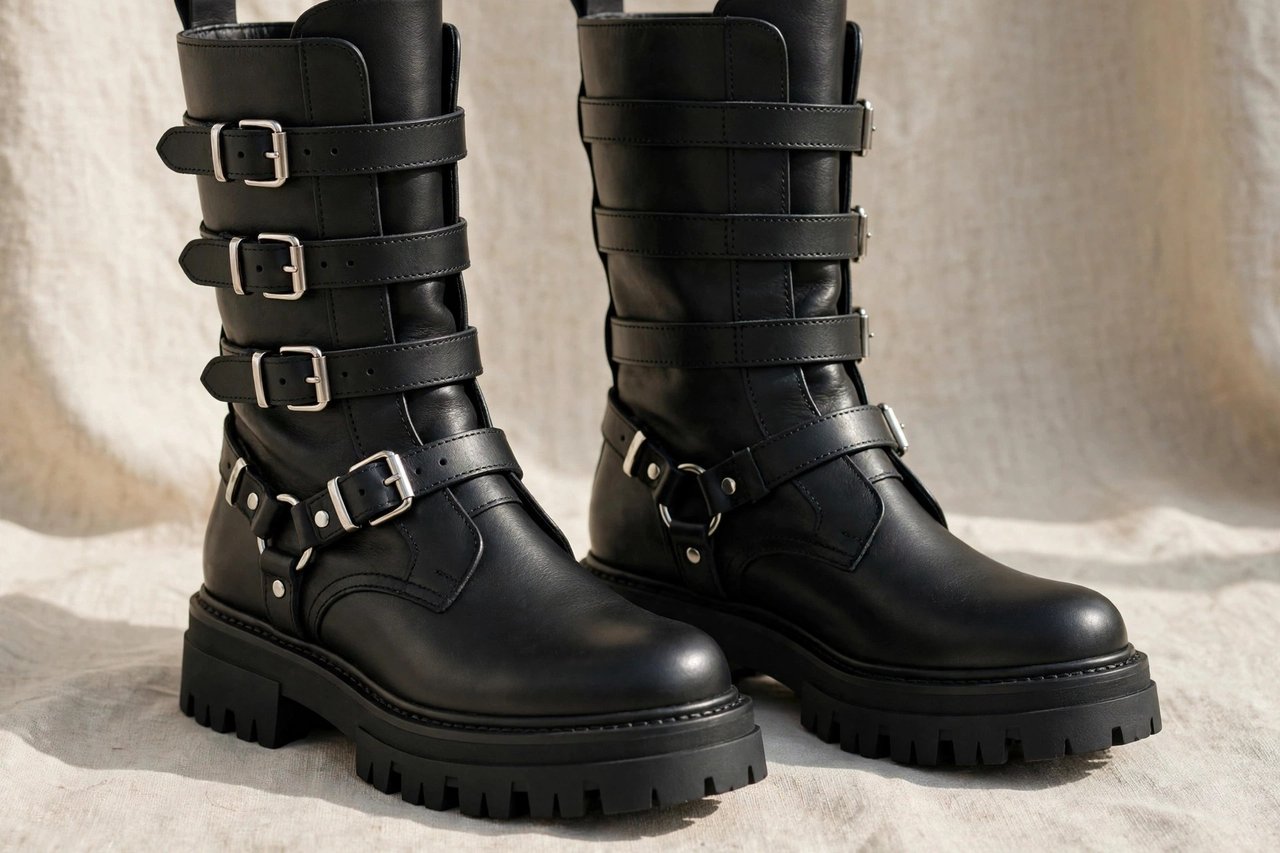
Biker boots — also called moto boots — are the toughest footwear most wardrobes ever meet: heavy leather, serious soles, straps and hardware, and a silhouette that has barely changed since riders adopted it generations ago. They were engineered to protect feet and ankles on a motorcycle, which means they shrug off weather, pavement and years of daily wear that would finish off a fashion boot. For women, the style brings a grounded, confident edge to jeans, dresses and everything between, along with genuine all-day stability. This guide explains the classic harness and engineer designs, how to judge leather and construction quality, and how to fit a boot that will feel like armor and break in like a favorite.
Authenticity matters in this category because the market is full of look-alikes: thin synthetic uppers, glued soles and decorative zippers that imitate the style without delivering the substance. A genuine biker boot is heavier than you expect, smells of leather, and feels slightly stubborn in the shop. That stubbornness is the point — quality moto leather molds to your foot over the first weeks and then holds that shape for years. Knowing what to look for will help you buy the real thing once instead of the imitation twice.
The style named in this section has a guide of its own: harness boots explains the ring-and-strap hardware, and how a harness boot differs from an engineer boot.
Harness, Engineer and Moto Styles
The harness boot is identified by its strap system: a leather harness wraps around the ankle, joined by a metal ring at each side, originally keeping the boot secure on a rider. It usually has a square-ish toe, a low stacked heel and a shaft around ten to twelve inches. The engineer boot trades the harness for a single adjustable strap and buckle across the instep, often with a taller shaft and a slightly dressier profile; it began as a work boot and became a biker icon. Modern moto boots loosen the formula — shorter ankle heights, side zips for easy entry, quilted panels and mixed hardware — while keeping the heavy leather and lug sole that define the family.
Height and toe shape steer the look. Tall harness and engineer boots make a strong statement and pair naturally with skinny jeans tucked in or leggings, while short moto boots slip under straight and wide-leg jeans and feel more everyday. Rounded toes keep the classic rugged reading; almond and slightly pointed toes dress the boot up a notch; chunky lug soles and combat-influenced motos lean youthful and urban. Buckle count is a matter of taste, but remember that every strap and ring adds weight and visual volume, which is wonderful with simple outfits and overwhelming with already busy ones.
Leather Quality and Construction
Leather is the headline material, and grades matter enormously. Full-grain leather is the strongest and most water-resistant natural option; it scuffs, conditions back beautifully and develops a rich patina. Top-grain and corrected leathers are sanded and finished for uniformity and are serviceable, though thinner. Avoid boots that feel papery, plasticky or unusually light for their size — bonded leather and synthetics crack at the flex points within a season or two. Run a thumbnail lightly across a hidden spot: real leather shows a temporary mark and recovers, while coated synthetics often show nothing or wrinkle in fine lines. Thickness you can feel at the shaft edge is a good sign.
Construction decides whether the boot can be resoled and how it handles weather. Goodyear-welted and stitched soles can be replaced by a cobbler, turning a worn boot into a renewed one, and they resist water better than purely cemented soles. Lug rubber outsoles provide the grip the style promises; check that lugs are deep rather than molded decoration. Inside, a leather or cushioned insole and a partial lining make long days comfortable, while an all-synthetic lining often traps heat. Hardware should be solid metal, firmly riveted, with straps of the same leather as the upper rather than thin substitutes that will stretch and tear first.
Fit, Break-In and Comfort
Biker boots fit differently from fashion boots, and expecting that difference prevents returns. A new quality pair should feel snug across the instep and heel — your heel may slip slightly at first, which is normal and stops as the sole flexes and the leather molds — with enough toe room to wiggle and no pressure across the widest part of the foot. The shaft should stand without collapsing and leave room for your calf plus jeans if you plan to tuck. Try boots on in the afternoon with the socks you will actually wear, and walk on a hard floor, not just carpet, to judge the sole and heel height honestly.
Break-in is a process, not a verdict. Wear new motos around the house and on short outings for the first week or two, and let thick socks protect any rubbing points while the leather softens. A little conditioning on stiff areas helps, but avoid soaking the boots in oils or using heat to force softness, which damages the structure you paid for. If the instep strap or harness presses, a cobbler can stretch a specific spot precisely. Once broken in, a well-made biker boot is famously comfortable — the same stiffness that resists on day one becomes personalized support by week three.
Styling Moto Boots Without Costume
The styling secret of biker boots is contrast. With skinny jeans or leggings and a simple top, they are the outfit anchor and need no help. With floral, floaty or feminine dresses, they supply the edge that keeps the look modern rather than sweet, a combination stylists return to every autumn. Straight and wide-leg jeans work best with short moto styles worn under the hem. A leather jacket doubles the biker signal and looks great when that is the intention, but a soft knit, a tailored coat or a plain tee often makes the boots look more deliberate and less like a uniform.
Keep the rest of the hardware story consistent when you can: a belt buckle in a similar metal tone, a bag with matching hardware, and minimal competing shine. For workplaces, a polished engineer boot in smooth leather with quiet hardware can pass in creative and casual offices with tailored trousers, though the harness style belongs to off-duty hours in most settings. Color choice extends range: black is the classic and most versatile, dark brown warms autumn outfits, and oxblood or distressed finishes add individuality once the black pair is secured.
Care and the Durability Payoff
Motos reward basic leather care generously. Brush off road dust, wipe salt away promptly in winter, condition the uppers every few months or whenever the leather looks thirsty, and let boots rest a day between wears with the shafts supported so they keep their shape. Air-dry wet boots at room temperature away from radiators, stuffed loosely with newspaper for the first hours. The lug soles rinse clean under a tap with an old brush. Resole welted pairs before you wear through to the welt itself, and a cobbler can also replace a worn heel cap inexpensively — small maintenance that keeps a decade-old boot fully in service.
That longevity is the durability payoff and the honest value argument for this category. A genuine leather, stitched-sole biker boot worn for ten years costs less per wear than three successive pairs of imitation boots, and it looks better in year five than the imitations looked in month five. Riders trusted this design with their safety long before fashion adopted it, and the overbuilt construction still shows. Buy the best leather and construction your budget allows, break them in patiently, and your biker boots will likely outlast every trend cycle that tries to replace them.
Related Women's Guides
More to Explore
Many heavy boots are held together by stitchdown construction or a Norwegian welt rather than glue - worth knowing before you buy.
The western branch of the working-boot family is the low-heeled roper boot, made for working on foot as much as in the saddle.
Photos

Looking for Women's Clothing Stores?
This guide helps you choose women's biker boots by style and leather. To browse where to buy, visit our women's clothing store directory, where you can find retailers that carry them.