Women's Hostess Dress Guide
The hostess dress is evening dress engineered for home: glamorous enough for guests, easy enough to cook, pour and clear in. From hostess gowns and hostess pajamas to the modern at-home occasion dress.
Shop Women's Hostess Dress Now
Shop Women's Hostess Dress on Amazon Shop Women's Hostess Dress on eBayThe Amazon and eBay links on this page are affiliate links. If you make a purchase through them, Apparel Search may earn a commission.
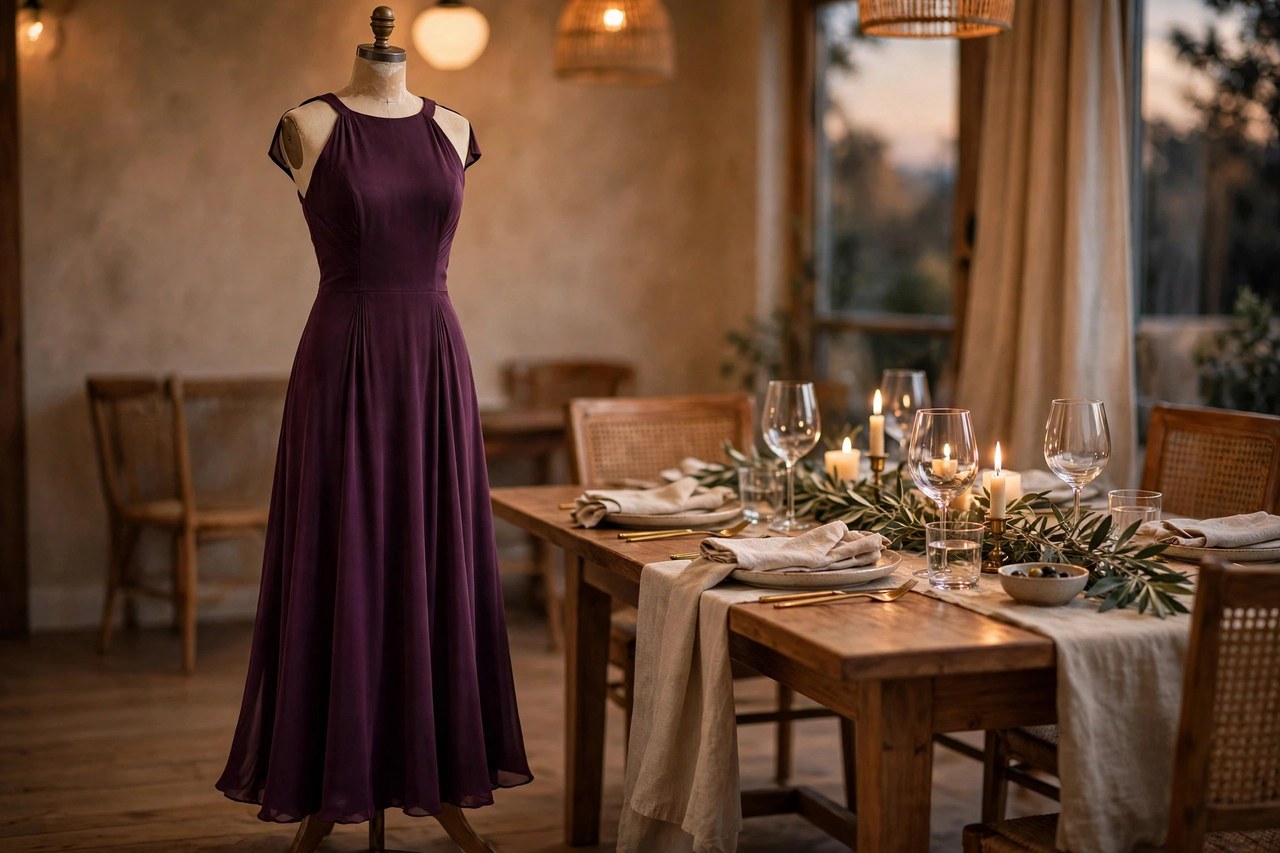
A hostess dress answers a problem no other dress has: its wearer is both the guest of honour and the staff. She must look like the occasion and still cook, pour, answer the door and clear plates in it. In its classic form, a hostess gown is a dressy negligee or housecoat worn especially for informal entertainment at home — glamour, deliberately built on a garment designed for the house.
Hold that definition against its near-namesake, the housedress, covered in its own guide: the housedress is the practical daytime dress for housework, the hostess dress is its after-dark opposite — same house, opposite job. One is made to work in unseen; the other is made to be seen in, at home. This guide follows the seen one: its gown and pajama heritage, the etiquette that shaped it, and how to choose and style it now.
Hostess Gowns and Hostess Pajamas
The hostess gown flourished from the 1930s through the 1960s, when entertaining at home was a central social art. It borrowed the floor-length drama of evening dress and rebuilt it in housecoat construction: wrap fronts, zip fronts, flowing skirts and sleeves that pushed up, in satin, velvet, quilted fabrics and later easy-care synthetics. A woman could receive guests in what was, structurally, luxurious loungewear — and that double identity was the point, not a compromise.
Its boldest sibling was hostess pajamas: wide-leg trousers worn with a tunic, overdress or floating top, an outfit that treated trousers as evening wear at home decades before they were accepted as evening wear anywhere else. Palazzo-style hostess sets survive in modern resort and loungewear collections, usually renamed, but the formula — drama above, freedom below — is unchanged.
Cocktail-Era Etiquette and the Hostess Look
As cocktail parties grew more formal at mid-century, dress became a code guests could read. The stricter guidelines let a party differentiate the organiser, the hostess and the wife at a glance — the hostess's dress was a role marker as much as an outfit, signalling who was running the evening. The surrounding etiquette was precise: gloves worn, cocktail hats for guests but never kept on indoors, and a hostess kept deliberately free of fussy accessories that would get in the way of serving.
Strip away the period rules and a practical principle remains, still worth dressing by: the hostess should be the most easeful person in the room to look at — clearly dressed for the occasion, clearly able to move, pour and embrace people in what she is wearing. If an outfit needs guarding, adjusting or apologising for, it is a guest's dress, not a hostess's.
Choosing a Hostess Dress Today
Modern hostess dressing keeps the heritage shapes and updates the fabrics. Look for wrap and faux-wrap dresses, column and A-line gowns in jersey, crepe or matte satin, and two-piece sets — a flowing skirt or wide trouser with a dressy top — which revive the hostess pajama logic. Length is the category's signature: full length or elegant midi reads hostess; a standard cocktail length simply reads guest.
Judge every candidate by the evening's real movements. Can you reach a high shelf, carry a tray with both hands, sit on the floor with a child or a dog, and hug arrivals without a wardrobe negotiation? Sleeves that push or roll to the forearm, pockets deep enough for a phone and a corkscrew, and a neckline that stays put when you lean over a table are the working details that separate a true hostess dress from an evening dress worn at home.
Fabrics, Warmth and the House Itself
At-home evening dress lives in a different climate from a restaurant or ballroom: your own heating, doors opening to the cold, a hot kitchen ten steps from a cool dining room. Layers built into the outfit — a matching jacket, wrap or dressy cardigan that belongs to the look rather than covering it — are the traditional hostess solution, inherited directly from the housecoat era's matching ensembles.
Fabric choice follows the house, too. Velvet and quilted satin suit winter formality and older, draughtier rooms; crepe, jersey and washed silk travel through a summer evening without wilting. Favour fabrics that forgive a splash and release a crease: the hostess who can wipe a drip from her dress and keep smiling owns the room in a way no spotless but fragile silk ever will.
Styling the Evening
Shoes decide the evening's stamina. The classic choice is the dressy flat, mule or low heel — height for the dress's long line, sense for hours on your own floors. Jewellery follows the old no-fuss rule: one strong piece rather than a set that needs managing, and nothing that dangles toward the food. Hair worn up keeps the look deliberate and the cooking hygienic.
Finally, dress early. The deepest tradition of the category is that the hostess is ready before the first guest — the dress is part of that readiness, worn before the doorbell, never pulled on over cooking clothes in a panic. That, more than any fabric, is what a hostess dress is for.
More Dress & H Guides
More to Explore on Apparel Search
Women’s Clothes Guide by Letter: Women's Clothing Directory G · Women's Fashion Directory I · Women's Apparel Directory J · Women's Fashion Directory K · Women's Fashion Directory L · Women's Fashion Directory M
Looking for Women's Clothing Stores?
This guide helps you choose women's hostess dresses and hostess gowns. To browse where to buy, visit our women's clothing store directory, where you can find retailers that carry them.