Women's Plus Size Gloves Guide
Plus size gloves in larger hand sizes with longer fingers, roomier palms and wider cuffs — dress, winter and driving styles sized by hand measurement, not guesswork.
Shop Women's Plus Size Gloves Now
Shop Women's Plus Size Gloves on Amazon Shop Women's Plus Size Gloves on eBayThe Amazon and eBay links on this page are affiliate links. If you make a purchase through them, Apparel Search may earn a commission.
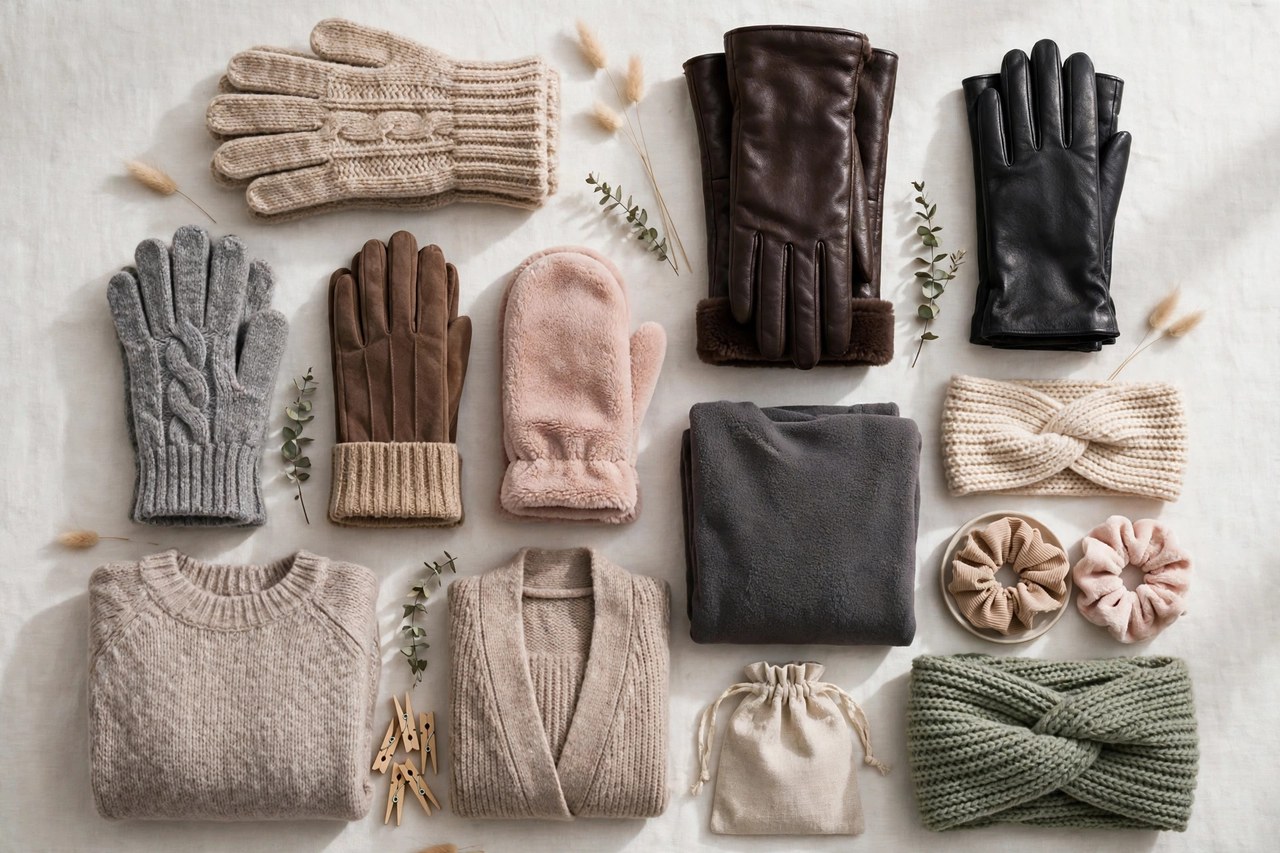
Gloves are sized by the hand, and plus size gloves exist for a simple reason: many women in plus clothing sizes also have larger hands — broader palms, longer fingers and fuller wrists — that standard women's glove sizes, which often stop at a medium or large drawn for a seven-inch hand, cannot fit. A glove that is too small fails everywhere at once: the fingers end short, the palm seams strain, the cuff cuts at the wrist, and the hand inside tires from working against the material all day.
This guide explains how glove sizing is measured, what genuinely changes in a larger or plus glove pattern, and how the main glove families — dress leather, winter insulated, knit and touchscreen styles — should fit a bigger hand. Gloves are a small category with an outsized effect on comfort and polish: the right pair disappears in use, while the wrong pair is taken off and carried, which defeats the purpose of owning them in cold, formal or driving situations alike.
Measuring Your Hand for Glove Size
Glove size is the circumference of your dominant hand around the knuckles, measured with a soft tape over the fullest part of the palm, excluding the thumb, with the hand flat and fingers together. In inches, that number is approximately your glove size: a hand measuring eight inches takes roughly a size 8, and women's ranges that serve plus hands typically run from 8 through 9.5 or 10, in half sizes, where standard ranges may end at 7.5 or 8.
Two further measurements separate a fitting glove from a merely wearable one. Finger length, especially of the middle finger, decides whether the glove's finger stalls match your own; plus and long versions add length here, and webbing between the fingers when you spread your hand means the stalls are too short. Wrist and cuff opening matter with coats: a fuller wrist and a coat sleeve together need a cuff that opens generously or a gauntlet style that goes over the sleeve.
Dress and Leather Gloves in Larger Sizes
Leather dress gloves are the formal backbone: unlined or silk- and cashmere-lined, in lengths from wrist to elbow for evening wear. In plus sizes, look for makers who cut genuinely larger patterns rather than stretching a standard block — the signs are proportionate finger length, a palm that covers without the fourchettes, the strips between fingers, pulling sideways, and decorative stitching that sits on the back of the hand where it was drawn.
Evening and opera lengths raise a second fit dimension: the arm. Plus size long gloves add circumference through the forearm and above the elbow, and are best chosen with your arm measurement at the fullest point the glove will reach. A long glove that fits the hand but binds the arm will slide down and wrinkle all evening. Driving gloves in larger sizes keep their knuckle openings and perforations aligned to a bigger hand, and their wrist strap should fasten without reaching its last hole.
Winter, Knit and Functional Gloves
Winter gloves trade fine fit for insulation, and plus hands need the larger sizes even more here because insulation takes up room inside the glove. Choose by the same knuckle measurement, then check that you can make a full fist without the lining pulling at the fingertips — trapped air insulates, but a fist that strains the shell means the size is wrong. Insulated leather, softshell and ski styles in extended sizes should still allow the thumb to reach each fingertip, the basic dexterity test for fastenings, keys and phones.
Knit and fleece gloves are the forgiving end of the category: high-stretch knits accommodate hands beyond their nominal size, though a hand far above the range gets a thin, over-stretched knit with little warmth left in it. Touchscreen fingertips, now common across knit, fleece and leather styles, must land on your actual fingertips — another reason finger length in the pattern matters.
Fit Checks, Care and Buying Tips
Fit a glove in sequence: fingers reach the ends of the stalls with a small ease, no webbing between spread fingers, the palm lies smooth when the hand opens flat, the cuff closes at the wrist without cutting, and the whole glove stays on when you shake your hand downward. Then do the tasks the glove is for — hold a steering wheel, fasten a coat, use your phone. Gloves bought for a specific coat should be tried with that coat's sleeve, because cuff and sleeve are a system and most glove failures happen exactly at their junction.
Care is by material: leather gloves are cleaned with a damp cloth and specialist leather cleaner, dried slowly away from heat — radiators crack damp leather — and stored flat or on hands in a drawer, never crushed in a coat pocket for a season. Knit and fleece gloves wash gently and dry flat so the larger size you chose is not shrunk back to standard. Keep your knuckle measurement with your other sizes, buy winter pairs before the season when extended sizes are stocked deepest, and one well-fitted pair per purpose will outlast a drawer of near-misses.
Related Women's Guides
More to Explore on Apparel Search
Looking for Women's Clothing Stores?
This guide helps you choose women's plus size gloves. To browse where to buy, visit our women's clothing store directory, where you can find retailers that carry them.