Women's Plus Size Belts Guide
Plus size belts are measured for real waists in sizes 14W and up — longer lengths with correctly placed holes, widths that define curves, and stretch and wrap styles that adjust through the day.
Shop Women's Plus Size Belts Now
Shop Women's Plus Size Belts on Amazon Shop Women's Plus Size Belts on eBayThe Amazon and eBay links on this page are affiliate links. If you make a purchase through them, Apparel Search may earn a commission.
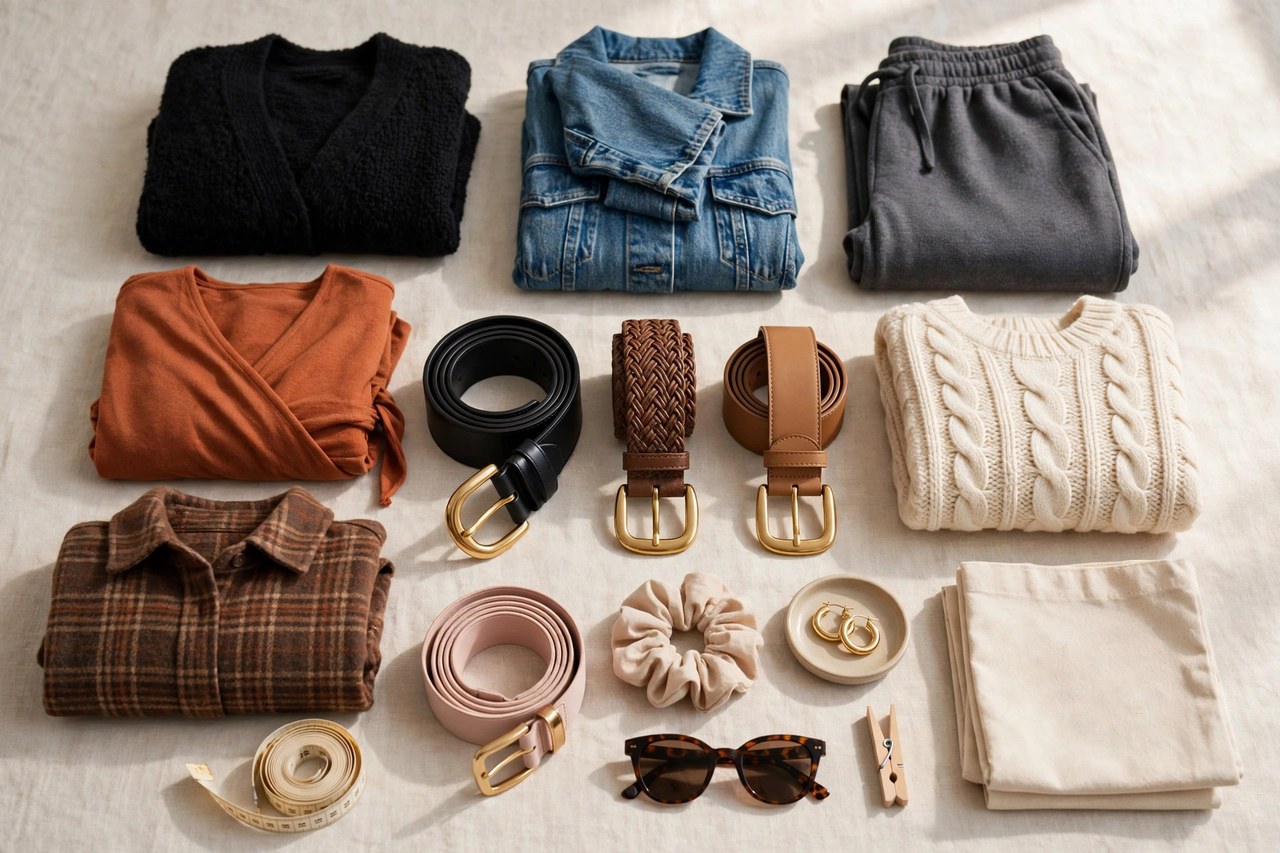
A belt can define a waist, hold trousers at the right height and finish an outfit in seconds, but only if it actually fits. Standard belts often end around a size range that leaves plus size women fastening on the last hole with no tail, or unable to close the belt at all. Plus size belts fix the arithmetic: longer straps, holes placed for larger waists and widths and buckles scaled to fuller frames, in sizes serving 14W through extended ranges.
This guide explains how to size a plus size belt in inches, how to choose width for dresses, trousers and jeans, and which constructions, leather, stretch, braided and wrap, suit different needs. Because waist size changes with the garment, high-rise jeans, a dress at the natural waist and low trousers all need different lengths, you will also learn to measure for the exact position you intend to wear, which is the single step that prevents most belt returns.
Sizing in Inches: Waist, Hips and Hole Placement
Belt size is the distance from the buckle fold to the middle hole. For trousers and jeans, choose a belt about two inches larger than the garment waist measurement at the point where the waistband sits. For a dress belt at the natural waist, measure over the dress, or a similar layer, at the narrowest point. Plus size belts commonly run from the mid-thirties to fifty inches and beyond, labeled 1X, 2X or by inches; inches are the label to trust, because X ranges differ by brand.
Hole placement and tail length complete the fit. Fastened on the middle hole, a well-sized belt leaves a tail of roughly four to six inches that reaches the first loop or sits neatly under a keeper. Holes spaced about an inch apart give useful adjustment for bloating, layering and weight fluctuation. If you always need the tightest hole, size down; if the loosest hole is your norm, size up before the strap strains and the hole elongates. Stretch belts remove the guesswork by fastening anywhere.
Widths and Buckles for Fuller Frames
Width controls both comfort and effect. Skinny belts of half to one inch thread small loops on dresses and lightweight trousers and add definition without bulk. Classic widths of one to one and a half inches suit jeans and tailored trousers and fill standard loops cleanly. Wide belts of two to three inches make a strong waist statement over dresses and tunics, distributing pressure over a broader area, but they need a torso length and a waist curve that can carry them, and they should sit at the true waist rather than across the stomach.
Buckles should scale with the belt and the body. A tiny buckle on a wide plus belt looks lost and can twist, while a very heavy buckle pulls the front down. Flat, smooth buckles lie best under untucked tops and against the midsection when sitting. For sensitive waists, consider rounded edges, padded backs and nickel-free hardware. Keeper loops, double loops on wider styles, and secure buckle fastenings, stitched or screwed rather than glued, keep the tail managed and the belt durable at the point of greatest strain.
Styles: Leather, Stretch, Braided, Chain and Wrap
Leather belts are the durable core: full-grain and top-grain leather hold holes without stretching out and age well for jeans and trousers. Stretch and elastic belts, often woven or backed with webbing, are the comfort choice for all-day wear, travel and waists that change through the day, because they give with breathing and sitting. Braided belts fasten at any point along the weave, which solves in-between sizing elegantly, though the braid can widen holes over time with heavy use.
Wrap and obi belts tie or wrap twice around the waist and suit dresses especially well, molding to curves without fixed holes and creating a defined, soft waistline; allow generous length, often ninety inches or more in plus sizes, for a proper wrap and knot. Chain and sash belts worn at the hip add finish to dresses and tunics and need length that drapes rather than pulls straight. Corset-style wide belts give the strongest shaping and should be fitted carefully so boning or elastic panels support without restricting breathing.
Three of the styles above have full guides of their own: the corset belt guide covers wide structured waist belts and their adjustable lacing in depth; the chain belt guide explains the any-link fit that makes chains so size-forgiving; and the braided belt guide covers the hole-less weave that adjusts to any measurement exactly.
Wearing, Care and Buying Tips
Wear the belt for the job you choose. A belt matched to trousers lengthens the leg line, one matched to the top lengthens the torso, and a contrast belt deliberately marks and defines the waist. Over fuller midsections, position a statement belt at the natural waist or just under the bust where the body is narrowest, rather than at the widest point. Thread belts fully through all loops so the waistband is supported evenly and does not roll, a common problem when a contoured plus waistband meets a belt that is slightly short.
Store belts rolled or hung by the buckle, away from humidity, and condition leather occasionally. Let a wet belt dry flat. When buying online, require the length in inches from buckle fold to middle hole, the width and the hole range; if only a dress size is listed, ask or choose stretch or braided. One leather jeans belt, one dress belt and one stretch belt, each in your true measured size, will quietly correct the fit and finish of most of a plus size wardrobe.
Related Women's Guides
More to Explore on Apparel Search
Looking for Women's Clothing Stores?
This guide helps you choose women's plus size belts. To browse where to buy, visit our women's clothing store directory, where you can find retailers that carry them.