Women's Plus Size Outfits Guide
Plus size outfits are coordinated sets of pieces that fit together on a curvier body — proportion, waist placement and fabric balance matter more than matching colors alone.
Shop Women's Plus Size Outfits Now
Shop Women's Plus Size Outfits on Amazon Shop Women's Plus Size Outfits on eBayThe Amazon and eBay links on this page are affiliate links. If you make a purchase through them, Apparel Search may earn a commission.
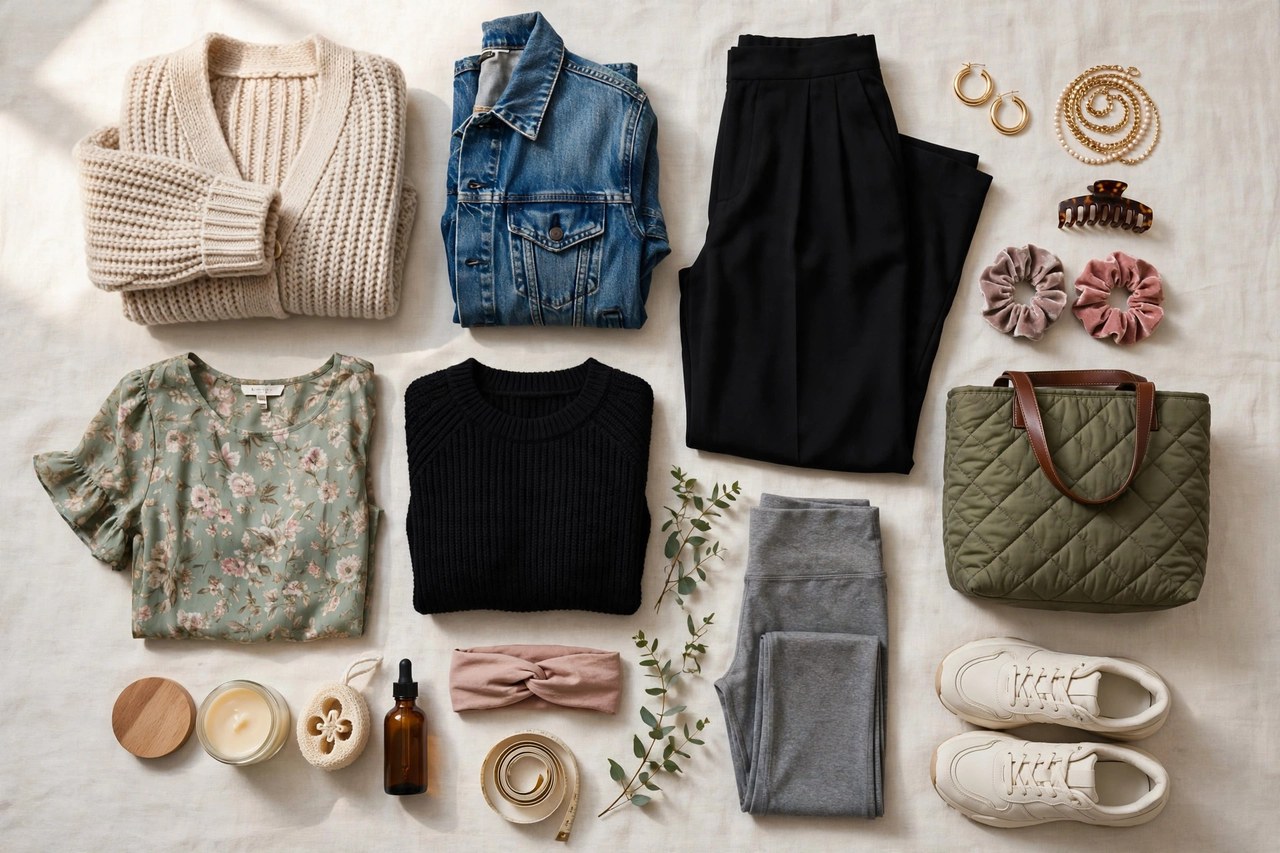
An outfit is a combination, and in plus sizes the combination succeeds when each piece fits well and the proportions between pieces are deliberate. A beautifully fitting top disappears into a badly proportioned outfit if its length cuts the body at the widest point, a skirt overwhelms if its volume meets an equally voluminous top, or a waistline vanishes under layers of the same weight. Plus shoppers from 14W to 5X have more outfit options than ever — the skill is assembly, and it is learnable.
This guide covers the principles behind plus outfits that work: defining the waist, balancing volume between top and bottom, managing lengths and hemlines, and using matching sets, work formulas and occasion dressing as shortcuts. It assumes the individual pieces fit — the jeans, pants, dress and top guides in this section cover that — and concentrates on what happens when fitted pieces meet. Small proportion decisions, repeated daily, are what make a wardrobe look intentional.
Proportion: Waist, Volume and Length
Start every outfit by deciding where the waist reads. A defined waist — shown by a tucked top, a belt, a cropped layer ending at the waist or a dress seam — gives a curvier silhouette structure and lengthens the leg line. The natural waist on most bodies sits above the hip bone, and placing the visual break there rather than at the hip is the single most repeatable plus styling improvement. If you prefer an undefined, fluid look, keep it fluid head to toe so it reads as a choice rather than a default.
Balance volume on the seesaw rule: fuller on one half, closer on the other. Wide-leg pants pair with a fitted or tucked top; a flowing tunic pairs with leggings or slim trousers; a full skirt pairs with a neat top that ends at the waist. Lengths follow the same logic — tops that end at the widest point of the hip emphasize it, while hems ending just above or below that point, or long enough to commit to tunic length, sit more comfortably in the overall proportion.
Matching Sets and Two-Piece Outfits
Coordinated sets — a top and bottom made in the same fabric — have become a plus wardrobe staple because they solve proportion automatically and dress like a jumpsuit without the fitting challenges. In plus sizes, check that both pieces are available in your size independently, since many women need a different size on top and bottom, and that the top length is designed to meet the bottom waistband without a gap or heavy overlap. Sets in knit fabrics travel and mix with other pieces best.
A set also multiplies: wear the top with jeans, the pants with a sweater, the full set with heels for an event or sneakers for travel. When buying, judge a set as three purchases and inspect each piece at that standard. Monochrome outfits beyond formal sets follow the same principle — one color head to toe in varied textures reads long and deliberate, and gives bold accessories or shoes a clean field. Keep one texture matte where another shines so the single color still has depth.
Work, Casual and Occasion Formulas
Reliable formulas remove morning decision fatigue. For work: a fitted plus trouser or pencil skirt, a blouse or fine knit tucked or ending at the waist, and a structured jacket or long cardigan as the third piece that finishes the silhouette. For casual days: well-fitted jeans, a top with a defined hem point, and one deliberate layer or accessory. For occasions: a dress with a defined waist or a matching set, with shoes and bag scaled up slightly — very small accessories can look lost against a fuller frame and a strong outfit.
Adapt formulas to your proportions rather than copying them whole. If you carry weight at the midsection, an open jacket over a column of one color, a wrap top or an empire dress may serve better than a tight tuck. If you are fuller at the hip, draw the eye up with neckline detail, earrings and a top hem at the waist. The formula is a starting frame; the adjustments are personal, and a mirror check for waist, volume balance and hem points takes under a minute once it becomes habit.
Capsule Planning and Outfit Checks
Build outfits at the wardrobe level with a small capsule: bottoms in two or three neutral colors that fit excellently, tops that each work with at least two bottoms, one structured layer and one soft layer, and shoes that complete both dressy and casual versions. Photograph outfits that work on your phone; a photo record exposes proportion habits that daily mirrors stop showing.
Before leaving, run a three-point check: waist defined or deliberately fluid, volume balanced top to bottom, and movement comfortable seated as well as standing — outfits are worn sitting, driving and reaching, not just posed. Check the back view for hem levels and how layers sit over the seat. None of this requires a large wardrobe or a large budget; it requires fitted core pieces and sixty seconds of proportion attention. That compounds with every outfit you build.
Related Women's Guides
More to Explore on Apparel Search
Looking for Women's Clothing Stores?
This guide helps you choose women's plus size outfits. To browse where to buy, visit our women's clothing store directory, where you can find retailers that carry them.