Women's String Bikini Underwear Guide
String bikini underwear adapts the tie-bikini idea to a brief — a low, minimal underwear cut with narrow string sides, made for a smooth line under clothing.
Shop Women's String Bikini Underwear Now
Shop Women's String Bikini Underwear on Amazon Shop Women's String Bikini Underwear on eBayThe Amazon and eBay links on this page are affiliate links. If you make a purchase through them, Apparel Search may earn a commission.
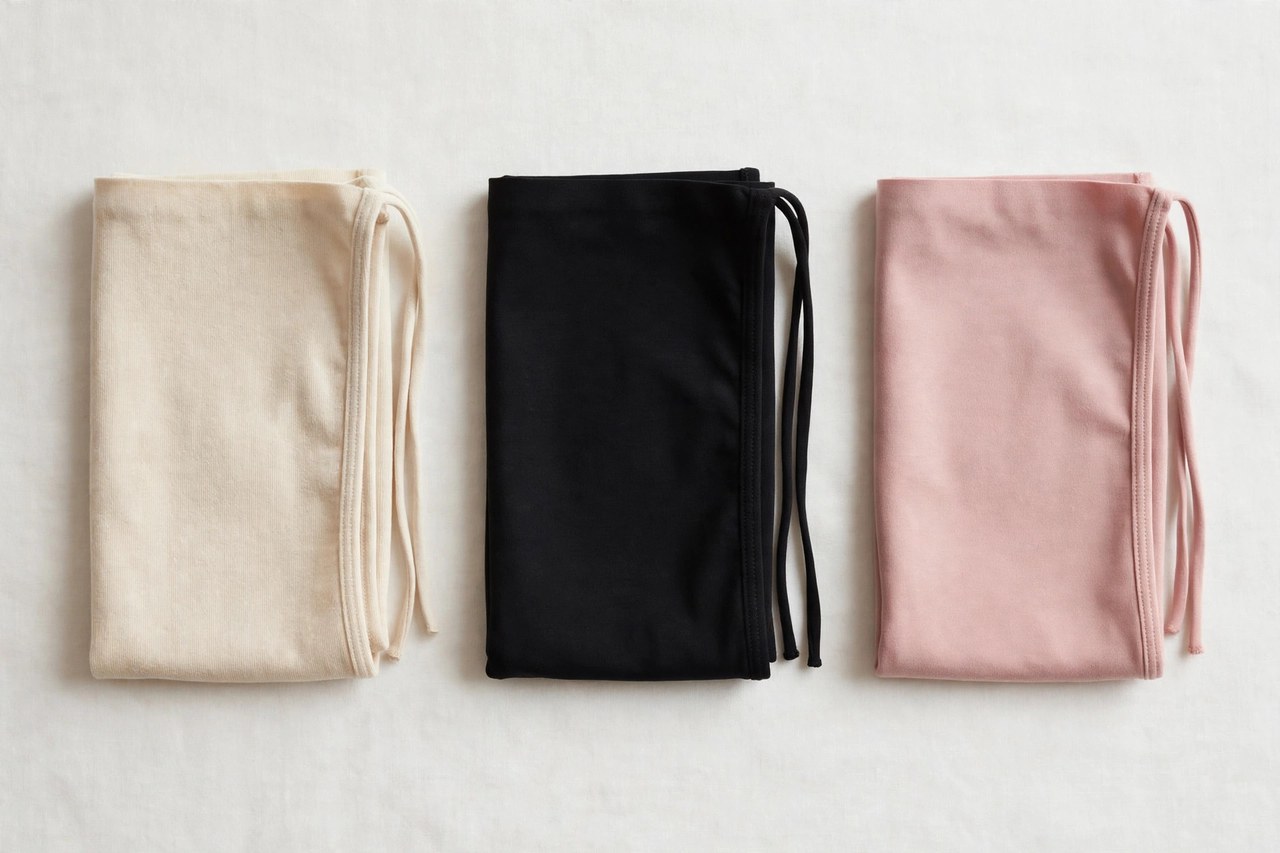
String bikini underwear is an underwear brief, not swimwear: it borrows the swimsuit style's name and its narrow string sides, and turns them into an everyday brief with a low rise, a triangular front panel and sides reduced to slim cords or narrow elastic strings. Unlike the swimsuit, most underwear versions do not actually tie — the strings are sewn or elasticated — and the garment is cut and sized as a brief, worn under clothing where its minimal side line is the entire point.
This guide covers the underwear version on its own terms: how the cut differs from a standard bikini brief and from other minimal brief styles, which fabrics suit daily wear, how to size a garment whose sides are elastic rather than cloth, and how multipack buying and washing work in practice. The swimsuit pages on this site cover the beach garment; everything here is about the drawer staple that shares its name.
The Cut: String Bikini vs Bikini Brief and Tanga
A standard bikini brief sits low with moderate side fabric, usually an inch or more of cloth at the hip. The string bikini brief replaces that side panel with a narrow cord or string of elastic, fabric or lace, so the front and back panels connect by a line rather than a band. The result is the least visible side profile of any brief with a full front panel, which is why the style is chosen under close-fitting trousers, skirts and dresses where a side panel's edge would show.
Neighboring cuts help fix the definition. A tanga keeps narrow sides but they are usually flat fabric rather than string, with a narrower back. A thong removes the back panel almost entirely, which the string bikini does not — its back panel, while smaller than a full brief's, still provides real coverage. True tie-side underwear versions exist as novelty and boudoir styles, but the everyday string bikini brief is a sewn, pull-on garment, and should be shopped with brief expectations: sized, laundered and replaced like any other daily underwear.
Fabrics for Daily Wear
Cotton with elastane is the everyday standard: breathable, washable and kind to skin, with enough stretch for the string sides to sit without digging. Microfiber — fine nylon or polyester knits — gives the smoothest finish under clothing and the least visible edges, and dries fastest for travel. Lace string styles trade some smoothness for appearance, with stretch lace strings that lie flatter than expected. Modal blends sit between cotton and microfiber in softness and are a comfortable middle choice.
Whatever the body fabric, check the gusset: a cotton-lined gusset is the healthy standard for daily underwear, and better garments state it plainly. Check also how the strings are made. A string of folded, stitched fabric or soft elastic with a fabric casing wears comfortably all day, while a bare thin elastic cord can cut in at the hip by evening — the underwear equivalent of the swimsuit's neck-tie problem, and just as predictable from a close look in the shop.
Sizing a Brief Held by Strings
Size string bikini underwear by hip measurement against the brand's chart, not by your bikini brief size in another brand: the string side has no panel to distribute a too-small fit, so an undersized pair announces itself at the hip within the hour. The front panel should lie flat without pulling the strings into diagonals, and the strings should rest on the hip bone line without riding up or sliding down as you move, sit and bend — the same movement test as any brief, with less fabric to hide the answer.
Rise is the second choice: the classic string bikini sits low, below the natural waist, and suits low and mid-rise clothing; higher-rise string versions exist for wear under high-waisted trousers and skirts, where a low brief's top edge would roll or show. Buy a single pair or a small pack first when trying a new brand, because string tension — the variable that decides comfort — is exactly what varies most between makers, and a multipack of the wrong tension is a drawer full of regret.
Buying in Packs and Making Them Last
String bikini briefs are sold singly, in three-packs and in larger value multipacks, often mixing colors or pairing cotton and microfiber versions of the same cut. Multipacks are the economical way to own a week's rotation once a brand's fit is proven, and a rotation matters: elastic strings recover between wearings, so a brief worn every other day outlasts the same brief worn daily by much more than the arithmetic suggests. Keep like fabrics together when comparing prices, since a cotton five-pack and a lace three-pack are different products wearing similar listings.
Wash in a lingerie bag on a gentle cycle, or hand wash, and dry flat or on a line rather than in high dryer heat, which tires the thin string elastic first — the strings are always this garment's first failure point, going slack or fraying while the panels still look new. Replace pairs when the strings no longer hold position, the gusset lining thins, or the front panel has lost its shape. Managed in rotation and washed gently, string bikini underwear is a durable everyday staple, not a delicate exception.
Related Women's Guides
More to Explore on Apparel Search
Women’s Clothes Guide by Letter: A · B · C · D · E · F · G · H · I · J · K · L · M · N · O · P · Q · R · T · U · V · W · X · Y · Z
Looking for Women's Clothing Stores?
This guide helps you choose women's string bikini underwear. To browse where to buy, visit our women's clothing store directory, where you can find retailers that carry them.