Protective Clothing
Clothing Definitions — definitions of garments and clothing terms from Apparel Search
Search Apparel Search
At a Glance
Definition: Protective clothing is clothing designed to protect the wearer's body — or the wearer's other clothing, or the working environment itself — from hazards such as heat, chemicals, infection and impact.
Also known as: Personal protective equipment (PPE) — the wider term for protective clothing used together with non-clothing equipment such as eye and ear protection
Category: Clothing Definitions
Protective clothing is clothing designed against a hazard: heat, chemicals, infection, impact, or the slower hazards of invisibility and contamination. Unusually, the protection can run in either direction — most protective clothing shields the wearer's body or the wearer's other clothing, but some of it shields the workplace from the worker, as cleanroom clothing in a microchip factory does, and some, like the disposable gloves of surgeons and dentists, does both at once. Together with the equipment worn alongside it, it forms personal protective equipment, or PPE — the subject of the fuller PPE — Personal Protective Equipment — Fashion Terms treatment, which categorises equipment by body area and hazard. This page defines the clothing itself: its categories, its materials, and the rules for choosing and keeping it.
Protection in Both Directions
Most protective clothing protects the person inside it, and much of it also protects the clothing underneath — the apron is the everyday example, a barrier worn so that dirt and splashes reach the apron instead of the wearer and the wearer's clothes. The second direction is less obvious and just as real. In a microchip factory, special clothing protects the working environment from pollution and infection carried in by the worker: the garment is a filter between the person and a product that a single particle can ruin. Medical dress sits in both directions at once — the disposable glove protects the clinician's hand and the patient in the same gesture, which is why such items are used once and discarded.
At the extremes, protective clothing shades into armour. Body armour such as bulletproof vests, historical armour and the modern flak jacket are protective clothing in function, though in UK legislation the term PPE does not cover armour. Most industrial clothing, by contrast, is protective clothing in the ordinary sense: it is specified, issued and worn because the work has hazards.
Hands, Head, Eyes and Ears
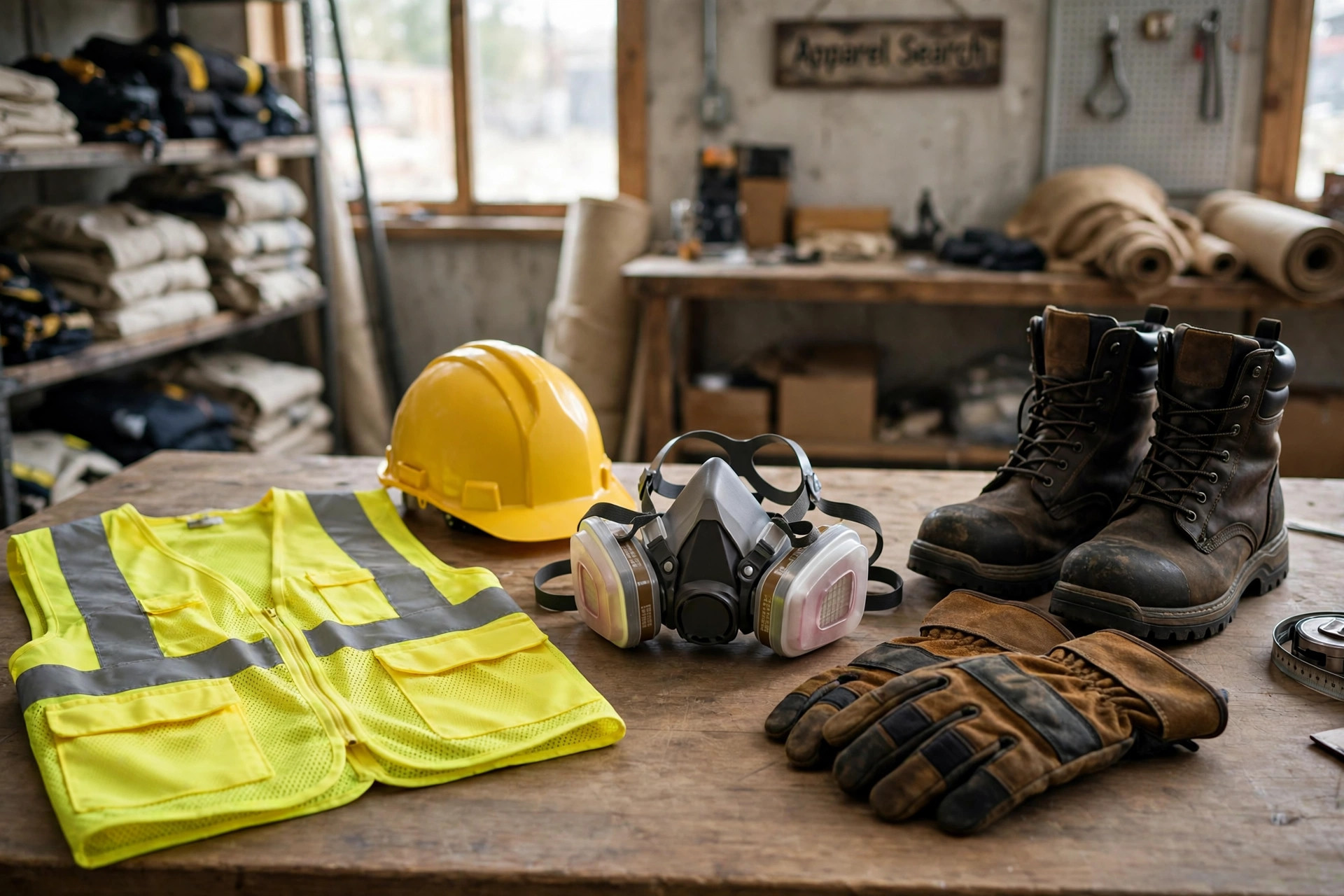
Protective clothing is specified backwards, from the hazard to the garment, and its categories follow the body part and the risk together. Hands take the widest range of gloves: disposable latex, vinyl and nitrile gloves against contamination and infection; oven gloves and welder's gloves against heat; rigger gloves and chainmail gloves against mechanical hazards such as cuts and crushing.
Head protection — helmets, hard hats and the wider family covered under headgear — guards against impact and falling objects; the helmet and the hard hat have their own definition pages, as does the bicycle helmet. Eye protection runs from goggles and visors to safety glasses, and hearing protection — ear defenders and earplugs — is classed as PPE alongside the clothing, though it is equipment rather than dress.
Breathing, Feet and the Whole Body
Respiratory protection runs from filter masks and particulate respirators, such as the N95, through gas masks and powered air-purifying respirators to self-contained breathing apparatus — again equipment rather than clothing, but issued and worn as one system with it. Feet are protected by steel-toe boots and by specialist clogs, within the wider subject of protective footwear. High-visibility clothing prevents accidents by the opposite method from most protection: not by resisting the hazard but by making the wearer seen before the hazard arrives.
Whole-body protection is a catalogue of trades. Chaps — individual leg coverings of leather, worn by farriers, cowboys and rodeo contestants — protect the legs from hooves, thorny undergrowth and work hazards, and are also made in waterproof materials as rain chaps and in Kevlar as saw chaps for chainsaw work. Chainsaw protection as a set adds a helmet with face guard, hearing protection and anti-vibration gloves. Beekeepers wear graduated protection, from a brimmed hat and veil at minimum to leather gauntlet gloves and full barrier clothing against stings. Fire protection suits, lifejackets and, at the extreme, the spacesuit complete the range — each a garment system built around a single hostile environment.
Sports Protection
Protective clothing is also worn for contact sports, on the same logic at lower stakes. Ice hockey and American football equip their players as a matter of course; baseball players wear sliding shorts and a protective cup under their pants; the goalie's mask and the catcher's mask protect the face against flying objects. The jockstrap began as sports protection of exactly this kind. Sports protection is PPE in everything but the workplace name: equipment chosen for a known impact, checked before use, and replaced when damaged.
Materials, Standards and Care
The materials mark the progress of the field. Nomex gives flame resistance for fire and racing protection; Kevlar gives cut and ballistic strength, in saw chaps, gloves and vests. Each fibre was developed for a hazard that ordinary cloth could not answer, and modern protective garments are commonly built by matching such fibres to the specific risk.
Two working rules govern all of it. The first is that protective clothing is chosen and checked for the specific standard of the workplace and the task: a glove, respirator or suit protects only against the hazards it was tested for, so current workplace safety requirements and the maker's instructions should always be checked before relying on any item. The second is inspection and care — protective garments are cleaned, stored and replaced on schedule, damaged or contaminated items are withdrawn rather than worn on, and disposable items are used once. A protective garment that has already absorbed its hazard is not protection; it is a record of it.
Not to Be Confused With
Three overlapping terms, three scopes. Protective clothing is the clothing itself — garments and wearable items made to protect against a hazard. PPE (personal protective equipment) is the wider set issued and used together against a hazard, and it includes equipment that is not clothing at all: eye protection, ear defenders, respirators and fall-arrest equipment alongside the clothing. Workwear and uniforms are defined by the job and the employer, not by a hazard: a uniform identifies the wearer, and only those of its items that are tested and issued against a specific hazard count as protective clothing.
Common Questions
What is protective clothing?
Protective clothing is clothing designed to protect the wearer's body, or the wearer's other clothing, from hazards such as heat, chemicals and infection. It ranges from gloves, helmets and steel-toe boots to fire protection suits, lifejackets and high-visibility clothing.
What does PPE mean?
PPE stands for personal protective equipment. The term covers protective clothing and other protective equipment used together against a hazard, including forms that are not strictly clothing, such as eye protection, ear defenders, respirators and fall-arrest equipment.
Can protective clothing protect the environment from the wearer?
Yes. Protection can run in both directions at once: disposable gloves worn by surgeons and dentists protect the wearer and the patient, and cleanroom clothing in a microchip factory protects the product and the working environment from pollution and infection carried by the worker.
More to Explore
- Glove Definition
- Headgear Definition
- Helmet Definition
- Hard Hat Definition
- Footwear Definition
- High-Visibility Clothing Definition
- Apron Definition
- Chaps Definition
- Flak Jacket Definition
- Space Suit Definition
- Life Jacket Definition
- Bulletproof Vests Definition
- Kevlar Definition
- Nomex Definition
- Steel-Toe Work Boots Guide
- PPE — Personal Protective Equipment — Fashion Terms
- Clothing Definitions