Hastings Embroidery
Embroidery Definitions — embroidery and needlework definitions from Apparel Search
Search Apparel Search
At a Glance
Definition: The Hastings Embroidery is a monumental hand-appliqué narrative of 27 panels, made by the Royal School of Needlework in 1965 to celebrate the 900th anniversary of the Battle of Hastings.
Category: Embroidery Definitions
The Hastings Embroidery was commissioned by Group Captain Ralph Ward and made by the Royal School of Needlework in 1965, to celebrate the 900th anniversary of the Battle of Hastings. It consists of 27 panels, each 9 by 3 feet, showing 81 great events in British history, and it took 22 embroiderers 10 months to finish.
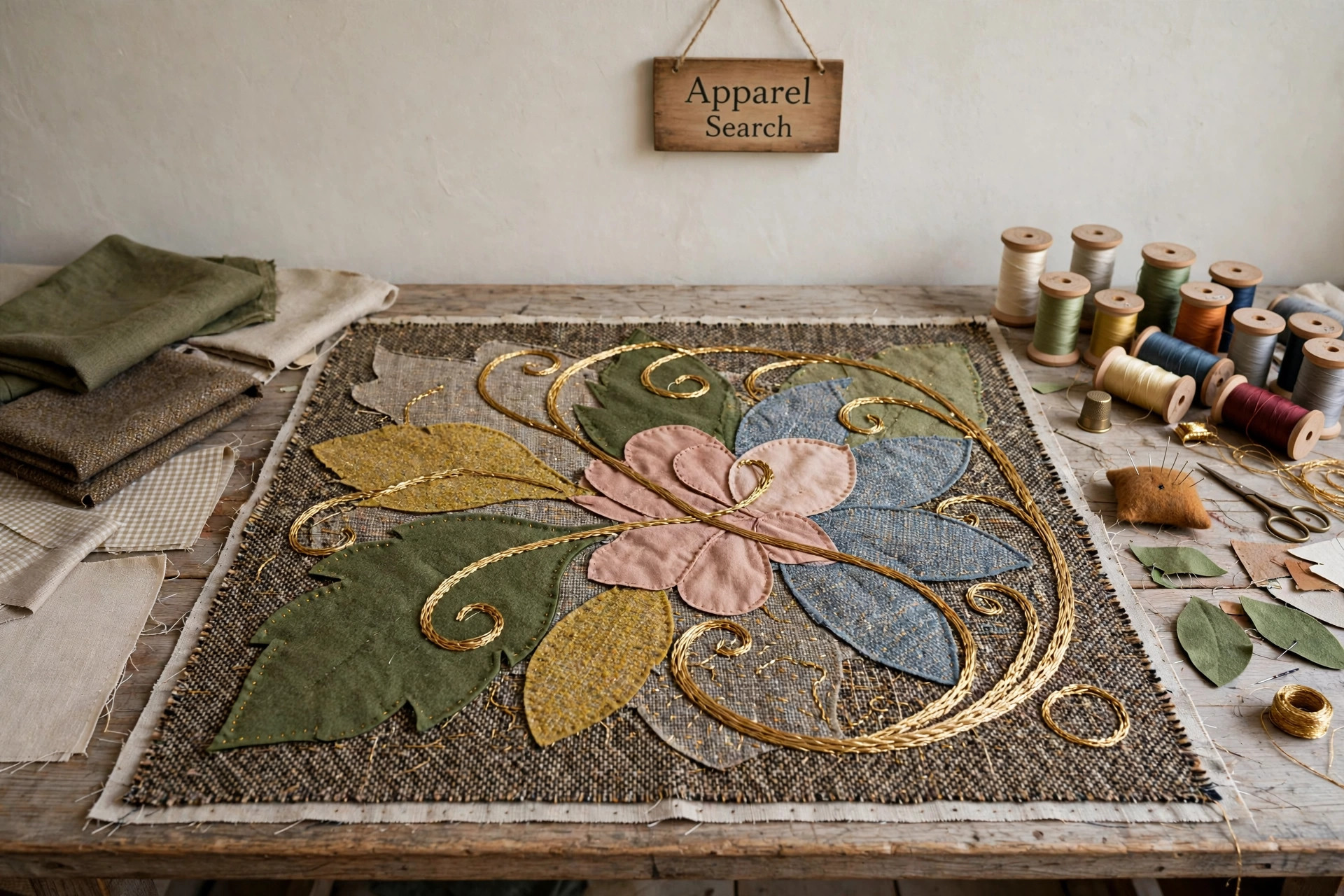
Eighty-One Events in Twenty-Seven Panels
The choice of 81 events across 27 panels makes the Hastings work a history book as much as a picture: nine centuries of British history compressed into scenes a viewer reads while walking its length — a total run of more than 240 feet of embroidery. That narrative ambition, embroidery as national chronicle, is the direct inheritance of the Bayeux Tapestry, whose makers proved a stitched cloth could argue a version of history at monumental length. The Hastings panels widen the scope from one conquest to a whole island story, while keeping the older work's method of telling history in cloth. The anniversary itself fixes the arithmetic of the piece: the Battle of Hastings was fought in 1066, so the nine-hundredth anniversary the embroidery was made to celebrate fell in 1966, the year after the work was made.
Appliqué at Monumental Scale
The work is executed in appliqué by hand, with couched threads and cords added on top. The comparison with Bayeux is deliberate — a Norman-conquest anniversary and a long narrative in cloth — but the making differs: Bayeux is wool surface stitchery on linen, while Hastings uses applied fabric, a technique chosen because applied areas can cover 9-foot panels at a pace solid stitching never could, with the couching supplying line and detail over the applied shapes.
The materials extend the appliqué idea beyond plain cloth. Tweed came from Scotland for its texture, other fabrics were supplied by the Victoria and Albert Museum, and real feathers came from London Zoo for passages where plumage reads better than any stitched imitation. It is a 20th-century work about an 11th-century event, built with a medieval technique used at exhibition scale.
Made to Be Seen, Then Stored
The embroidery was on public display in Hastings, first in the Town Hall and then at the White Rock Pavilion, a large theatre — venues sized for a work whose panels demand distance to be read. It was later taken down and placed in storage, and the question its chroniclers end on — where it is now, and when it will be placed back on public display — is the recurring problem of monumental textile art.
Works of this scale need long walls, controlled light and conservation care that few venues can offer continuously, so some of the largest embroideries ever made spend much of their lives rolled in store. The Royal School of Needlework workmanship that made the panels durable enough to move and store is the same professionalism that runs through its other major commissions.
The storage question is left open by the original account, and it is the honest ending for a work of this kind: a 27-panel embroidery cannot simply be hung anywhere. Until a venue with the wall length, the light control and the conservation budget appears, the panels wait in store — preserved by the same professional making that created them, but unseen.
Common Questions
How big is the Hastings Embroidery and what does it show?
It consists of 27 panels, each 9 by 3 feet — a total run of more than 240 feet of embroidery — showing 81 great events in British history, made to celebrate the 900th anniversary of the Battle of Hastings in 1066.
Who made the Hastings Embroidery and how long did it take?
It was commissioned by Group Captain Ralph Ward and made by the Royal School of Needlework in 1965. Twenty-two embroiderers took 10 months to finish it.
What materials were used in the Hastings Embroidery?
It is worked in appliqué by hand, with the addition of couched threads and cords, tweed from Scotland, fabrics from the Victoria and Albert Museum, and feathers from London Zoo — a deliberate mixture of applied materials suited to appliqué at a monumental scale.