Shako
Fashion Definitions — fashion history and style definitions from Apparel Search
Search Apparel Search
At a Glance
Definition: A shako is a tall, cylindrical military cap of stiffened felt or leather, with a short peak, a metal cap plate, and often a plume, that was the standard infantry headgear of the Napoleonic era and much of the 19th century.
Pronunciation: SHAK-oh
Category: Fashion Definitions
Word Origin
Shako comes from the Hungarian word csákó, the name of the hussar headgear from which the cap developed in the late 18th century.
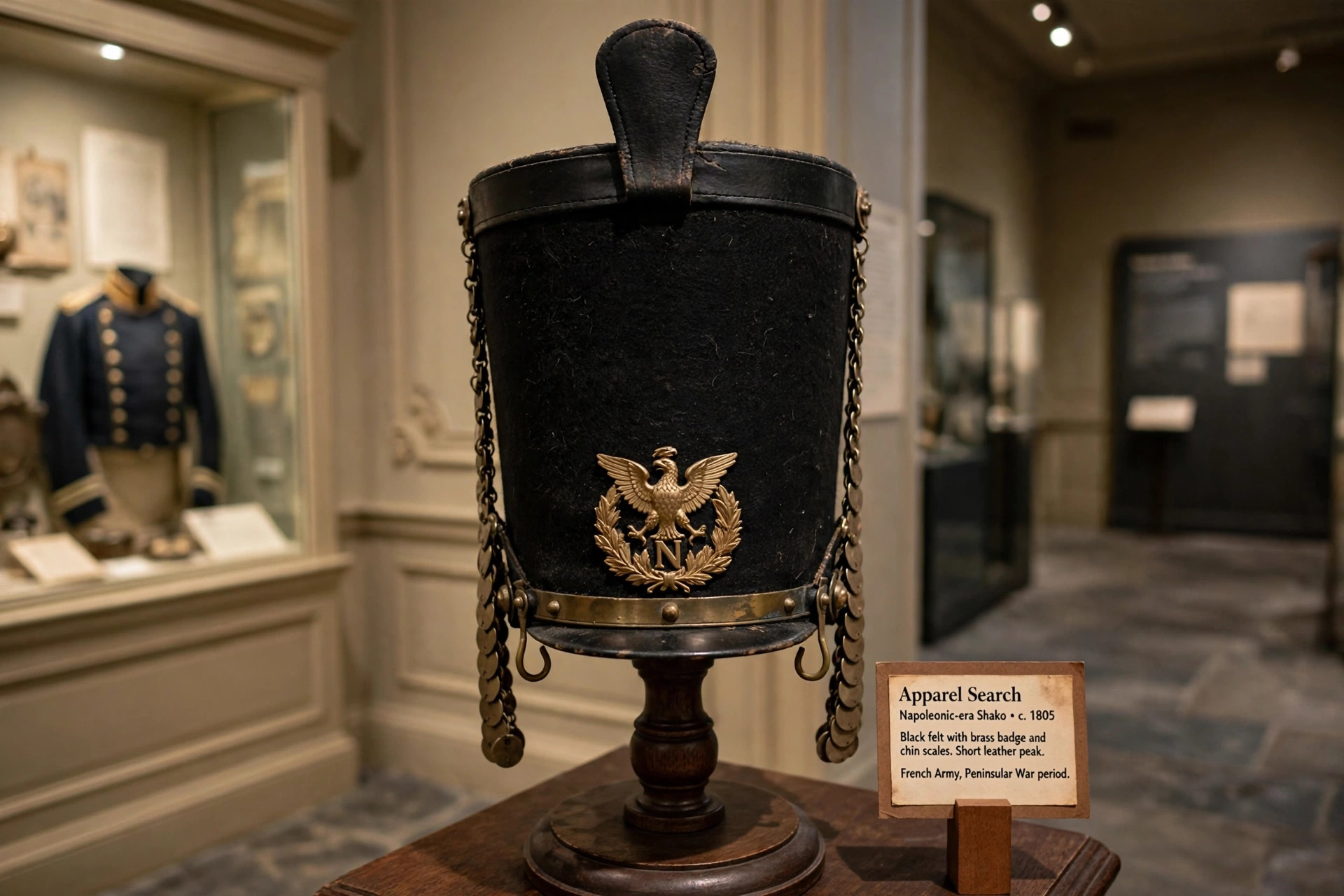
The shako was a tall, cylindrical military cap that became the standard headgear of European and American soldiers in the early 19th century. Made of stiffened felt or leather, wider at the top than at the base in its classic form, and fitted with a short peak, a metal cap plate, chin scales, and often a plume or pompon, it gave infantry regiments their unmistakable silhouette on the battlefields of the Napoleonic Wars. Its moment is captured in 1820s fashion, when the wars had just ended and military tailoring saturated civilian dress, and its long ceremonial career runs through the whole world of Victorian fashion. Few military garments have been so widely worn, or so long retained.

Origins and Napoleonic Form
The shako developed from Hungarian hussar headgear in the late 18th century. Adopted by French infantry around 1801 and then imitated across Europe, it replaced the tricorne and bicorne for ordinary soldiers because it was cheaper, more uniform, and — standing high on the head — made troops look taller and more imposing in the line. Regiments distinguished themselves by plate designs, coloured cords, plumes, and the shape of the cap itself.
Its construction was industrial as much as military: a body of felt or leather stiffened and lacquered against the weather, a leather peak, brass or white-metal fittings, and a plate bearing a regimental number, royal cypher, or national arms. The tall 'stovepipe' shako of the years around 1812 was the extreme form; the Belgic shako worn by British infantry at Waterloo carried a distinctive front plate and false front.
Change and Ceremonial Survival
Through the 19th century the shako shrank by stages. Mid-century versions were lower and tilted forward; by the 1870s many armies had replaced it for field service with smaller caps and helmets, which were lighter and less conspicuous. Yet the shako refused to disappear: it remained full-dress headgear for guards, cadets, and ceremonial units, and it survives today in the dress uniforms of military academies, palace guards, and marching bands.
Its influence reached civilian life in subtler ways. The tall, flat-topped silhouette echoed in 19th-century top hats and in coachmen's and postilions' caps; military-style braiding and upright posture shaped fashionable tailoring for men and women alike; and toy soldiers, nutcrackers, and band uniforms fixed the shako in the popular image of the soldier. A cap designed for the battlefield became the headgear of ceremony itself.
Legacy
The shako marks the moment military dress became fully standardised and industrially produced — one pattern, issued by the thousand, its variations controlled by regulation. Surviving examples anchor museum displays of the Napoleonic era, and wherever a cadet or guardsman still wears a tall black cap with a shining plate, the shako's two-century career continues.
Common Questions
What is a shako?
A shako is a tall, cylindrical military cap of stiffened felt or leather, fitted with a short peak, a metal cap plate, and often a plume. It was the standard infantry headgear of the Napoleonic era and much of the 19th century.
Where did the shako come from?
It developed from Hungarian hussar headgear in the late 18th century, and its name comes from the Hungarian word csákó. French infantry adopted it around 1801, and other armies soon followed.
Are shakos still worn?
Yes, as ceremonial dress. Shakos survive in the full-dress uniforms of military academies, palace guards, ceremonial units, and marching bands, long after leaving field service.