Import Buyer Job Description
Buying clothing from overseas factories — sourcing, landed cost, lead times and compliance
An import buyer buys clothing and textiles from overseas manufacturers for a retailer, brand or importer, rather than from domestic vendors. The product judgement is the same as any buyer's — the right garments, at the right quality, for the right customer — but everything around it is harder: factories are visited rather than phoned, prices are built up from fabric, labour, freight, duty and currency, lead times run to months rather than weeks, and a mistake discovered when a container arrives cannot be sent back for a quick remake. Import buying is therefore as much a sourcing, logistics and compliance discipline as a fashion one. This page explains what the import buyer does and how the role is reached.
More Buying Job Descriptions by Letter:
What an Import Buyer Does
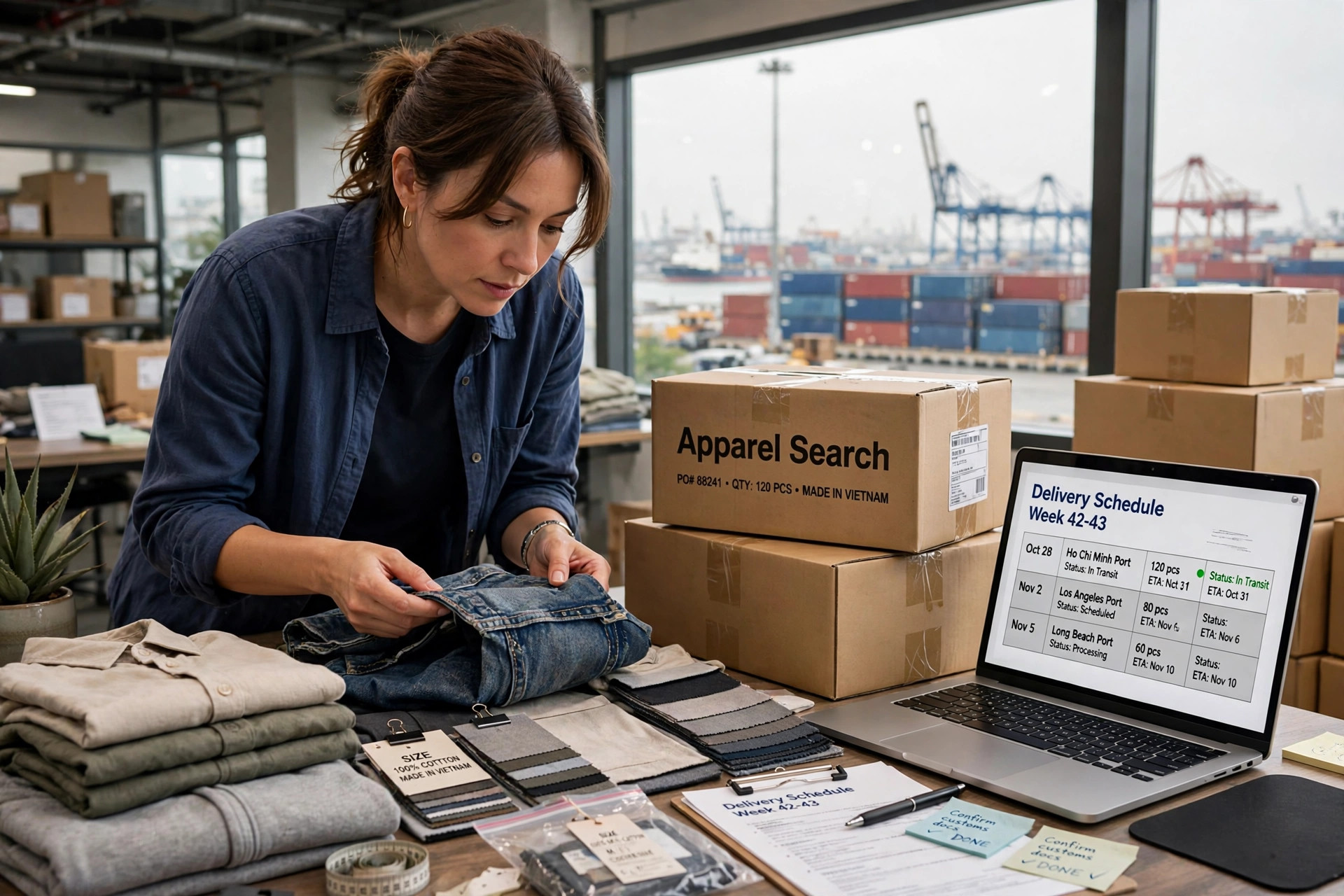
The import buyer sources and manages a base of overseas factories and agents, matching each product type to countries and factories that make it well and compliantly. The cycle starts with development: sending tech packs, patterns or samples to factories, receiving and commenting on counter-samples, and negotiating prices against target costs. Orders are then placed months ahead of delivery, production is monitored through agents or quality teams, and shipments are booked, tracked and cleared so stock arrives for its selling window despite the long chain between factory and warehouse.
Travel is part of the job's reality. Import buyers visit factories to assess capability, working conditions and quality systems, attend sourcing fairs, and develop ranges at the source where fabric and trim markets sit beside the factories. Back home, the buyer manages the critical path for every order — sample approvals, fabric bookings, production slots, inspection dates, vessel bookings — and deals with the exceptions: a delayed fabric, a failed inspection, a missed sailing, each with a cost and a decision attached.
Landed Cost and Lead Times: The Numbers That Define the Role
An import buyer never buys at the factory price alone. The real figure is the landed cost: the factory price plus freight, insurance, import duty, port and clearance charges, and the cost of any agent's commission, converted at the exchange rate that will actually apply. A style that looks cheap at the factory door can be expensive landed, and a currency movement between order and payment can erase a season's margin. The import buyer must build and defend those calculations precisely, compare countries on landed cost rather than headline price, and agree currency and hedging arrangements with finance colleagues.
Lead time is the second governing number. From order to warehouse can run three to six months or more once fabric production, garment making, inspection and sea freight are chained together, so import programmes are committed before domestic buyers have finalised their ranges. The import buyer manages that risk by splitting programmes — proven core styles committed early in volume, fashion styles placed later or closer to home, fabric booked ahead of garment orders — and by knowing exactly which dates on the critical path can slip and which cannot.
Compliance, Quality and Responsible Sourcing
Imported clothing must meet the destination market's rules: fibre content and care labelling, flammability and chemical restrictions, children's product safety, and customs origin and documentation requirements. The import buyer is responsible for specifying those standards to factories, arranging testing and pre-shipment inspection, and refusing or reworking goods that fail — decisions that are straightforward in principle and commercially painful in practice when a season's stock is involved.
Factory standards sit alongside product standards. Retailers and brands audit working conditions, hours, wages practices and building safety in their supply bases, and the import buyer owns the commercial relationship those audits examine: choosing factories that can meet the code, not placing orders so aggressively priced or so late that compliance becomes impossible, and acting on audit findings. Experienced import buyers treat this as part of the buying itself, because a supply base that fails socially will eventually fail commercially as well.
Skills, Qualifications and Career Path
The import buyer needs a domestic buyer's full commercial toolkit plus three additions: costing fluency across freight, duty and currency; critical-path and logistics literacy; and the cultural and communication skill to negotiate and manage quality across languages and time zones, usually through agents and interpreters as well as directly. Resilience and organisation matter — the role runs many orders at different stages in several countries simultaneously, and its problems arrive at inconvenient hours.
Routes into import buying run from domestic buying or assistant buyer roles into an import or sourcing team, from production and technical roles that already work with overseas factories, or from importer and buying-office organisations abroad. Qualifications in fashion buying, international business or supply chain subjects support entry, but employers weigh factory experience and costing competence most. Progression runs to senior import buyer, sourcing manager and head of sourcing roles, and across into production and supply-chain leadership.
Common Questions
What is landed cost in import buying?
The full cost of a garment delivered to the buyer's warehouse: factory price plus freight, insurance, import duty, clearance charges and any agent's commission, converted for currency. Import buyers compare suppliers and countries on landed cost, never on factory price alone.
How far ahead does an import buyer place orders?
Typically three to six months or more before delivery, once fabric production, garment making, inspection and sea freight are chained together. Core styles are committed earliest; fashion styles are placed later, in smaller quantities, or sourced closer to home.
Does an import buyer travel?
Yes. Factory visits to assess capability, quality and working conditions, sourcing fairs, and range development trips at the source are a regular part of the role, alongside daily communication with factories and agents across time zones.