Designer Job Description
The fashion designer role in full — originating clothing ranges from first research to approved production
Designer is the title at the centre of the fashion industry — the person who originates the clothing a company will make and sell. In a large organisation that means owning a defined part of a range, such as women's dresses or men's knitwear, inside a design team led by a design director; in a small label it can mean one person researching, sketching, sourcing, fitting and presenting an entire collection. Either way the job is equal parts creativity and commerce: a design only succeeds when it can be made at the right price, in time for its season, and when customers want to wear it. This page sets out the full role for the general designer title the specialist pages in this directory branch from.
More Design Job Descriptions by Letter:
What a Fashion Designer Does
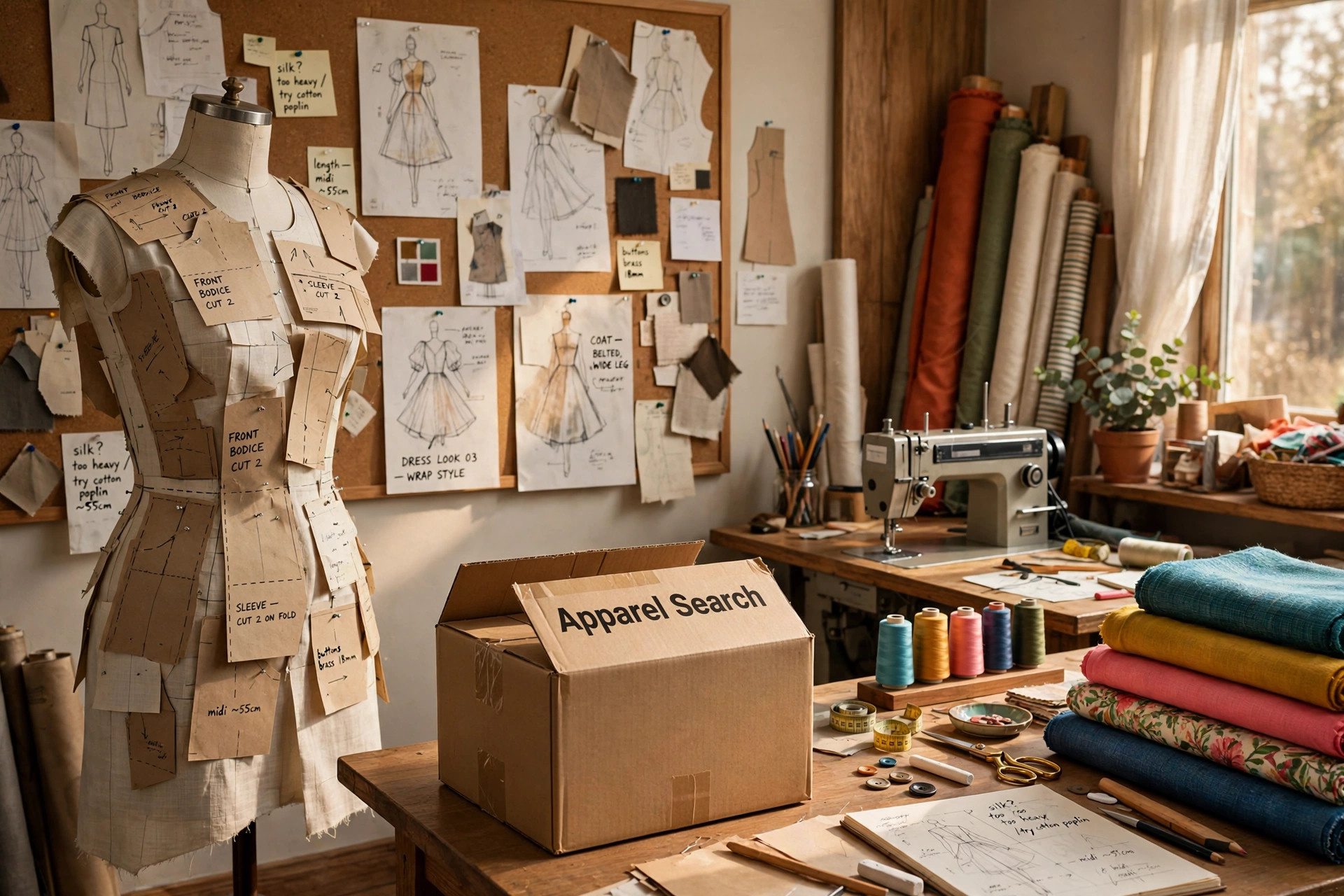
The season begins with research. The designer gathers trend evidence from fashion weeks, trade shows, fabric fairs, competitor ranges, vintage sources, street style and sales data from previous seasons, and distils it into the season's direction: mood boards, colour palettes, fabric stories and silhouette themes agreed with the design director and merchandising colleagues. From that direction the designer sketches — rapidly at first, exploring shapes, then precisely — building a balanced range plan in which each style has a purpose, a price level and a customer. Range plans are reviewed and edited hard: weak styles are dropped early, because every style carried forward consumes sampling time and factory capacity.
Development turns sketches into garments. The designer selects fabrics and trims, issues specification packs with the illustrators and technical team, and reviews prototype samples as they arrive — checking proportion on the fit model, correcting construction, approving fabric substitutions and re-costing styles that arrive over target. Several sample rounds are normal. Once a style is approved for production, the designer signs off its pre-production sample and stays answerable for it: if the bulk garment drifts from the approved standard, it is the designer's eye that is expected to catch it. Sales evidence then feeds the next season — best sellers are evolved, failures are analysed rather than repeated.
Fabrics, Fit and Making Knowledge
Commercial design is applied materials knowledge. The designer must know how fibres and fabric constructions behave — how a jersey drapes against a woven, how much ease a knit needs, what a fabric's weight and finish do to a silhouette — because those decisions are made at the sketch table, long before a sample proves them wrong expensively. Fabric fairs and mill appointments are working research: the designer handles cloth, notes composition, width, minimums and lead times, and builds a personal fabric library season by season. Trim knowledge — zips, buttons, interlinings, embroidery and print techniques — is judged the same way, by what it costs and how it survives making and wear.
Fit is the second craft. Designers attend fittings with pattern cutters and garment technologists, pinning and marking corrections on the body, learning why a sleeve pulls or a waist sits wrong and how the pattern change fixes it. A designer who understands pattern logic writes better specifications, argues more credibly with factories and wastes fewer sample rounds. That is why employers value designers who have spent time in sample rooms.
Skills, Qualifications and Training
The visible skill is drawing, but the decisive skills are judgement and stamina. A designer juggles dozens of styles at different stages, absorbs criticism of creative work without losing momentum, presents ranges persuasively to buyers and directors, and keeps commercial discipline — price architecture, margin and delivery dates — inside every creative decision. Numeracy is genuinely part of the job: costing a style, estimating fabric consumption and reading sell-through figures are weekly tasks, not exceptions. Communication carries the rest, because almost nothing a designer creates is made by the designer alone.
The standard route is a fashion design degree or diploma with a strong final collection and portfolio, followed by assistant designer posts where the trade's routines — tech packs, sample tracking, fabric filing — are learned on live ranges. Some designers arrive through pattern cutting, garment technology or textile design and grow into the role from the making side. Internships matter disproportionately in this field: studios hire people they have already watched work, and a season spent assisting in a sample room teaches more about commercial design than any lecture.
Career Path and Specialist Directions
The ladder runs from assistant designer to designer, senior designer and design director, with responsibility widening at each step from styles, to a product category, to the whole collection and the team behind it. Along the way most designers specialise, and this directory carries a page for each major specialism: womenswear, menswear and childrenswear designers; knitwear, swimwear, outerwear, suit and footwear designers; textile, print and CAD designers; and the many product-specific titles in between. Choosing a specialism is rarely a single decision — it follows the categories a designer's employers happen to trade in, deepened by the fabrics and customers they come to know best.
Experienced designers also move sideways into related senior work: trend forecasting, product development leadership, and their own labels, where the design skill is joined by the whole burden of running a business. What stays constant at every level is the test the work is judged by — garments that fit, fabrics that perform, prices that hold and customers who come back for the next season.
Common Questions
What qualifications do you need to become a fashion designer?
Most commercial designers hold a fashion design degree or diploma and, more importantly, a portfolio and final collection that prove they can design makeable, saleable clothing. Employers weigh internships and assistant experience heavily, because they show a candidate already understands sampling, tech packs and studio deadlines.
What is the difference between a designer and a design director?
A designer originates styles within an agreed seasonal direction and owns them through sampling. A design director sets that direction, leads the design team, approves ranges and answers for the collection as a whole. Designers are promoted to director level once their judgement about ranges — not just individual garments — has been proven over several seasons.
Do fashion designers need to sew and cut patterns themselves?
They rarely make production garments, but they are expected to understand how garments are constructed. Designers who can read a pattern, follow a fitting and specify construction clearly produce better samples in fewer rounds, which is why pattern and making knowledge is taught alongside design and valued by employers.
More to Explore
- Designer Search
- Fashion Design
- Fashion Designers Directory
- Fashion Artists Guide
- CAD Services
- Computer-Assisted Design (CAD Software)
- Fashion Week
- Fashion Job Description Directory
- Fashion Employment Agencies
- Employment Search Engines
- Fashion Schools and Education
- Fashion Careers
- Fashion Directory
- Fashion Industry News