Fashion Designer Job Description
The industry's defining creative role — originating clothing collections from first sketch to finished garment
A fashion designer originates clothing: the person who decides what a collection will look like before a single garment exists, then carries those ideas through fabric selection, sampling, fittings and production until they hang on a rail as finished clothes. It is the title most people picture when they think of a fashion career, and the reality is both more collaborative and more commercial than the picture — designers work inside teams, to calendars and price points set with merchandisers and buyers, and their sketches only matter if factories can make the garments and customers want to buy them. This page explains what fashion designers actually do across a season, the skills the work demands, and how designers are trained and promoted.
More Design Job Descriptions by Letter:
What a Fashion Designer Does
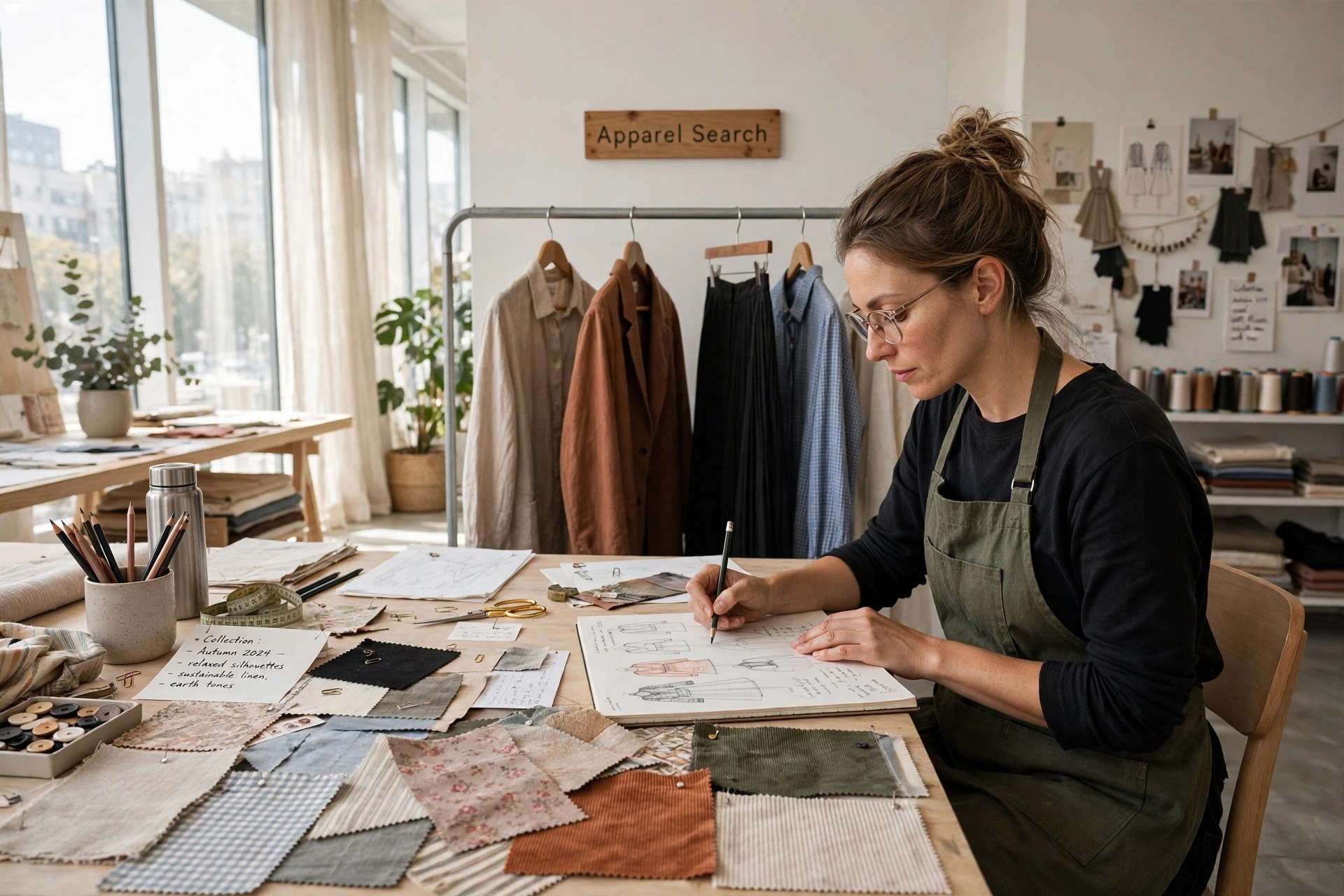
A season starts with research and direction. The designer studies trend forecasts, fabric fairs, vintage garments, street style, art and the brand's own sales history, then pulls the material into mood boards and a design brief: the silhouettes, colours, fabrics and key pieces the collection will be built from. Early sketches explore dozens of ideas, which are edited hard at range reviews — what survives is drawn up properly, assigned fabrics and trims, and planned against the range's price architecture so the collection holds together as both a creative statement and a sellable line of products at different prices.
Development is where most of the working week goes. Selected designs become tech packs — technical flat drawings with construction details, measurements and a bill of materials — that pattern cutters and factories turn into first samples. The designer attends fittings, judging each sample on a model or stand for proportion, drape, comfort and fidelity to the sketch, then corrects it: a collar redrawn, a seam moved, a fabric swapped when the chosen cloth will not behave. Several sample rounds later the approved styles are presented to buyers, costed, and finally released to production, with the designer checking pre-production samples against the standard they signed off.
Fabrics, Costing and the Commercial Frame
Fabric knowledge is the designer's second language. A silhouette that sings in silk crepe collapses in a cheaper substitute, so designers learn fibre, weave, weight, stretch and finish by handling cloth constantly — at mills, fabric fairs and in the studio's own library — and they test drape on the stand before committing. Every fabric choice is also a price choice: the designer works to a target cost per garment, trading cloth, trims and construction detail against each other so the style can be made and sold at its intended price without losing the idea that made it worth making.
That commercial frame widens as ranges are reviewed. Designers sit with merchandisers and buyers to read sales by style and colour, learn which of last season's ideas customers actually bought, and adjust the new range accordingly — repeating a proven shape in a new fabric, dropping a category that consistently underperforms. Presenting and defending designs in those meetings is core work, not an interruption of it: a collection is a negotiation between creative ambition, factory capability and the customer's wallet, and the designer is its chief negotiator.
Skills and Abilities the Role Requires
Drawing comes first — not fine-art polish, but fast, communicative sketching and accurate technical flats that a pattern cutter can work from — together with colour sense and an instinct for proportion on the body. Increasingly the drawing is digital: CAD flats, print and colourway work in standard design software, and tech packs assembled to factory-ready standard. Garment construction knowledge is what separates employable designers from illustrators of clothes; you must know how a garment is sewn together, where it will strain, and what a factory can and cannot do, because you are specifying a product, not a picture.
The professional skills are stamina and judgement under the calendar. A designer runs many styles at different stages simultaneously, absorbs criticism of work they care about at range reviews, redesigns quickly when costs or sales demand it, and communicates precisely with pattern rooms, factories overseas and non-design colleagues. Taste matters, but taste that can explain itself — why this length, this cloth, this price — is what gets a designer's work approved, made and reordered.
Qualifications, Training and Career Path
Most fashion designers hold a degree or diploma in fashion design, built around drawing, pattern cutting, garment construction, textiles and collection projects, and they enter the industry as assistant designers before progressing through associate to designer and senior designer. The portfolio is decisive at every hiring step: employers look for coherent collections, technical flats and evidence that the candidate can design for a defined customer and price level, not just for themselves. Internships and placements during study are the usual first foothold, and competition for them is intense.
At the top of the ladder, senior designers own categories, design directors set a brand's whole direction, and some designers found their own labels — a route that adds pattern-room management, sourcing, sales and cashflow to the creative work. Others move sideways into design-adjacent roles where their product knowledge is valuable: range planning, product development, styling and trend forecasting. The career rewards designers who keep both halves of the job alive — the eye that originates and the discipline that delivers.
Common Questions
What does a fashion designer do day to day?
Researches trends and fabrics, sketches new designs, builds tech packs for the styles selected, attends fittings and corrects samples through several rounds, presents ranges to buyers and merchandisers, and checks production samples — all against a seasonal calendar and target costs.
Do fashion designers need to sew and make patterns?
They need to understand both deeply enough to specify garments a factory can make and to judge fit and construction at fittings. Most designers can drape, toile and make basic patterns from their training, even though pattern cutters and machinists do the production making.
How do you become a fashion designer?
Typically through a fashion design degree or diploma with a strong portfolio of collections and technical work, plus internships during study. Entry is usually as an assistant designer, progressing to associate and then designer as you prove you can own styles through production.
More to Explore
- Designer Search
- Fashion Design
- Fashion Designers Directory
- Fashion Artists Guide
- CAD Services
- Computer Assisted Design
- Fashion Designer — Definition
- Fashion Week
- Fashion Job Description Directory
- Fashion Employment Agencies
- Employment Search Engines
- Fashion Schools and Education
- Fashion Careers
- Fashion Directory
- Fashion Industry News