Licensed Apparel Designer Job Description
Designing clothing under licence — garments built inside a brand's style guide, approvals and intellectual-property rules
A licensed apparel designer designs clothing that carries someone else's brand: a sports league's marks, a film studio's characters, a famous label's logo, a university's name. The licence is a legal permission — a manufacturer pays for the right to use that intellectual property on garments — and the designer's creative work happens inside the owner's rules: a style guide that fixes logos, colours, characters and layouts, and an approval process in which the licensor passes every design before it may be made. It is design as a governed craft, and the specialists who do it well combine genuine garment talent with a lawyerly respect for other people's property. This page explains the role.
More Design Job Descriptions by Letter:
What a Licensed Apparel Designer Does
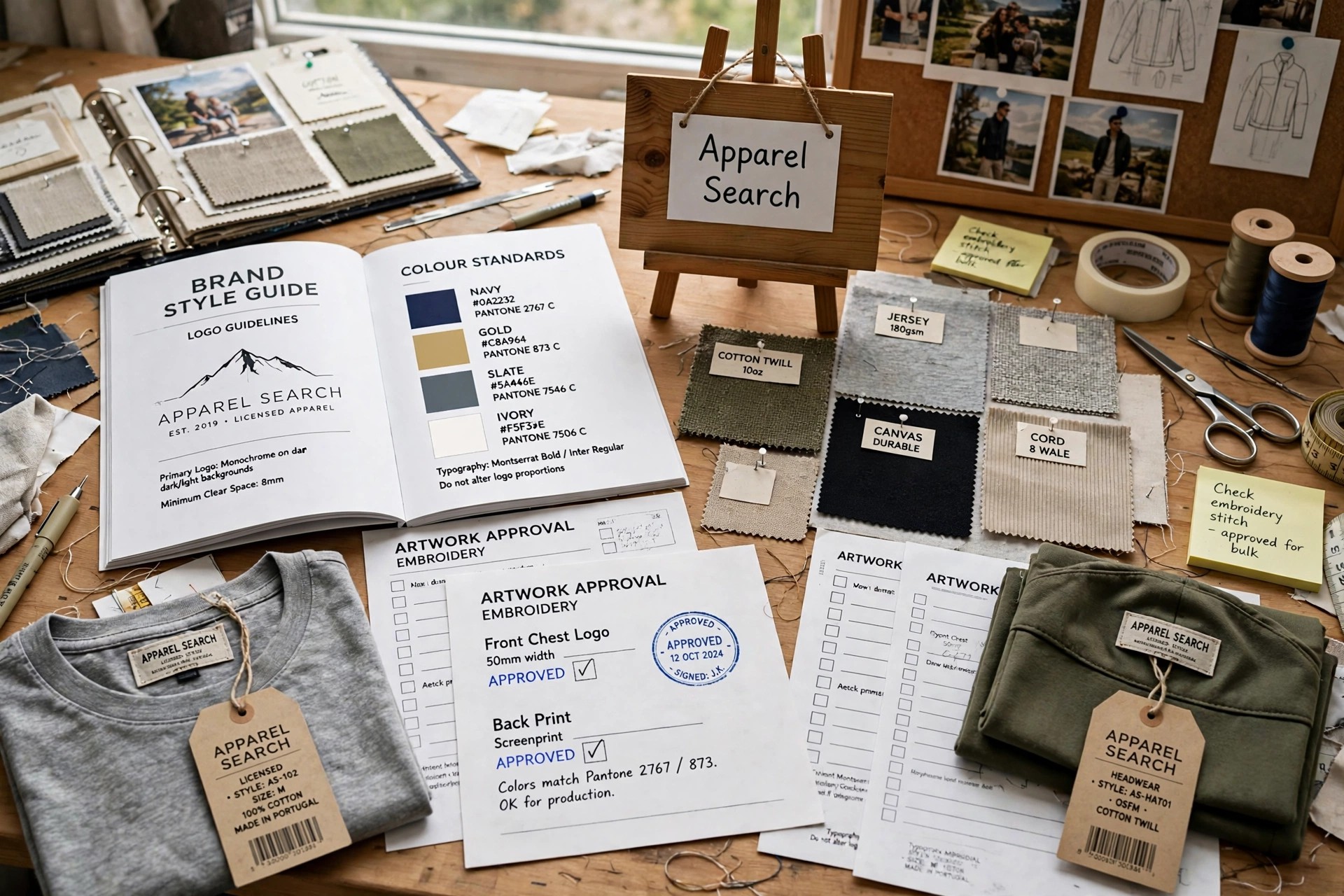
The design cycle begins with the licence agreement and the style guide. The agreement defines what the licensee may make — categories, territories, channels, term — and the style guide supplies the approved assets: logo lockups, character poses, pattern and icon libraries, colour standards and the rules for combining them. The designer builds ranges from those assets: graphics and garments for each season and each retail channel, from mass-market t-shirts carrying a character to better apparel carrying a discreet embroidered mark, always designing within the product categories the licence actually grants.
Approvals structure the calendar as firmly as sampling does. Designs pass through staged licensor approval — concept, pre-production sample, final production — submitted through the licensor's system with artwork, fabrics, colours and trims shown exactly as intended. Comments come back as approvals, rejections or requested changes, and the designer revises and resubmits without losing the season's deadlines, because a style that misses its approval window misses its delivery. Production samples are checked against the approved standard, since the licensor may audit product in stores and withdraw approval from garments that drift from what was passed.
Style Guides, Assets and the Rules of Other People's Brands
Working inside a style guide is a skill of its own. The guide's rules — clear-space around logos, forbidden colour combinations, character proportions that may not be redrawn, backgrounds that may not be used — are not bureaucratic decoration: they are how a global brand stays recognisable, and breaches can breach the licence itself. The licensed designer's creativity operates in the space the guide leaves open: garment design, fabric and technique selection, placement and scale within the rules, range architecture and the translation of assets into products each retail channel can sell. Strong designers become fluent in a property's world — its history, its audience, its upcoming releases — and design product that feels native to it.
Asset handling is part of the discipline. Licensed artwork files are controlled property: they are used at approved resolutions and sizes, never redrawn casually, never shared outside the licensee, and retired when a licence ends. The designer also distinguishes the properties in the portfolio — a company may hold a dozen licences with a dozen different guides and approvers — and keeps each property's assets, approvals and deadlines strictly separate. Sloppiness here is not a creative failing but a commercial and legal one, and employers test for the careful temperament as much as for the drawing hand.
Skills and Abilities the Role Requires
Garment and graphic design skill is the foundation — most licensed apparel is graphic-led, so the designer typically combines apparel construction knowledge with strong graphic craft: typography, logo application, print and embroidery techniques and their limits. On top sits guide literacy: reading a long style guide completely, extracting its hard rules, and designing to them first time, because every avoidable rejection costs a week the calendar does not have. Portfolio evidence for these roles shows licensed or brand-governed work handled accurately, not only free creative projects.
Process skills complete the profile: meticulous version control across approval stages, clear written communication with licensor brand-assurance teams, tact in negotiating a middle path when a retailer's request conflicts with a licensor's rule, and calm organisation across many properties and deadlines at once. Commercial awareness matters too — licensed product sells on the property's heat, and the designer watches releases, seasons and anniversaries in each property's calendar to time ranges to the moments customers will want them.
Qualifications, Training and Career Path
Licensed apparel designers usually come from apparel graphic design or fashion design, often entering through a licensee's studio as a junior designer or artwork specialist and learning the approval disciplines on live properties. Training in graphic design with apparel technique knowledge is the common base; knowledge of intellectual-property basics — what a trademark is, what licence terms mean — is a genuine advantage and is frequently taught in post. Employers value a record of error-free approvals as highly as a flair portfolio.
Careers progress to senior licensed designer and to design management across a licensee's property portfolio, with routes into brand assurance on the licensor's side — approving other designers' work — and into licensing management itself. The specialism is a durable one wherever brands extend into clothing, which is to say almost everywhere: entertainment, sport, fashion labels, universities and museums all license apparel, and each needs designers who can make its property wearable without ever making it unrecognisable.
Common Questions
What is licensed apparel?
Clothing made under a licence: a manufacturer pays the owner of a brand, character, team or name for the right to use that intellectual property on garments, within the categories, territories and rules the licence agreement sets.
Why do licensed designs need licensor approval?
Because the garments carry the owner's property and reputation. Designs pass staged approvals — concept, pre-production and production — against the style guide, and product that drifts from the approved standard can be rejected or withdrawn from sale.
How do you become a licensed apparel designer?
Build apparel graphic and garment design skills, learn style-guide and approval discipline in a licensee's studio — often starting as a junior designer — and develop working knowledge of trademarks and licence terms alongside a portfolio of brand-governed work.
More to Explore
- CAD Services
- Computer Assisted Design
- Fashion Schools and Education
- Fashion Careers
- Fashion Job Description Directory
- Licensing Assistant Job Description
- Fashion Employment Agencies
- Employment Search Engines
- Fashion Artists Guide
- Graphic Designers Guide
- Apparel Licensing
- Licensing Agents
- Licensing by Brand Name
- Licensing Companies
- Merchandising Clothing