Swimwear Designer Job Description
Designing swimwear across the whole category — stretch fabrics, fit in water and the resort-season calendar
A swimwear designer designs the garments made for the water: swimsuits, bikinis, swim trunks, boardshorts, rash guards and cover-ups, across women's, men's and children's ranges. It is one of fashion's most technically concentrated specialisms, because swimwear is worn with almost nothing underneath, is expected to fit like a second skin, and must keep that fit while wet, stretched, exposed to chlorine and sun, and dried a hundred times. The fabric is engineered elastane stretch, the fit tolerances are unforgiving, and the selling season is short and weather-driven. This page describes the swimwear designer's work across the whole category.
More Design Job Descriptions by Letter:
What a Swimwear Designer Does
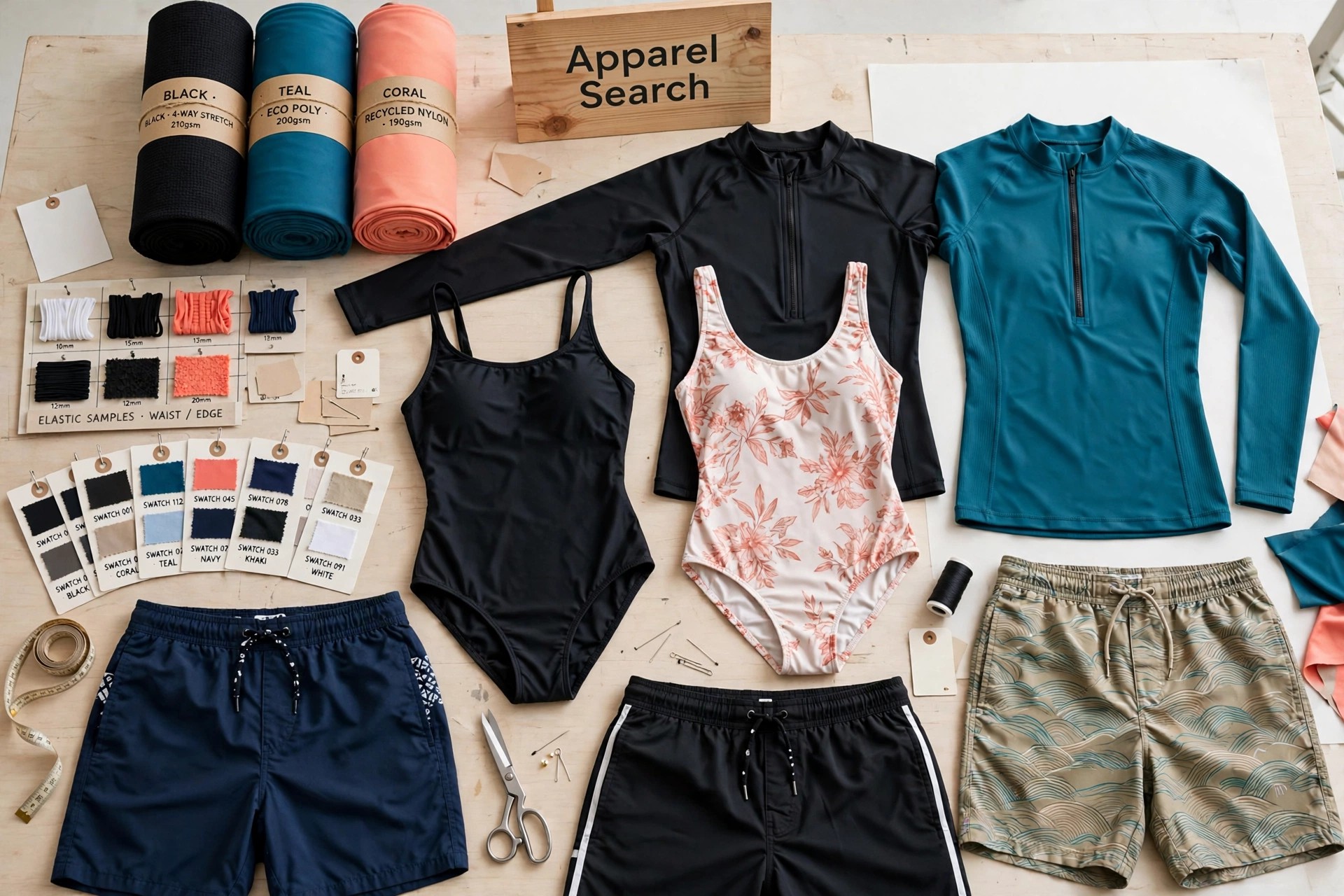
The designer builds ranges around the category's calendar: a main summer season and, for many brands, a resort or cruise collection that lands in winter for holiday travellers. Each range is planned by market and garment family — women's one-pieces and separates, men's trunks and boardshorts, children's suits and sun-protection styles — and developed from fabric and print first, because in swimwear the surface is the styling. Styles are sketched, prints and colour stories are placed on the garment shapes, and each style is specified for construction: strap and neckline engineering, lining, elastication, hardware and trims that must all survive salt water, chlorine and sunscreen.
Sampling is fit-critical in a way few categories match. Swim garments are fitted wet-tested as well as dry where facilities allow, checked for stretch recovery, opacity when wet, strap security and movement — a swimsuit is worn swimming, not standing still. The designer corrects patterns for negative ease, adjusts elastic tensions, and re-checks graded sizes, because stretch fit that works at the sample size can fail at the extremes of the range. Pre-production samples are sealed only when fit, fabric performance results and print placement all pass together.
Stretch Fabrics, Fit and Print
Swim fabric is a specialist textile: warp-knitted elastane blends, usually nylon or polyester with elastane, chosen for stretch percentage, recovery, chlorine resistance and colourfastness to light and pool chemicals. Polyester-based fabrics resist chlorine longer; nylon blends feel softer; recycled yarns now serve much of the market. The designer specifies fabric by weight and stretch behaviour, pairs it with linings and power-mesh support fabrics where the garment needs control, and understands that a print's scale and placement must be designed on a garment that stretches — a motif placed on flat fabric changes size and position on the body.
Fit engineering divides by market but shares one principle: the garment is drafted smaller than the body and held by controlled stretch and elastication. Women's styles add support engineering — underbands, moulded cups, boning and strap geometry. Men's styles turn on waistband construction, inseam length and liner design. Children's styles add growth room and easy dressing. Across all three, the designer works to test standards for stretch, recovery and durability, reads fit and returns evidence by size, and treats a style that twists, rides or fades as a design failure to be engineered out next season, not explained away.
Skills and Abilities the Role Requires
Stretch-fabric literacy is the foundation: knitted elastane fabrics, their weights, stretch and recovery behaviour, and the pattern drafting that negative-ease garments require. Print and colour skill carries unusual weight because swimwear styling is surface-led — placing repeats and placement prints on stretch garments, building colour stories that hold under sun and water, and designing across several markets at once. Construction knowledge covers elastication, bonding and seaming methods for stretch fabric, and hardware that resists corrosion.
The commercial skills are those of a short, sharp season. Swim ranges are committed early, sold fast and marked down hard if the weather or the fit fails, so costing accuracy, range discipline and honest reading of last season's returns matter. The designer collaborates with specialist swim factories, fabric mills and print studios, manages long sampling lead times against an immovable summer deadline, and keeps specification records precise across dozens of similar styles. Specialists who can design for more than one market — or go deep in one — are both employable patterns in this category.
Qualifications, Training and Career Path
Swimwear designers usually train in fashion design, with contour, swim or sportswear modules where available, and enter through assistant roles with swim brands, lingerie and contour companies, surf and active brands, or retailers' swim departments. Portfolios that persuade show stretch garments actually made and fitted, print placement worked out on garment shapes, and fabric choices explained — evidence of designing for a body in motion and in water, not only for a mood board.
Progression runs to swimwear designer and senior designer owning a market's range, and to design leadership across swim and resort categories. The specialism connects naturally to activewear and athleisure design, where the same stretch fabrics and fit engineering apply, and to the audience specialisms described in the children's, men's and women's swimwear pages of this directory. It is a small, expert category: experienced swim designers are known to each other, and good ones are recruited rather than advertised for.
Common Questions
What fabrics do swimwear designers work with?
Warp-knitted elastane blends — nylon or polyester with elastane — specified by weight, stretch and recovery, with chlorine resistance and colourfastness to light and pool water. Linings, power mesh and corrosion-resistant hardware complete the material palette, and recycled yarns now serve much of the market.
Why is swimwear fit so technical?
Swim garments are drafted smaller than the body and held by controlled stretch (negative ease), then must keep their fit wet, in motion and across many sizes. Elastic tension, strap engineering and grading all decide whether a suit stays in place and stays opaque — which is why sampling and fit correction dominate the development calendar.
How do you become a swimwear designer?
Train in fashion design, ideally with contour or swim study, build a portfolio of made and fitted stretch garments with print placement shown on garment shapes, and enter through assistant roles with swim, contour, surf or retail swim teams.
More to Explore
- Swimwear Shopping Guide
- Swimwear Factories — CMT Swimwear
- Men's Swimwear Wholesalers
- Women's Swimwear Wholesalers
- Merchandising Clothing
- Fashion Merchandising — Term
- Fashion Artists Guide
- Computer Assisted Design
- CAD Services
- Fashion Job Description Directory
- Fashion Employment Agencies
- Employment Search Engines
- Fashion Schools and Education
- Fashion Careers
- Fashion Directory
- Fashion Industry News
- Clothing Industry Portal