Children's Swimwear Designer Job Description
Designing children's swimwear as products — sun-protection fabrics, easy dressing, durability and room to grow
A children's swimwear designer designs swim garments sold in children's size ranges: swimsuits, swim trunks, rash vests and swim sets, specified entirely as products. The design brief is practical from the first sketch — the garment must protect against sun, go on and off easily, survive a season of pools, beaches, washing machines and growth, and be bought with confidence by the parent who pays for it. Colour and print do the persuading; construction, fabric performance and sizing do the satisfying. This page describes the role in those product terms: the fabrics, the features and the standards that shape children's swim design.
More Design Job Descriptions by Letter:
What a Children's Swimwear Designer Does
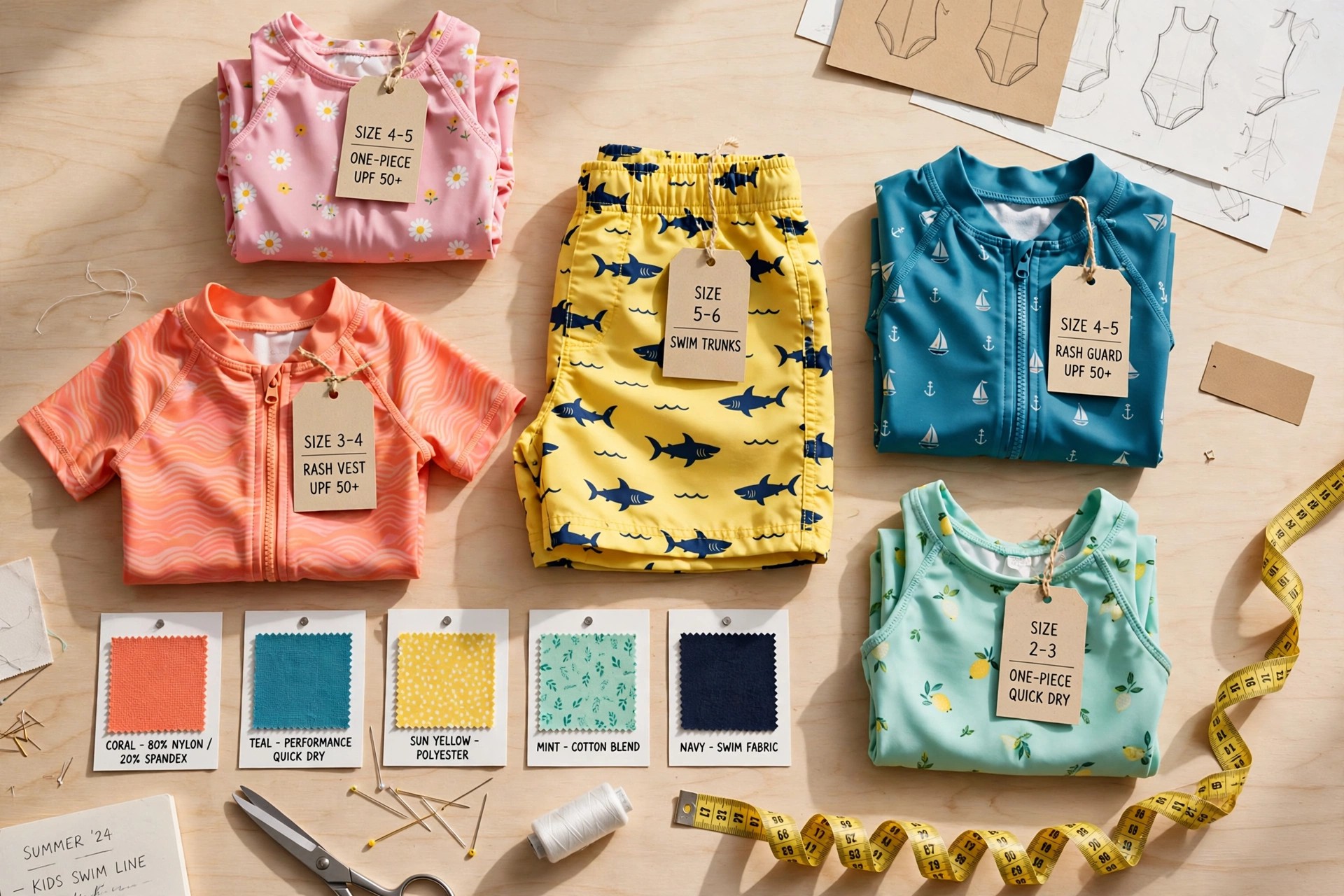
Working from the range plan, the designer covers the children's swim needs of the season by size band: baby and toddler swim items, younger children's suits and trunks, and older children's and early-teen styles, which borrow their styling cues from the adult ranges in simplified, appropriate form. Each style is specified as a product — fabric, print or colour, construction, fastening and size range — with the practical features of the category designed in from the start: wide, secure straps that stay on shoulders, fronts and backs that a child can manage independently, and coverage options including long-sleeve rash vests and leg suits for sun protection.
Development runs through samples checked size by size. A style produced across many children's sizes must grade sensibly — strap widths, elastic tensions and proportions adjusted per band rather than simply scaled — and the designer verifies measurements, stretch and recovery at the smallest and largest sizes, not only the middle one. Prints are checked for placement at each size so a character or motif is not distorted or cut awkwardly on small garments. Pre-production samples are assessed against the specification for seam strength, elastic security and colourfastness before bulk production is authorised.
Sun Protection, Safety and Easy Dressing
Sun protection is a designed feature of this category, not a marketing line. Many children's swim fabrics are tested and rated for ultraviolet protection (UPF), and the designer selects rated fabrics for coverage styles — rash vests, long sleeves, leg suits and hats in matching fabric — and ensures the product information states the rating honestly, including that protection covers only the skin the garment covers. Fabric choice balances that protection with stretch, quick drying and comfort against skin that may already be warm and sandy, and with colourfastness to chlorine and sunlight, because children's swimwear is washed and worn constantly through a holiday.
Safety and usability standards shape the details. Drawcords and ties on children's garments are governed by strict rules in major markets, so waist fastenings are designed to those specifications or engineered with elastic and fixed, secured ties instead; snaps, zips and zip guards are selected to work smoothly and avoid pinching; and seams are finished flat so they do not chafe during all-day wear. Easy dressing is a product requirement in its own right: wide neck openings, generous stretch and simple constructions that pull on and off — including when wet — are specified and tested on the size bands the style serves, because a garment a child cannot manage alone fails at its job.
Skills and Abilities the Role Requires
The skill base is the swimwear designer's — elastane stretch fabrics and their behaviour, negative-ease pattern principles, print placement on small garment shapes, costing — applied with specialist knowledge of children's sizing and the safety framework for children's clothing. Knowing how proportions change across children's size bands, which prints and colours each age group actually chooses, and which practical features decide whether a style is re-bought in the next size up, is the category expertise employers in children's clothing specifically hire for.
Commercial judgement runs close behind. Children's swimwear is bought on protection, durability and price, in a short season, often in a hurry before a holiday — so ranges must be legible at a glance: clear size banding, honest UPF and fabric information, prints grouped so matching sets and separates are easy to find. The designer works tightly with garment technologists on safety and testing, reads parent reviews and returns as design evidence — straps that slipped, fabric that faded, sizes that ran small — and keeps meticulous specification records across many sizes and sample rounds.
Qualifications, Training and Career Path
Designers in this specialism usually train in fashion design, with childrenswear or swim and contour modules where available, and enter through assistant designer roles in children's clothing companies, supermarket and high-street children's teams, or swim brands with a children's range. Portfolio work that helps most shows developed product ranges — garment flats, specifications, size-aware thinking and print placement at small scale — rather than styling alone, and any grounding in children's product safety standards strengthens an application immediately.
Progression leads to designer and senior designer within children's swim and beach ranges, then to design responsibility across children's categories, where swim sits alongside the wider children's wardrobe. Some designers move between children's and adult swimwear during a career, carrying the fabric and fit science with them; many specialise permanently, because the sizing knowledge, safety standards and seasonal rhythms of children's clothing form a distinct professional expertise that the industry values and that transfers across every children's category.
Common Questions
What does a children's swimwear designer design?
Swim garments sold in children's size ranges: swimsuits, swim trunks, rash vests and swim sets. Each style is specified as a product — stretch fabric, print, construction and fastenings — checked size by size for fit, durability, easy dressing and compliance with children's clothing safety rules.
What is UPF in children's swimwear?
UPF is the ultraviolet protection factor rating given to fabrics tested for sun protection. Designers select rated fabrics for coverage styles such as rash vests and leg suits, and state the rating honestly in product information, noting it protects only the skin the garment covers.
What makes children's swimwear different to design?
The purchaser and the wearer are different people, sizes span rapid growth, and safety rules govern cords, fastenings and construction. Growth room, easy on-and-off design, flat seams, sun-protection options and hard-wearing, washable fabrics are designed in from the first sketch.
More to Explore
- Swimwear Shopping Guide
- Swimwear Factories — CMT Swimwear
- Men's Swimwear Wholesalers
- Women's Swimwear Wholesalers
- Merchandising Clothing
- Fashion Merchandising — Term
- Fashion Artists Guide
- Computer Assisted Design
- CAD Services
- Fashion Job Description Directory
- Fashion Employment Agencies
- Employment Search Engines
- Fashion Schools and Education
- Fashion Careers
- Fashion Directory
- Fashion Industry News
- Clothing Industry Portal