Technical Designer Job Description
Turning design into garments that can be made — tech packs, measurements, fit sessions and factory communication
A technical designer is the fashion industry's translator between an idea and a manufactured garment. Designers decide what a style should be; the technical designer decides how it is measured, constructed and checked, writes those decisions into the tech pack a factory builds from, measures and fits every sample, and owns the corrections until the garment in bulk is the garment that was approved. It is a role of millimetres and documents, and production quality across the whole industry rests on it. Technical designers work in brands, retailers and manufacturers across every clothing category. This page explains the work in detail.
More Design Job Descriptions by Letter:
What a Technical Designer Does
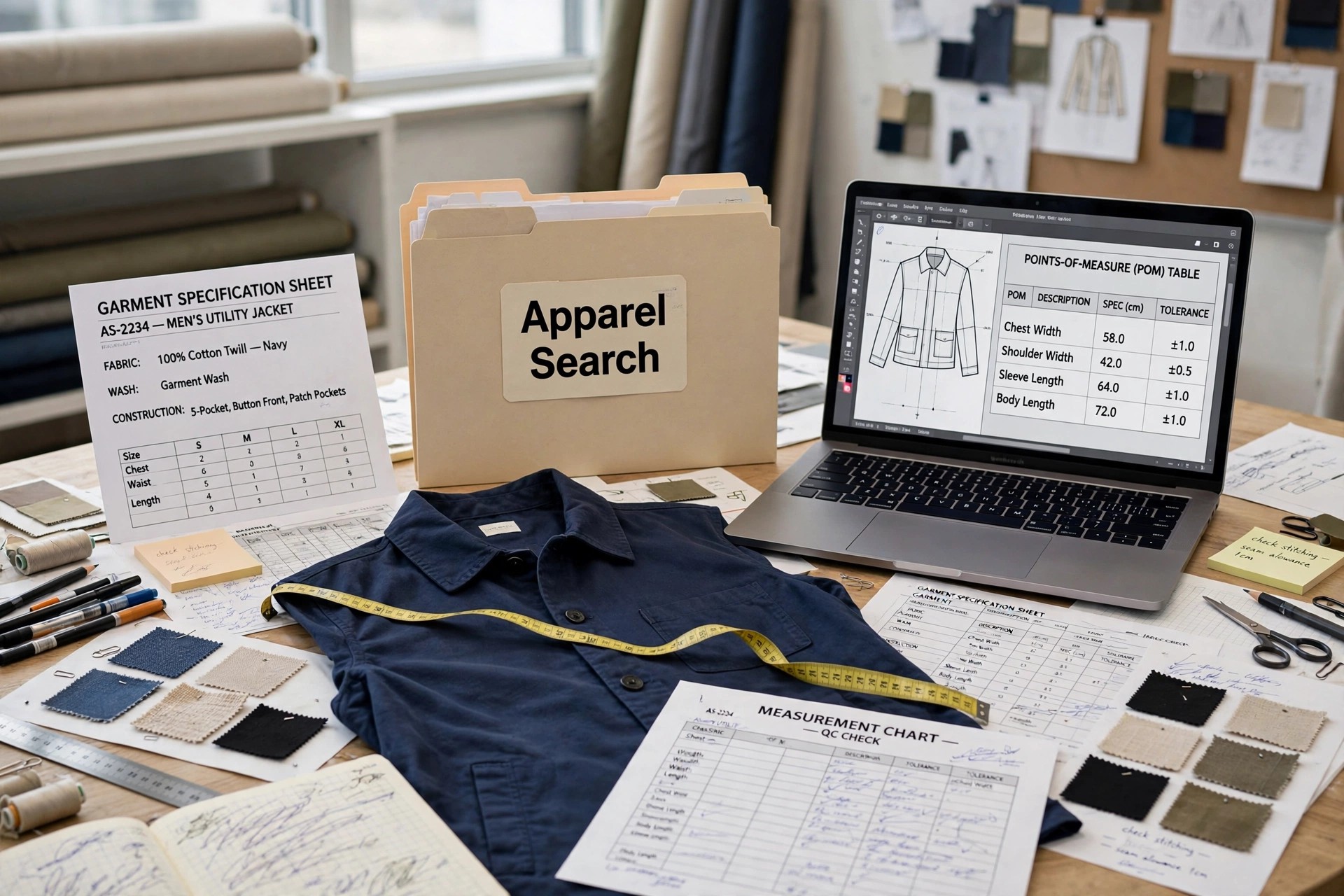
The core document is the tech pack: the complete specification for one style, built and maintained by the technical designer. It carries the technical flat drawings, the points-of-measure chart with a target measurement and tolerance for every dimension, construction and stitch details, fabric and trim specifications, labelling and packaging requirements, and the graded measurements for every size. The technical designer creates the first version from the designer's sketch and reference garments, then updates it at every sample stage, so the pack is always the single agreed record of what the garment is supposed to be.
Sample evaluation fills the working week. Each proto, fit sample and pre-production sample is measured against the pack, tried on the fit model or form, and assessed for fit, balance, construction and workmanship. The technical designer writes the fit comments — precise, illustrated instructions stating what is wrong, by how much, and how it should be corrected — and sends them to the factory, then checks the next sample against both the pack and the comments. The cycle repeats until the sample is approved as the production standard, and the same discipline is applied to production and shipment samples so bulk matches the approval.
Fit, Grading and Tolerances
Fit judgement is the role's craft core. The technical designer reads a garment on a body the way an editor reads a page: shoulder slope and sleeve pitch, chest and waist balance, rise and leg shape, neckline behaviour in movement. Corrections are specified as pattern changes with amounts, not impressions, and the designer understands how a change at one point moves measurements at others. Grading — the rule set that grows the base size into the full size range — is set and checked from this desk, because a style that fits its sample size and fails at the range's ends was graded, not fitted, carelessly.
Measurement discipline underpins everything. Points of measure are defined unambiguously (where exactly the chest is measured, how the sleeve is taken), tolerances state how far a bulk garment may sit from target before it fails, and measurement audits of samples and production are recorded against them. The technical designer also owns the block library — the proven base patterns each category reuses — and the fit standards for forms and models, so fit stays consistent across seasons and suppliers. When a garment is returned by thousands of customers for the same fault, this desk is where the cause is usually found, in a measurement, a tolerance or a grading rule.
Skills and Abilities the Role Requires
Pattern-cutting knowledge is the foundation — not necessarily cutting patterns daily, but understanding construction deeply enough to specify corrections a pattern room can execute without a second conversation. Measurement and specification writing must be exact and unambiguous across language and distance, since most factories receiving these packs work in a second language and build literally what the document says. Fluency in the standard tools — spreadsheet measurement charts, CAD flats, product lifecycle management systems where the company uses them — is assumed and tested.
The human skills decide seniority. Fit sessions involve designers defending aesthetics, merchants defending cost and factories defending feasibility; the technical designer holds the garment's integrity in the middle, with evidence. Communication with overseas factories — clear annotated photographs, measured diagrams, patient confirmation that comments were understood as intended — is daily work, as is prioritising a wall of samples against a shipping calendar. Employers value a record of categories fitted cleanly: low sample rounds, low bulk returns, approvals that stayed approved.
Qualifications, Training and Career Path
Technical designers usually train in fashion design, garment technology or pattern cutting; garment technology courses are the most direct route, teaching construction, measurement and specification as the main subject. Entry is through assistant technical designer or garment technologist assistant roles, measuring samples and maintaining packs under supervision, and hiring is evidence-led: employers set measurement and fit-comment exercises because the skills are demonstrable. Category experience — tailoring, knitwear, swim and contour, denim — is built category by category and is itself a marketable asset.
Progression runs to technical designer owning categories, senior technical designer across a division, and technical leadership roles setting fit and quality standards company-wide. The expertise transfers into quality assurance, product development and production management, and experienced technical designers are recruited by manufacturers and sourcing agents as readily as by brands. As supply chains lengthen and returns grow more expensive, the role has moved steadily from the back room toward the centre of how clothing businesses protect their product.
Common Questions
How is a technical designer different from a fashion designer?
The fashion designer creates the style — silhouette, fabric, styling. The technical designer makes it manufacturable: building the tech pack, setting measurements and tolerances, fitting every sample and correcting it with the factory until bulk production matches the approved garment. The roles are partners, not substitutes.
What is a tech pack?
The complete specification document for one style: technical flats, a points-of-measure chart with targets and tolerances for every size, construction and stitch details, fabric and trim specifications and labelling requirements. The factory builds from it, and the technical designer maintains it as the single agreed record of the garment.
How do you become a technical designer?
Study fashion design, garment technology or pattern cutting — garment technology is the most direct route — and enter through assistant technical roles measuring samples and maintaining packs. Employers test measurement accuracy and fit-comment writing directly, because both are demonstrable skills.