Textile Knit Designer Job Description
Designing knitted fabrics — stitch structures, jacquard and intarsia, yarn and machine as one design system
A textile knit designer designs knitted fabrics themselves — the stitch structures, colourwork and yarn combinations that become sweater cloth, jersey, knitted dress fabrics and technical knits. Where the sweater designer designs a garment, the knit textile designer designs the material it is made from, working at the level of the loop: every stitch is a decision, and the fabric's texture, stretch, weight and pattern are all built in the same act of knitting. These designers work for knitting mills, knitwear manufacturers, yarn companies and brands developing exclusive fabrics. This page explains the specialism inside textile design.
More Design Job Descriptions by Letter:
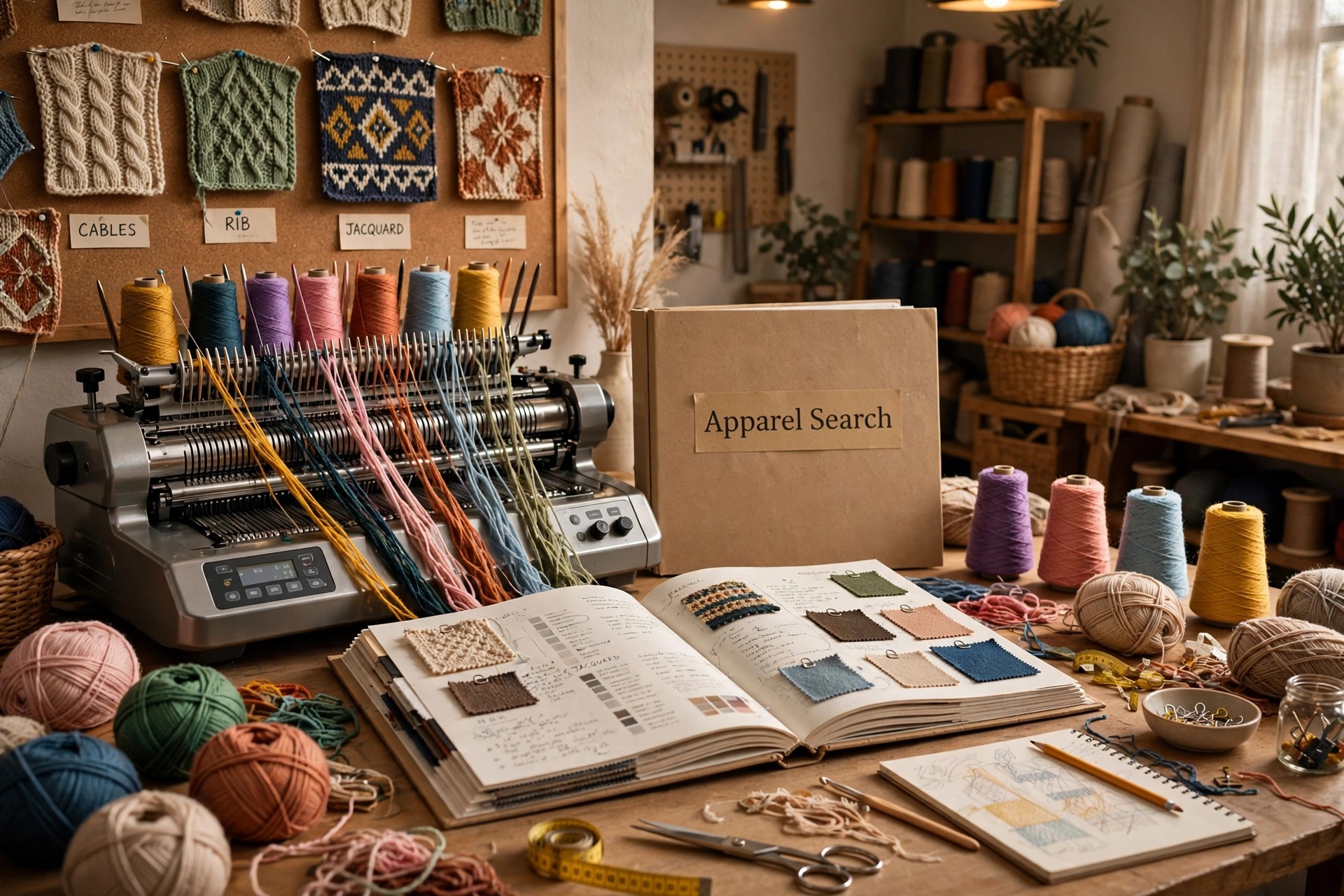
What a Textile Knit Designer Does
The design unit is the swatch. The designer develops stitch ideas — ribs, cables, moss and waffle textures, lace and pointelle, jacquard and intarsia colourwork, inlay and plated effects — knitting trial swatches on sample machines, adjusting yarn, gauge and tension until the structure behaves: flat where it should lie flat, elastic where it should recover, stable where a garment will be cut from it. Successful swatches become fabric designs, specified completely — yarn and count, machine gauge, stitch notation or programme, width, weight and finishing — so a mill can reproduce them in bulk at commercial speed.
Collections are built seasonally for the customers who buy knitted fabric and knitwear capacity: fashion brands, sweater manufacturers and retailers' own-label teams. The designer presents fabric ranges as knitted lengths and made-up garment trials, because knit fabric sells by handle and drape as much as by pattern. Development feedback flows back into the swatch library — which structures held their shape in wear, which colourwork sold, which yarns pilled or twisted — and each season's designing starts from that evidence as much as from trend research.
Stitch Structures, Colourwork and Machines
Stitch knowledge is this specialism's deep craft. Single-jersey, rib and interlock structures form the base fabrics; tuck, miss and transfer stitches build texture and lace; jacquard knits pattern in several colours with the unused yarns floated or knitted in behind; intarsia inlays each colour area separately for clean, lightweight colour blocks at higher machine time. The designer knows what each structure does to a fabric's stretch, recovery, edge behaviour and cost, and chooses structures the way a woven designer chooses weaves — as engineering with a visible surface.
Machine fluency turns that knowledge into fabric. Modern flatbed and circular machines are programmed, and the knit textile designer works with — or as — the programmer: translating a stitch idea into machine instructions, setting courses, densities and yarn feeds, and proving the design on the sample machine before bulk. Yarn is the other half of the system: fibre, blend, count, twist and finish decide whether a stitch reads crisply or blurs, whether a fabric pills, and what it costs per garment. The designer specifies yarn as precisely as structure, and tests both together, because in knitting neither exists without the other.
Skills and Abilities the Role Requires
The foundation is hands-on knitting competence: the designer must be able to make the fabrics they draw, on real machines, and read a knitted structure from a swatch the way a musician reads a score. Layered on it is design range — colour judgement for jacquard and stripe work, pattern scale for garment application, and the collection sense to build fabric stories a brand can range from. CAD knit simulation and programming software are standard tools, used to prove structures before machine time is spent.
Production and commercial judgement complete the role. A beautiful stitch that knits slowly, wastes yarn or distorts in finishing is a cost, not a design; the specialist learns each structure's machine time, yarn consumption and defect risks, and designs to the price the fabric must sell at. Record-keeping is exact — stitch notations, programmes, yarn specifications and finishing routes archived so a fabric can be re-knitted identically seasons later — and collaboration with yarn spinners, machine technicians and garment designers is the daily texture of the job.
Qualifications, Training and Career Path
Textile knit designers usually train in textile design or knitted textiles, where machine access and stitch teaching are the course's core, and enter through junior roles with knitting mills, knitwear manufacturers or yarn companies' design studios. Portfolios for this specialism are swatch-led: books of knitted structures with their notations and yarn specifications, fabric lengths and any garment applications, showing both invention and production discipline. Machine programming skill, where a candidate has it, is a distinct hiring advantage.
Progression runs to senior knit designer and leadership of a mill's or brand's knit development, with the craft also feeding sweater and knitwear garment design — the neighbouring specialism in this directory — and technical knitted fabrics for sportswear and interiors. Experienced knit textile designers are a small, identifiable community in the industry: the combination of stitch invention, machine fluency and yarn knowledge takes years to build, and employers who knit value it accordingly.
Common Questions
How is a textile knit designer different from a sweater designer?
The sweater designer designs a finished garment — style, fit and range. The textile knit designer designs the knitted fabric itself: stitch structures, jacquard and intarsia colourwork, yarn and machine settings, supplied as fabric or knit capacity that garment designers then use.
What is the difference between jacquard and intarsia knitting?
Jacquard knits pattern across the row with several colours, carrying unused yarns behind the fabric — efficient and suited to repeating patterns. Intarsia knits each colour area from its own yarn supply with no floats, giving clean, lightweight colour blocks at greater machine time and cost.
How do you become a textile knit designer?
Study textile design or knitted textiles with real machine access, build a swatch-led portfolio with stitch notations and yarn specifications, and enter through junior roles with knitting mills, knitwear manufacturers or yarn companies. Programming skill is a strong advantage.
More to Explore
- Knitting — Definition
- Merchandising Clothing
- Fashion Artists Guide
- Computer Assisted Design
- CAD Services
- Fabric Mills
- Fashion Job Description Directory
- Fashion Employment Agencies
- Employment Search Engines
- Fashion Schools and Education
- Fashion Careers
- Fashion Directory
- Fashion Industry News
- Clothing Industry Portal