Textile Woven Designer Job Description
Designing woven cloth from the warp out — weave structures, yarns, colourways and loom-ready specifications
A textile woven designer creates the cloth itself. Where a knit designer works in loops, the woven designer works in two crossing yarn systems — the warp, held lengthways under tension, and the weft, woven across it — and builds fabric by deciding how those yarns interlace, what they are made of, how thick they run and in what colours they meet. Shirtings, denims, tweeds, jacquard brocades, suiting checks and furnishing-weight cloths all begin as a woven designer's decisions, long before a garment designer cuts a single pattern piece from them.
More Design Job Descriptions by Letter:
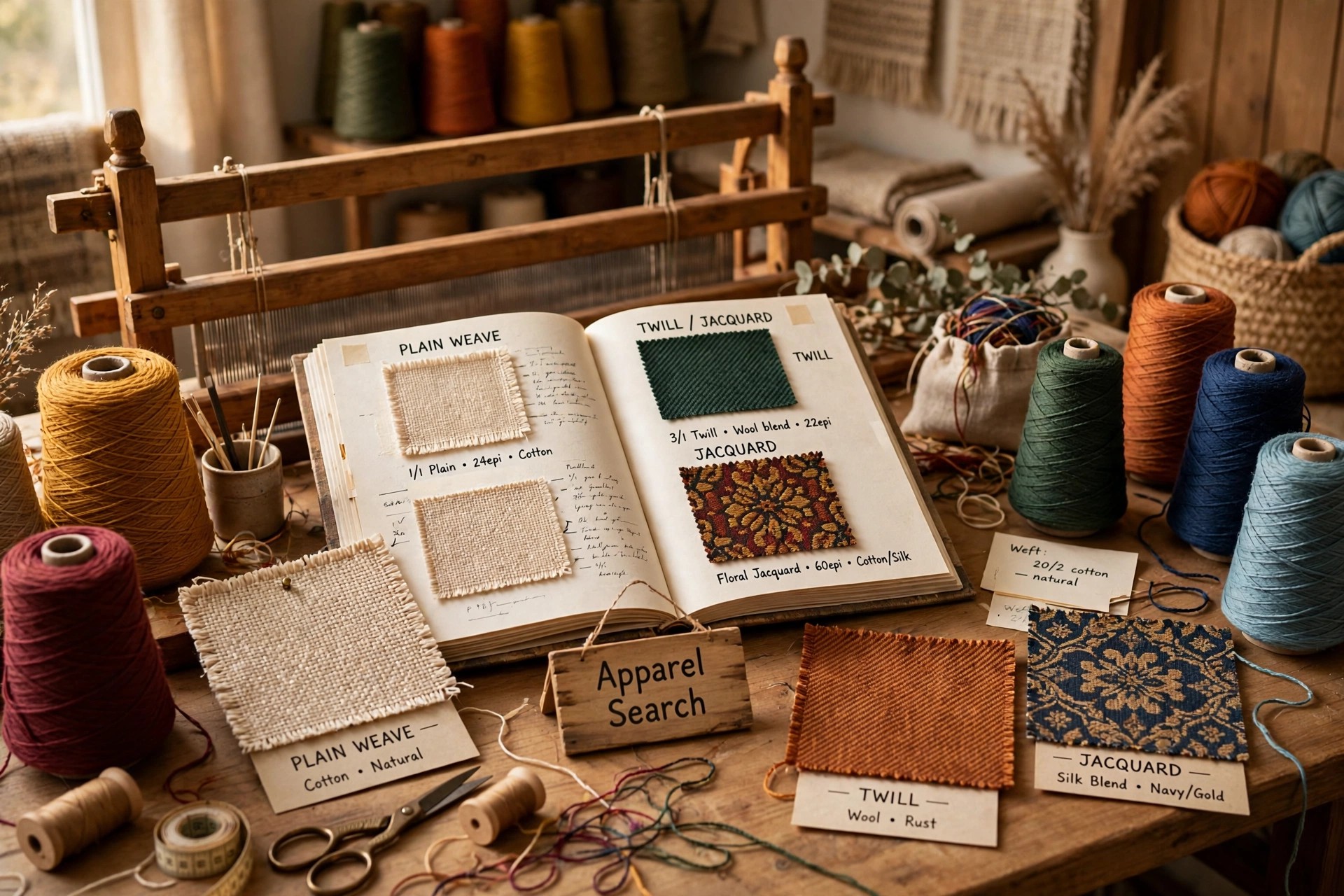
Designing Cloth From the Warp Out
The core of the work is weave structure. Plain weave gives crisp, stable cloth such as poplin and organdie; twill lines produce denim, gabardine and drill; satin weaves float yarns across the surface for lustre; and dobby and jacquard mechanisms let the designer weave pattern directly into the fabric — spots, stripes, checks, florals and fully pictorial motifs that no print can imitate for depth. The woven designer drafts these structures thread by thread, knowing that every interlacing choice changes the fabric's hand, drape, strength, shrinkage and cost at once.
Yarn choice is the second design material. Fibre — cotton, wool, linen, silk, viscose or synthetics and their blends — sets character and price, while yarn count, twist and texture (slub, bouclé, chenille, filament) shape the surface before weaving even starts. Colour is planned into the cloth through warp and weft colour orders, so a check or stripe is an arithmetic pattern of threads the designer writes out in full, and a skilled designer can predict how two yarn colours will optically mix where they cross.
From Brief to Loom-Ready Specification
Work usually begins from a brief: a garment designer's mood board, a brand's seasonal colour palette, a mill's request for a new range, or a buyer's target price and end use. The woven designer translates that brief into colourways and woven trials, drafting structures on textile CAD software that simulates the cloth on screen and then drives sample looms. Strike-offs and blanket trials — grids showing one design in many colour and structure variations — are assessed for hand, appearance and faults before any design is approved for bulk.
An approved design leaves the studio as a complete technical specification: yarn types and counts for warp and weft, thread densities, the weave draft and peg plan or jacquard file, colour order, finished width, weight and the finishing processes (washing, brushing, coating, sanforising) that will give the cloth its final feel. Accuracy matters commercially — an error in the spec is woven into thousands of metres before anyone sees it, so woven designers check their paperwork with a care closer to engineering than to sketching.
Working With Mills and Garment Designers
Most woven designers work in constant conversation with mills. They visit looms during sampling, judge whether a fault — a broken end, a barre mark, a slub where none was designed — is a weaving error or a design problem, and adjust structures that prove too fragile, too slow or too expensive to weave at production speed. They also sit between mill and garment designer, explaining what a fabric can and cannot do: a structure that drapes for a dress may be hopeless for tailoring, and part of the job is steering garment teams toward cloth that will survive cutting, sewing and wear.
Quality and testing run through the working week. The designer reviews lab results for colourfastness, dimensional stability, abrasion and tear strength against the end use, approves bulk shade against the standard, and investigates when production cloth drifts from the sample. In vertically organised companies the same designer may follow a fabric from first CAD draft to the garment rail; in a mill, one designer serves many brands and learns to switch aesthetic languages several times a day.
Skills and Tools of the Woven Designer
The craft skills are drafting literacy — reading and writing weave plans, lifting plans and threadings without hesitation — plus a trained eye for colour interaction and a tactile memory for yarn behaviour built by handling thousands of samples. Digital tools now carry much of the drafting: textile CAD systems simulate weaves, generate colourways and output loom files, and general graphics software handles mood boards and presentation. Numeracy is quietly essential, because ends and picks, yarn counts and cost per metre are arithmetic, and costing a design out of its market is a professional error, not an artistic one.
Qualifications and Training Routes
Most woven designers arrive through textile design degrees or fashion-and-textiles courses with a serious woven pathway, where they learn to weave on hand looms and sample looms, draft structures and build a portfolio of actual cloth — in this trade the portfolio is physical, and employers handle the fabrics in it. Weaving apprenticeships and mill traineeships remain a second respected route, particularly in heritage weaving regions, and CAD specialisation or dyeing and finishing knowledge widens employability. Short courses in jacquard design or specific CAD systems are common mid-career additions as loom technology changes.
Work Environment and Career Path
Woven designers work in mill design studios, in the fabric teams of brands and retailers, in trend-led design studios selling ranges to many customers, and freelance from their own studios with sample-loom access. The work is studio-based but mill-floor time is regular, and the calendar follows fabric seasons, which run ahead of garment seasons. Progression leads to senior woven designer, fabric design manager, head of textiles within a brand, or mill design director; some experienced designers build independent studios whose woven ranges are bought by brands worldwide. It is a specialism where deep technical mastery compounds — the designer who truly understands looms becomes steadily harder to replace.
Common Questions
What is the difference between a woven textile designer and a print designer?
A print designer creates pattern applied onto finished cloth, while a woven designer creates the cloth itself: the pattern, checks and textures are formed by the interlacing of coloured warp and weft yarns during weaving, so structure, hand and cost are all part of the design.
Do woven textile designers need to know how to weave?
Yes — at least to sample-loom standard. Employers expect designers who can draft a weave, thread a loom, weave trials and diagnose faults, even though bulk production weaving is done by mill technicians on industrial looms.
Where do woven textile designers work?
In textile mills, the fabric departments of fashion brands and retailers, independent design studios that sell fabric ranges, and freelance practice. The work is found wherever woven cloth is developed — apparel, interiors and technical textiles alike.
More to Explore
- Woven Fabric Definition
- Textile Mills
- Merchandising Clothing
- Fashion Artists Guide
- Computer Assisted Design
- CAD Services
- Fashion Employment Agencies
- Employment Search Engines
- Fashion Job Description Directory
- Fashion Industry News
- Fashion Directory
- Fashion Schools and Education
- Fashion Careers
- Clothing Industry Portal