Trend Forecaster Job Description
Reading cultural signals early and turning them into colour, fabric and silhouette direction fashion teams can use
A trend forecaster works ahead of the fashion calendar, identifying what people will want to wear one, two or more seasons before those clothes reach a rail. The job is disciplined anticipation: gathering weak signals from culture, streets, runways, media, retail and social change, testing them against each other, and distilling them into direction — colours, fabrics, silhouettes, details and attitudes — that designers, buyers and merchandisers can act on while there is still time to develop product. Good forecasting looks like intuition from outside; inside, it is research method plus judgement.
More Design Job Descriptions by Letter:
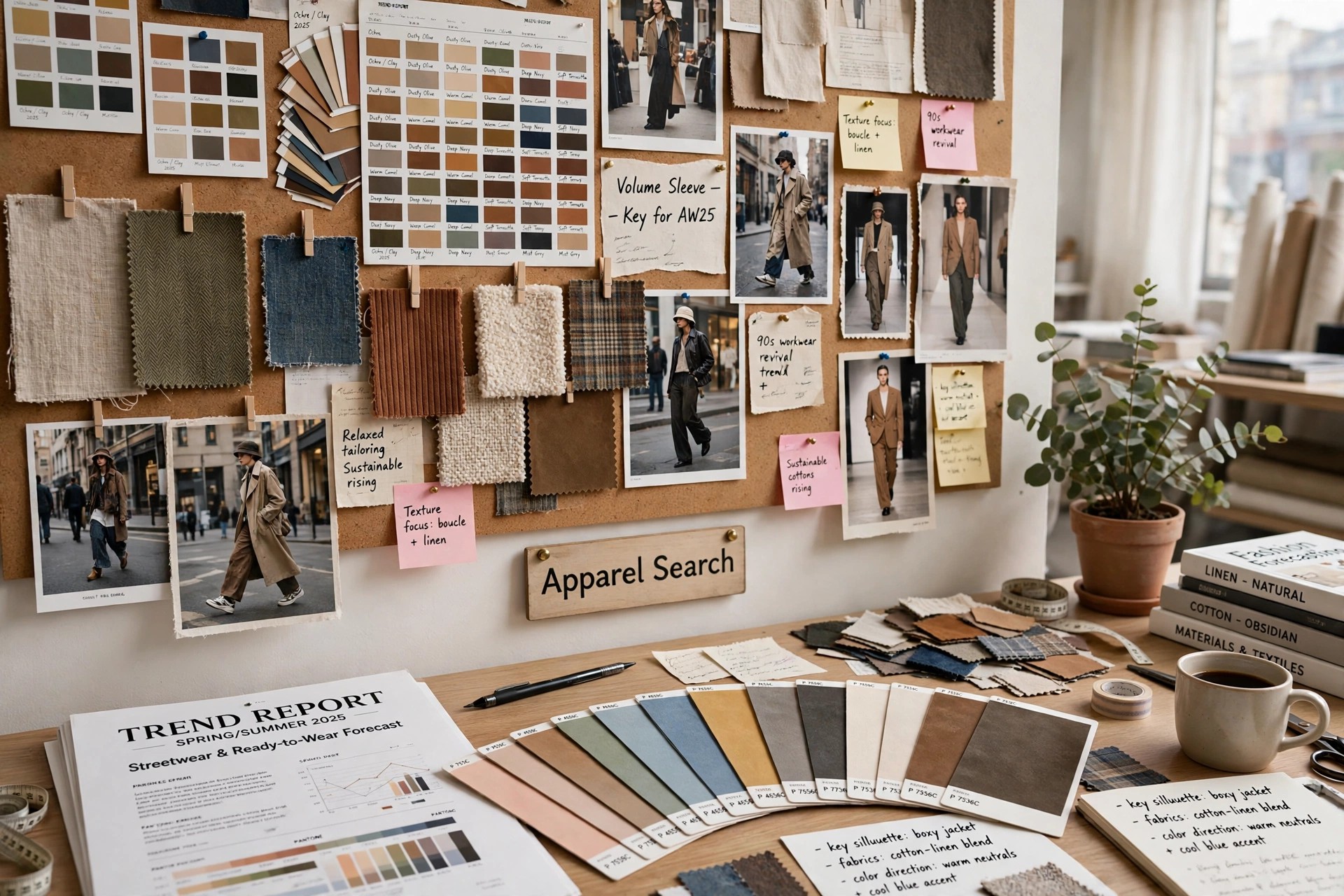
Reading Signals Before They Become Seasons
Forecasters scan far wider than fashion itself. Exhibitions, film, music, interiors, automotive colour, technology launches, political mood, economic pressure and demographic shifts all feed the file, because clothing choices echo the wider culture with a lag the forecaster learns to estimate. Street observation matters as much as spectacle: how people in different cities are actually styling garments — lengths layered, trainers worn with tailoring, vintage mixed with new — often signals adoption earlier than any catwalk, and forecasters document it with photography and notes on research trips built into the working year.
Signals are worthless until they are sorted. The forecaster separates genuine emerging direction from noise — a single celebrity outfit, a one-week social media flare — by looking for the same impulse arriving independently from several sources, and by tracking where a look sits on its adoption curve: innovator, early adopter, mainstream, decline. Calling a trend too early wastes a client's money as surely as calling it too late, so the craft lies in timing as much as in spotting.
Building the Forecast: Colour, Fabric and Form
The deliverable of all that research is a structured forecast. Colour stories come first for most clients, because dyeing and fabric decisions lock earliest: the forecaster builds palettes with core, fashion and accent levels, specifying how colours combine and which product categories each serves. Fabric and yarn direction follows — surfaces, weights, finishes and pattern types, from jacquards to prints — and then silhouette and key items: the shapes, lengths, volumes and details expected to carry the season, plus styling guidance on how pieces are worn together.
Forecasts are packaged to be used under time pressure. Trend agency forecasters produce books, digital platforms, presentations and workshops for many subscribing clients; in-house forecasters tailor the same material to one brand's customer, price level and handwriting, translating broad cultural direction into stories a specific design team can draw from without losing its identity. Either way, mood imagery must be backed by reasoning the forecaster can defend in a room full of sceptical merchants.
Presenting, Persuading and Being Accountable
A large share of the job is communication. Forecasters present to design directors, buyers and executives, walk teams through evidence, and adapt emphasis live — colour for the fabric team, key items for the buyers, consumer attitude for marketing. They attend trade fairs and fabric exhibitions, brief photographers and researchers, and increasingly analyse data: retail sales patterns, search behaviour and social listening now sit alongside the sketchbook, and the modern forecaster moves between qualitative instinct and quantitative checks without treating either as sufficient alone.
Accountability arrives a year or two later, when the season that was forecast actually sells — or does not. Serious forecasters review their calls against outcomes, note where adoption ran faster or slower than predicted, and refine their sources accordingly. That feedback loop, repeated over seasons, is what turns a stylist with opinions into a forecaster whose calls businesses plan money around.
Skills and Judgement the Role Demands
The visible skill is visual: an exceptional memory for colour nuance, silhouette and styling, and the ability to assemble imagery that makes an abstract direction feel inevitable. Underneath sit research discipline, pattern recognition across unrelated fields, writing that can name and frame a story memorably, and presentation confidence. Commercial literacy matters too — a forecast that ignores a client's price architecture or production lead times is decoration. Languages, travel readiness and cultural curiosity are practical assets in a role whose raw material is how different societies are changing.
Qualifications and Training Routes
Forecasters come from fashion design, fashion marketing, styling, journalism and buying; there is no single licence, but most hold a fashion-related degree and, more importantly, seasons of experience inside the industry whose decisions they now advise. Junior roles — research assistant, trend analyst, editorial assistant at an agency — teach the method: building boards, logging evidence, writing copy to deadline. In-house roles usually require prior design or buying experience, because the forecaster must know exactly how a design team consumes direction. A portfolio of past forecasts, ideally with their outcomes, is the senior currency.
Work Environment and Career Path
The role sits with trend agencies and forecasting platforms, inside larger brands and retailers as an in-house function, or in independent consultancy for experienced names. Work mixes desk research, travel to fashion capitals and trade events, studio sessions building seasonal stories, and presentation days with clients. Progression runs from analyst to forecaster to senior or creative lead of a forecasting team, head of trend within a brand, or founder of a specialist consultancy; some forecasters move into creative direction, where the same anticipatory judgement is applied to one label's whole output.
Common Questions
How far ahead does a trend forecaster work?
Typically two to five seasons ahead for colour and fabric direction, because dyeing, weaving and garment development lock in long before retail. Shorter-range nowcasting and in-season reaction work exist too, especially for fast-moving retail.
What is the difference between a trend forecaster and a stylist?
A stylist assembles looks for the present — shoots, shows and clients today. A forecaster researches emerging direction and documents, reasons and presents what will matter in future seasons, in a form design and buying teams can plan product around.
Do trend forecasters use data or instinct?
Both. Sales patterns, search behaviour and social listening provide evidence, but the professional value lies in interpreting scattered cultural signals and judging timing — data alone describes the present, while forecasting must commit to a future.