Fashion Event Planner Job Description
Producing the fashion industry's live moments — runway shows, collection launches, press days and brand events that run to the minute
A fashion event planner plans and produces the live events the fashion industry runs on: runway shows, collection launches, press presentations and press days, store openings, pop-ups, trade show stands and brand parties. The role turns a creative idea into a scheduled, budgeted, staffed production — venue, lighting, sound, seating, catering, garments, models, guests and press all arriving in the right order — and then runs the event itself to the minute. Event planners work in fashion brands and retailers, in public relations and production agencies, and independently for several clients. This page explains the production desk behind fashion's live moments.
More Marketing Job Descriptions by Letter:
What a Fashion Event Planner Does
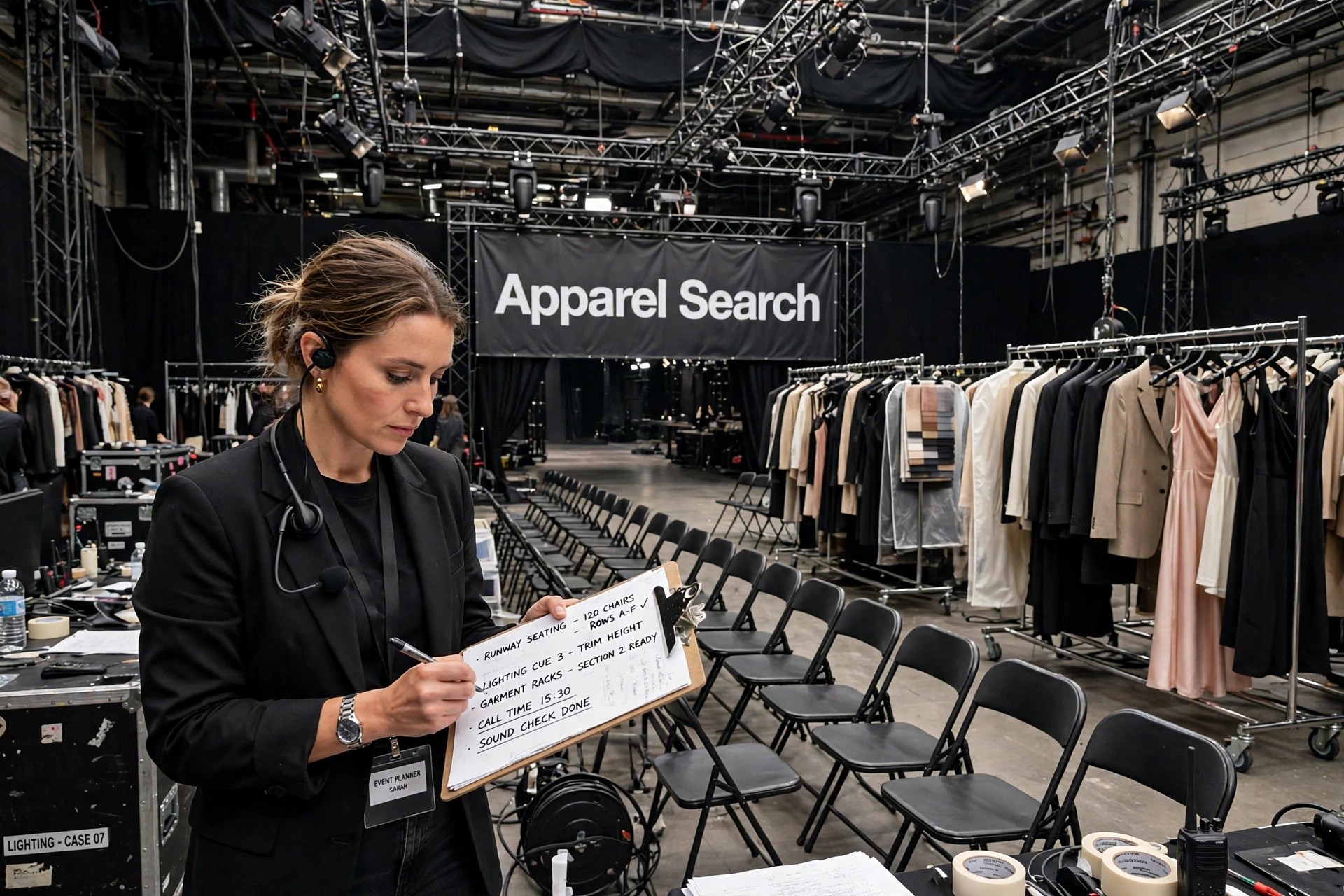
Every event starts as a brief: what the event must achieve, for which audience, on what date, within what budget. The planner answers with a production plan — venue options and site visits, a supplier list covering set build, lighting, sound, staging, catering and security, a critical path of deadlines, and a budget broken down by element with contingencies for the overruns live production always threatens. Approvals secured, the planner books and contracts suppliers, schedules garment and sample deliveries, and builds the guest operation: invitations, RSVP management, seating plans and the press and buyer lists the event exists to serve.
On the day, the planner runs the run-of-show: a minute-by-minute schedule covering load-in, rehearsals, hair and make-up calls, garment steaming and dressing, guest arrival, the show or presentation itself, photography and interviews, and load-out. The planner is the calm centre of a headset network — stage managers, dressers, technicians, security and front-of-house staff all take their cues from the production office the planner leads. When something fails, as something always does, the planner's contingency planning and composure decide whether the audience ever notices.
Shows, Launches and the Fashion Calendar
Fashion events cluster brutally. Fashion weeks compress a season's shows into days; launches follow collection drops; press days stack across the same weeks in the same cities. The planner's calendar is therefore a study in peaks — months of planning converging on a few frantic weeks — and in the logistics of an industry whose product is physical: garments that must be steamed, guarded, dressed and recovered; samples that cannot be lost because the sales campaign depends on them; venues that range from white gallery spaces to warehouses, historic houses and the street itself.
The work environment divides between office planning and on-site production, with site work involving early load-ins, late finishes and travel that follows the fashion calendar between cities. Event planners in brands produce their own company's calendar of events; agency and freelance planners carry several brands at once and may produce many shows in a single fashion week. The work is social, visible and unforgiving of disorganisation — an audience experiences an event exactly once, live, and there is no edit, no reprint and no second take.
Skills and Abilities the Role Requires
Production organisation is the core skill: the ability to decompose a glamorous idea into hundreds of scheduled, costed, assigned tasks and then hold them together under pressure. Budgeting is its twin — events burn money in real time, and the planner must know at any hour what has been spent, what is committed and where the contingency stands. Supplier knowledge matters practically: which staging company, lighting designer, caterer and security firm can be trusted with a fashion audience, and what each element of production genuinely costs.
People skills under pressure complete the profile. The planner directs large temporary teams, manages demanding creative directors and executives whose vision the event must realise, handles guests and press whose experience is the event's purpose, and solves problems publicly without visible panic. Fashion literacy — understanding show conventions, press expectations, buyer schedules and the etiquette of the front row — distinguishes a fashion event planner from a general events professional, and clients pay for exactly that fluency.
Qualifications, Training and Career Path
Event planners come from event management, hospitality, production, public relations and fashion business backgrounds; qualifications in event management or fashion marketing help, but hiring is portfolio-led — employers and clients ask what you have produced, at what scale, and whether it ran well. Entry routes include events assistant and production assistant roles in agencies and brands, showroom and press-day support work, and backstage dressing and production runner jobs during fashion weeks, which teach the live side of the trade faster than any classroom.
Progression runs to senior event planner and events or production manager roles, agency production leadership, and independent practice with a client roster built on reputation. Experienced fashion event planners also move into experiential marketing and brand experience roles as live events claim a larger share of fashion marketing budgets. The career is built event by event: a planner whose shows start on time, look effortless and come in on budget becomes known in an industry that runs on recommendation, and that reputation is the business.
Common Questions
What kinds of events does a fashion event planner produce?
Runway shows, collection launches, press days and presentations, store openings, pop-up shops, trade show exhibits, sample sales and brand parties — any live occasion where a fashion company meets its press, buyers, customers or partners in person.
What is a run-of-show?
The minute-by-minute production schedule for an event day: load-in, rehearsals, dressing and make-up calls, guest arrival, the show or presentation, photography and load-out, with every cue and responsible person named. The event planner writes it and runs the event from it.
How do you become a fashion event planner?
Gain production experience wherever events are made — agency or brand events assistant roles, press-day support, backstage and runner work at fashion weeks — and build a portfolio of events you helped produce; clients and employers hire on that record.
More to Explore
- Fashion Employment Agencies
- Employment Search Engines
- Fashion Job Description Directory
- Fashion Directory
- Fashion Industry News
- Fashion Schools and Education
- Fashion Careers
- Learn How to Become an Event Planner
- Apparel Industry Links
- Fashion Event Management
- Public Relations
- Fashion Week
- Fashion Blogs
- Fashion Calendar