Entry-Level Clothing Job Description
First jobs in fashion — where beginners start, what employers actually ask for, and how a first role becomes a career
Entry-level clothing jobs are the industry's ground floor: the roles a fashion business can fill with someone who has enthusiasm, reliability and basic skills rather than a track record. They cluster in four places — stores, where sales associates, cashiers and stock staff start; studios and workrooms, where assistants support designers and pattern makers; warehouses and distribution, where orders are picked, packed and shipped; and offices, where interns and junior assistants support buying, merchandising, marketing and e-commerce teams. The titles differ, but every entry-level role shares one purpose: real work, done properly, while the beginner learns how the business fits together.
More Miscellaneous Job Descriptions by Letter:
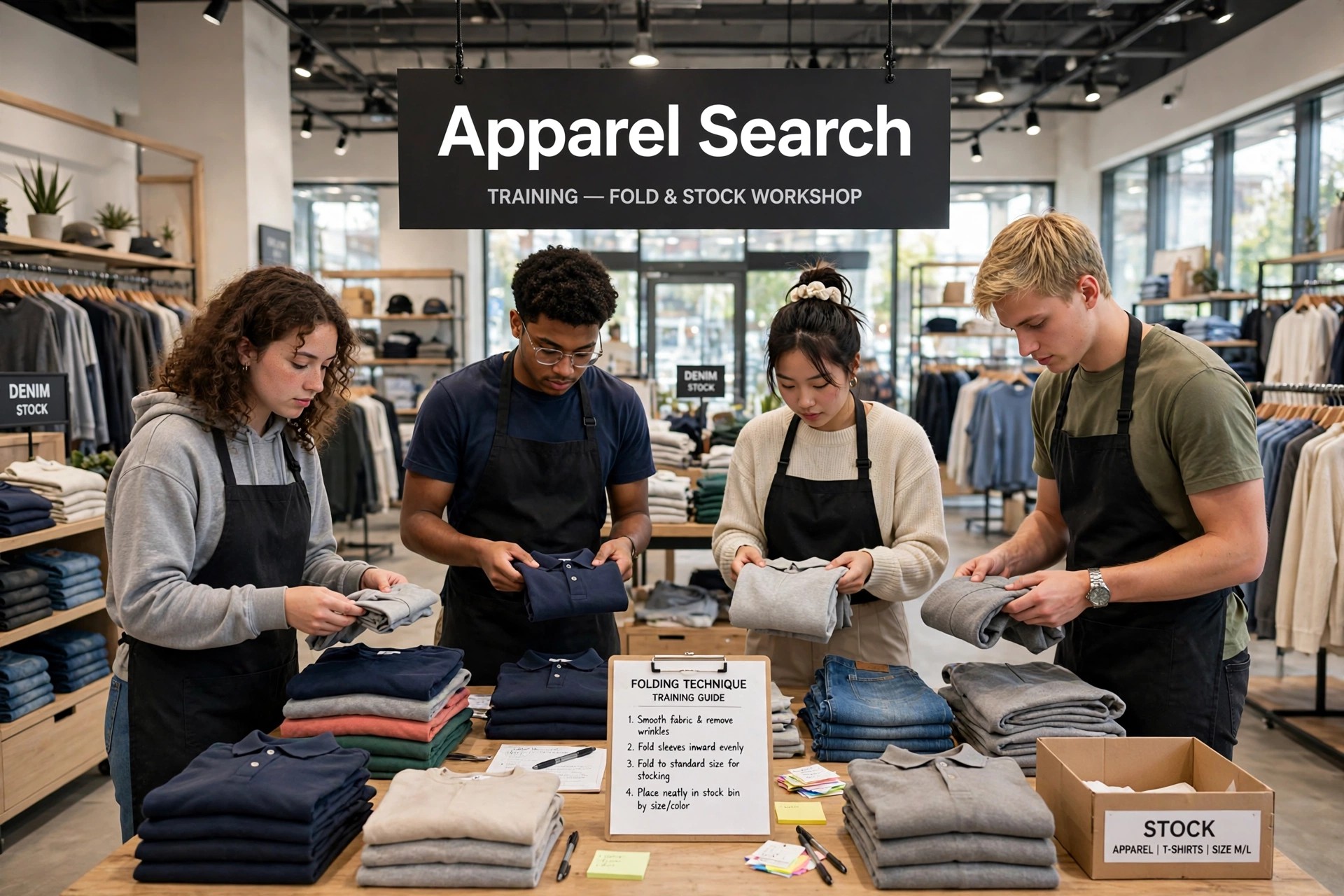
Where Entry-Level Fashion Jobs Are
Retail is the largest doorway. Sales associates help customers, keep departments tidy and stocked, work fitting rooms and tills, and learn the product by handling it daily. Stock and replenishment staff receive deliveries, process and ticket garments, and move them to the floor accurately — unglamorous work that teaches sizing, fabrics, seasons and sell-through faster than any classroom. Many of the industry's buyers, managers and executives began exactly here, and employers know it: a strong store record is a recognised first credential.
Behind the scenes, assistant roles open the production and office sides of the industry. Design and sample-room assistants organise fabrics and trims, run errands between suppliers, prepare samples and keep records. Warehouse and e-commerce fulfilment staff pick, pack, check and return garments at volume. Office juniors and interns file samples, update spreadsheets and product data, sit in on meetings and prepare reports. Each setting teaches a different part of the machine, so a beginner's first choice of doorway quietly shapes the career that follows it.
What Employers Ask For — and What They Train
The honest entry requirement is smaller than most beginners fear. Employers ask for a secondary-school education, clear spoken and written communication, basic numeracy and computer confidence, the legal right to work, and availability that matches the role's hours — weekends in stores, early shifts in warehouses. Fashion knowledge helps and enthusiasm is expected, but the decisive qualities are reliability, accuracy and willingness: turning up on time, every time, doing repetitive tasks carefully, and asking when unsure rather than guessing with a customer's money or a thousand garments.
Almost everything specific is trained on the job. Stores train till systems, service standards and product ranges; warehouses train scanning, packing and safety procedures; offices train their software and filing systems, and internships are structured training by design — a placement that teaches nothing is a failure of the placement, not the intern. What cannot be trained quickly is attitude, which is why interviews for first jobs probe motivation and dependability far more than technique. A beginner who treats training as the real pay of a first role extracts the most from it.
Skills to Build Before and After You Start
Before applying, build the evidence. Retail or customer-facing experience of any kind — a Saturday job, hospitality, volunteering — proves the service basics. Handling garments helps too: sewing, mending, selling clothing online or helping at shows and markets all demonstrate genuine interest with something to show for it. A tidy, specific application that names the company, the department and what you admire about its product beats a generic declaration of passion for fashion, because it shows the research habit every fashion job eventually requires.
After starting, build deliberately. Learn the product until you can answer questions without checking; learn the systems until your accuracy is trusted with money, stock or data; learn the calendar until you understand why the team is frantic in certain weeks. Ask for the extra task adjacent to your ambition — the stock associate who helps with a delivery discrepancy, the intern who stays to organise the sample sale — because entry-level careers advance on noticed usefulness. Keep notes of what you achieved; the second job's application is written from the first job's evidence.
Career Paths From the Ground Floor
Entry-level is a starting line, not a category of person. Store associates become senior associates, supervisors and store managers, or cross into head-office roles carrying floor knowledge that office-only careers lack. Sample-room and studio assistants progress toward design, pattern and product-development posts as their technical skills grow. Warehouse staff move into inventory control, logistics coordination and operations supervision, and office juniors and former interns are the natural applicants when assistant buyer, merchandising assistant and marketing assistant posts open.
The timeline is measured in seasons rather than weeks, and it rewards staying long enough to be trained twice — once for the job you were hired into, once for the job above it. Not every first role leads where its holder hopes, and moving sideways between doorways is normal early on. What entry-level work guarantees, in a business that runs on handled product and real customers, is that nothing learned at the ground floor is wasted: every senior role in fashion is easier to do well for someone who has folded, packed, sold or filed at the start of it.
Common Questions
What entry-level jobs exist in the clothing industry?
The main doorways are store roles such as sales associate, cashier and stock staff; studio and sample-room assistant posts; warehouse and e-commerce fulfilment work; and office junior and internship roles supporting buying, merchandising, marketing and design teams.
Do I need a fashion degree for an entry-level clothing job?
Usually not. Most entry-level employers ask for a secondary-school education, communication and numeracy, reliability and availability, and train the specific systems and product knowledge on the job. Degrees matter more for later specialist and graduate-entry roles.
How do internships help a fashion career?
An internship trades time for structured exposure: real tasks inside a working team, industry contacts, and evidence on a CV that you can function in a fashion workplace. Good placements teach; treat that learning, and the reference at the end, as the real return.
More to Explore
- Fashion Employment Agencies
- Employment Search Engines
- Fashion Job Description Directory
- Fashion Directory
- Fashion Industry News
- Fashion Schools and Education
- Fashion Careers
- Fashion Internships
- Fashion School Internship Programs
- Fashion Books
- Fashion Week
- Fashion Blogs
- Fashion Newspaper
- Fashion Book Directory