Fashion Editor Job Description
Assigning, editing and managing fashion content — the editor decides what runs, and answers for how well it reads
A fashion editor decides what a publication says about fashion, and makes sure it says it well. The craft is managerial as much as literary: planning coverage of seasons, shows and subjects; commissioning and assigning writers, stylists and photographers; editing their work into shape; and managing the contributors, deadlines and budgets of a magazine section, a newspaper fashion desk or a digital title. Senior fashion editors shape the taste and direction of the whole title, while the writers beneath them produce the individual stories. If a fashion writer's job is to write one piece brilliantly, the fashion editor's job is that every piece in the section earns its place.
More Miscellaneous Job Descriptions by Letter:
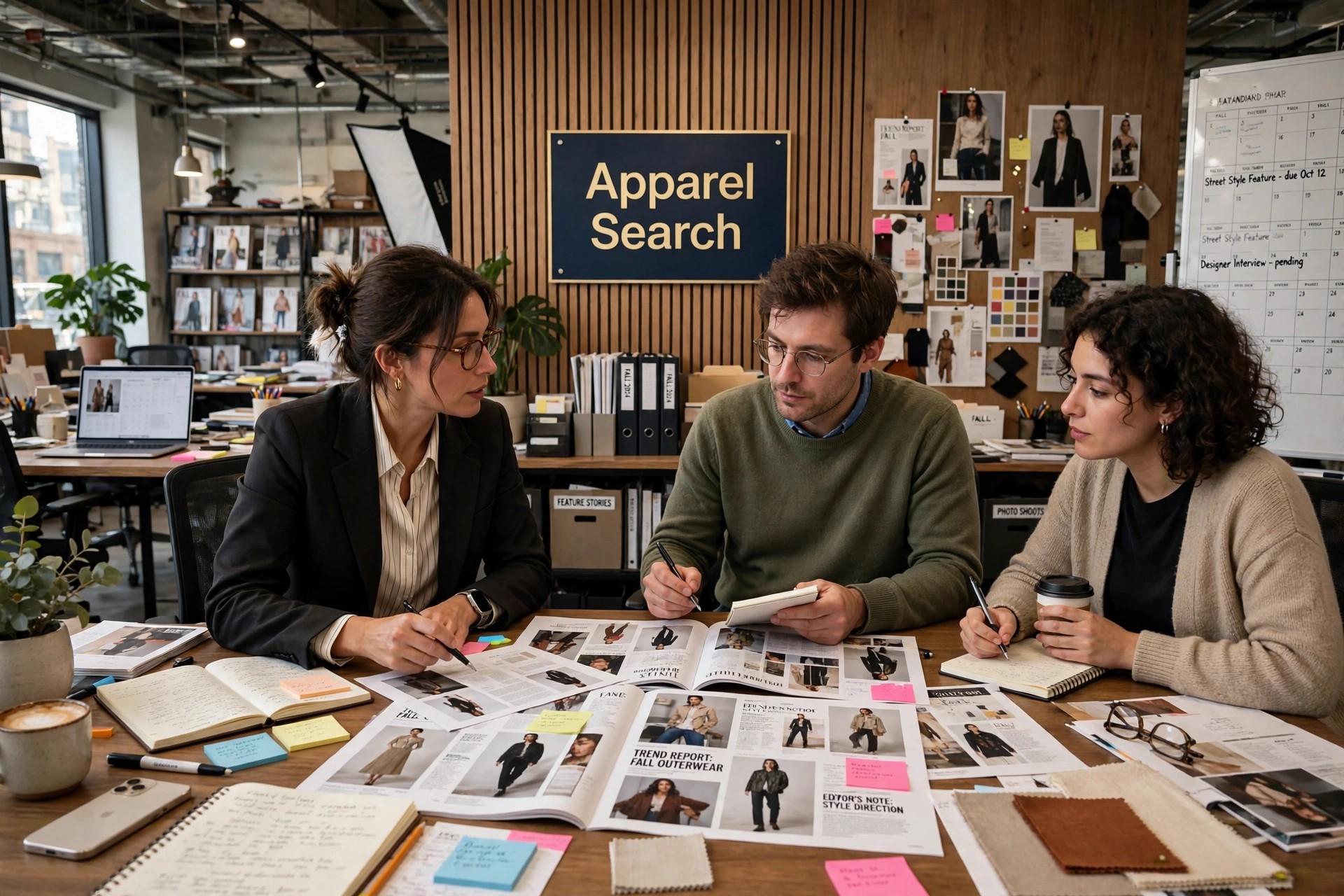
What a Fashion Editor Does
Planning leads the role. The editor builds the coverage plan for each issue or publishing cycle — which collections and trends to feature, which interviews and shopping pages to commission, how the fashion pages balance the spectacular with the useful — and defends that plan in editorial meetings against competing sections. Fashion weeks turn planning into fieldwork: the editor attends or directs coverage of the shows, decides which stories the title will own, and reallocates pages and people as the season's real narrative emerges instead of the predicted one.
Commissioning and editing fill the working week. The editor briefs contributors with precise assignments — angle, length, deadline, imagery, fee — then edits what returns: restructuring pieces that bury their point, cutting repetition, checking facts, names and prices, writing headlines and captions that sell the story honestly, and holding the title's style and standards across writers of very different voices. Page production follows the same discipline through layouts, picture choices and proofs, and in digital publishing the editor also programmes the day's fashion output, updating and re-promoting stories as events move.
Managing People, Budgets and Standards
A fashion desk is a small business inside a publication, and the editor runs it. Staff writers are hired, developed and reviewed; freelancers are booked, negotiated with and paid correctly; photography, styling and travel budgets are allocated across a season and accounted for. Samples and designer relationships need managing at this level too — the editor maintains the title's standing with fashion houses and PR teams, because access to collections, interviews and shoots is negotiated by editors, and a title's reputation for fairness and return of samples in perfect condition is an editorial asset.
Standards are the other management duty. The editor enforces accuracy and ethics across the desk: credits correct, prices and stockists verified, sponsored and gifted material handled under the title's disclosure rules, images used within their rights. When a piece draws a complaint or a legal question, it is the editor who answers. This accountability — for taste, for truth and for the team's conduct — is exactly what separates editing from senior writing, and why editors are appointed on judgement as much as on prose.
Skills and Abilities the Role Requires
Editorial judgement comes first: recognising the story inside a season's noise, knowing which commission will fail before it is made, and improving a good piece into a memorable one with a few exact changes. Fashion knowledge must match it — designers' histories, garment and fabric literacy, retail awareness — because an editor cannot brief or challenge specialists credibly without it. Writing and editing craft remains essential even though editors write less: headlines, standfirsts, captions and the rescue of broken copy are all writing of a concentrated kind.
Organisation and diplomacy carry the rest. An editor runs several deadlines at different stages simultaneously, absorbs a contributor's delay or a show's cancellation without the reader ever seeing the join, and delivers criticism that talented writers accept rather than resent. Commercial awareness matters in modern titles — audience data, search behaviour and the advertising environment all shape commissioning — but the editor's defining skill is holding the line between serving the audience and merely chasing it.
Qualifications, Training and Career Path
Fashion editors are promoted from fashion writing and sub-editing. The standard ladder runs editorial assistant, fashion writer or reporter, senior writer or deputy fashion editor, then fashion editor, with newsroom training in media law, editing standards and production along the way. Degrees in journalism, English or fashion communication are common, and picture, styling or digital specialisms feed in from the side, but the appointment evidence is editorial: sections or stories visibly improved under that person's hands, and deadlines met under pressure.
Above the fashion editor sit the executive roles — deputy editor, editor of the title, editorial director across several titles — and alongside them, brand-side and agency content leadership, where the same commissioning and standards skills serve a company's own publications. Some senior editors become the public face of their title at shows and on broadcast media. The career suits journalists who discovered their best work happens through other writers: the byline shrinks as the influence grows, and the section itself becomes the achievement.
Common Questions
What does a fashion editor do?
A fashion editor plans a publication's fashion coverage, commissions and assigns writers, stylists and photographers, edits their work to the title's standards, and manages the desk's contributors, deadlines and budgets.
How is a fashion editor different from a fashion writer?
A writer produces individual stories. An editor decides which stories exist, assigns them, edits them and answers for the whole section — its taste, accuracy, budget and standards — managing the team as well as the text.
How do you become a fashion editor?
By rising through editorial work — assistant, writer, senior writer or deputy editor — building a record of judgement, improved copy and met deadlines. Journalism training and fashion knowledge support the climb, but edited work is the credential.