CAD Pattern Cutter Job Description
Pattern work on screen — digitising, grading and laying markers for efficient cutting
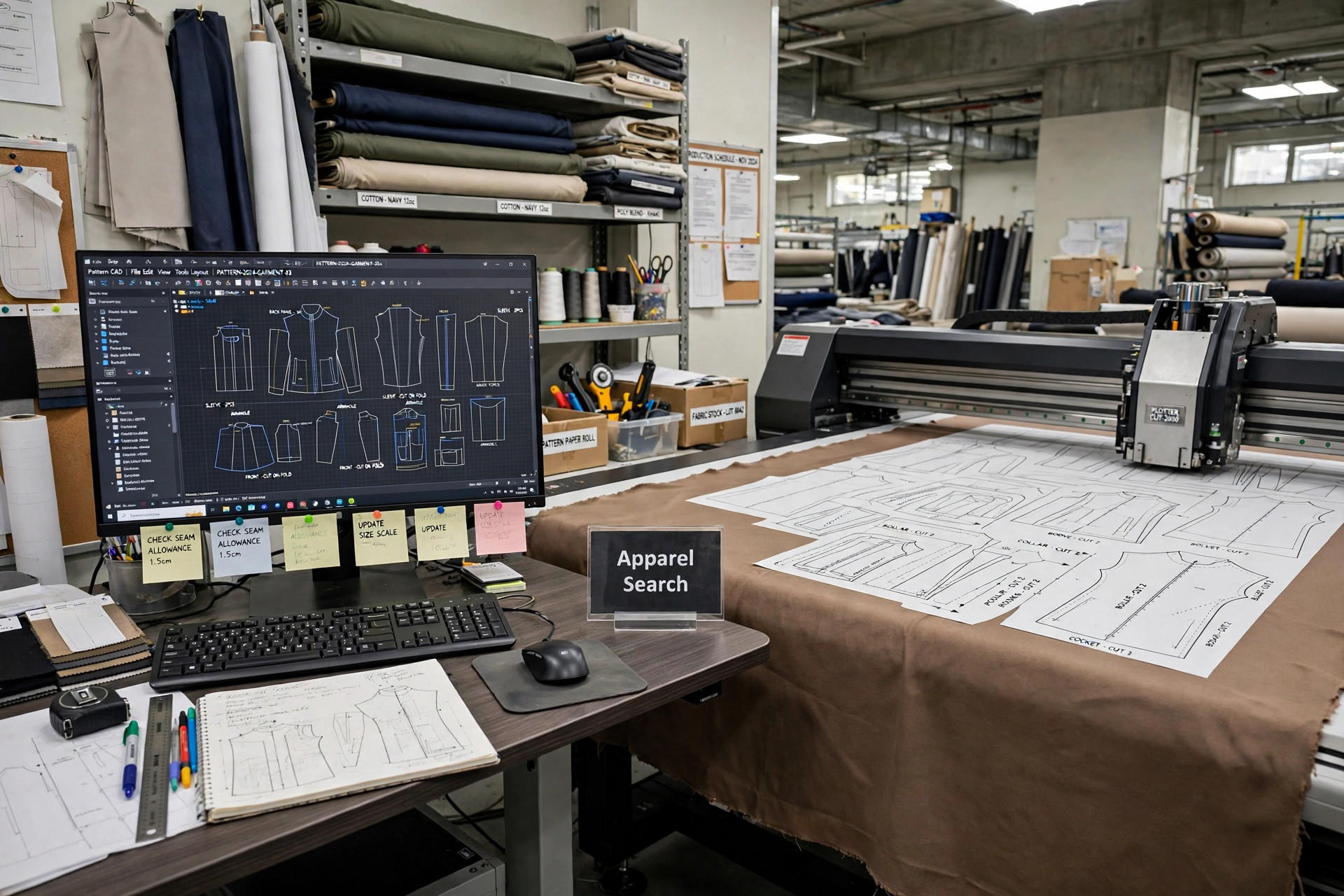
The CAD pattern cutter does pattern work with a mouse instead of a notcher. Using computer-aided design systems built for garments, the CAD cutter digitises paper patterns into the computer, creates and amends pattern pieces on screen, grades them across the size range and lays the markers — the tightly nested plans that decide exactly how fabric will be cut. It is the technology end of the pattern trade: the same fit and construction judgment as hand pattern cutting, exercised through software where a careless click can waste metres of cloth or, handled well, save a factory a fortune in fabric.
More Production Job Descriptions by Letter:
Digitising, Amending and Managing Pattern Data
Many CAD cutters start from a pattern that exists on paper or card. They digitise it piece by piece on a digitising table or from scanned images, cleaning curves, checking that measurements on screen match the physical pattern, and adding the notches, grain lines, drill marks and piece information the factory needs. From there, amendments after fittings are made digitally: a seam moved, a dart reshaped, a length adjusted, with each revision saved under version control so the approved pattern — and only the approved pattern — reaches the cutting room.
Some CAD cutters also create patterns from scratch in the system, drafting blocks and styling them on screen, and most prepare the supporting data production relies on: piece lists, fabric and model definitions, and files for plotters and automatic cutters. Accuracy in data housekeeping is a professional virtue here, because a mislabelled size or an outdated revision does not stay on one desk — it is plotted, cut and sewn at full production speed before anyone notices.
Grading Sizes and Laying Efficient Markers
Grading is where the CAD cutter multiplies a pattern into a business. Applying the company's grade rules, they scale the approved base size into every size the range will sell, checking that proportions, pocket positions and style lines survive the journey from the smallest size to the largest. Poor grading is easy to spot in shops — collars that swallow small sizes, prints and details that sit wrongly at extremes — and preventing it is skilled, checking work rather than a button press.
Marker making is the other economic lever. The cutter nests all the pieces for a garment, in the sizes and ratio the order requires, within the usable width of each fabric, respecting grain, pattern matching, shading and one-way designs. A marker a few percent tighter can save substantial fabric across a bulk order, so experienced marker makers are valued like buyers: they quite literally decide how much cloth a season consumes, and they re-lay markers when widths, orders or fabrics change.
Skills, Systems and Judgment Required
Fluency in at least one major garment CAD system is the entry ticket — the software families used across the industry for pattern design, grading and marker making — together with confident general computer skills and file discipline. But employers stress that the software is only half the job: a CAD cutter who has never understood how a garment is constructed will grade and amend patterns in ways that look tidy on screen and sew badly on the line, so pattern cutting knowledge underpins the technology.
The role also demands concentration and checking habits. Work arrives against cutting deadlines, files must match orders exactly, and the cutter often liaises with pattern makers, production staff and factories receiving the same data overseas. Knowledge of automatic cutting equipment, plotters and how different fabrics behave in lay planning — checks that must match, nap that must run one way — rounds out the practical skill set.
Training, Work Settings and Career Path
Routes in combine pattern cutting study with CAD training: fashion and garment technology courses increasingly teach pattern work directly in CAD, while experienced hand pattern cutters retrain into systems work, and factory trainees learn grading and marker making under senior cutters. Employers commonly test candidates on the system itself — digitising a piece, applying a grade, laying a short marker against a target efficiency — so demonstrable software hours matter as much as certificates.
CAD pattern cutters work in manufacturers' pattern and cutting rooms, brand technical centres and service bureaus supplying grading and marker making to several companies. Career growth leads to senior CAD roles, pattern room or cutting room supervision, or technical specialisation in grading systems and automated cutting. The contrast with the hand craft is set out on the Apparel Pattern Maker page: same patterns, different bench — and the strongest practitioners understand both.
Common Questions
What does a CAD pattern cutter do?
Works with garment patterns in CAD software: digitising paper patterns, amending pieces after fittings, grading approved patterns across the size range and laying markers that nest pieces efficiently within the fabric width for cutting.
Is a CAD pattern cutter the same as a pattern maker?
They share the same foundation — construction and fit knowledge — but the pattern maker typically drafts and drapes the original pattern, often by hand, while the CAD pattern cutter specialises in the digital stages: digitising, grading, marker making and cutting data.
How do you become a CAD pattern cutter?
By combining pattern cutting knowledge with training in a garment CAD system, through garment technology courses or by retraining from hand pattern work. Employers usually test software skills directly, such as digitising a piece or laying a marker to a target efficiency.
More to Explore
- Fashion Employment Agencies
- Employment Search Engines
- Fashion Job Description Directory
- Fashion Directory
- Fashion Industry News
- Fashion Schools and Education
- Fashion Careers
- Computer Assisted Design
- CAD Services
- Designer Search
- Fashion Industry Artists Guide
- Fashion Merchandising
- Pattern Makers
- Clothing Manufacturers and Factories
- Clothing Factories and CMT
References & Further Reading
More Job Description Categories
- Buying Job Descriptions
- Design Job Descriptions
- Marketing & PR Job Descriptions
- Miscellaneous Job Descriptions
- Planning & Allocation Job Descriptions
- Production & Sourcing Job Descriptions (current)
- Sales & Selling Job Descriptions
- Transportation & Warehouse Job Descriptions