Fabric Dyer Job Description
The hands-on dyeing craft — preparing cloth, mixing colour and running dye processes that come out right, batch after batch
A fabric dyer colours cloth. That short sentence covers one of the oldest and most demanding crafts in textiles: taking undyed — greige — fabric, yarn or finished garments and immersing them in dye so the colour is level, matches the approved shade, and stays put through washing, rubbing and light for the life of the garment. Dyers work in dyehouses attached to mills, in commission dyeing firms that colour cloth for many customers, and in smaller garment-dyeing and craft operations. It is wet, physical, chemical work where a few grams of dye or a few degrees of temperature decide whether a batch is right or ruined.
More Production Job Descriptions by Letter:
Preparing Fabric and Mixing the Dye
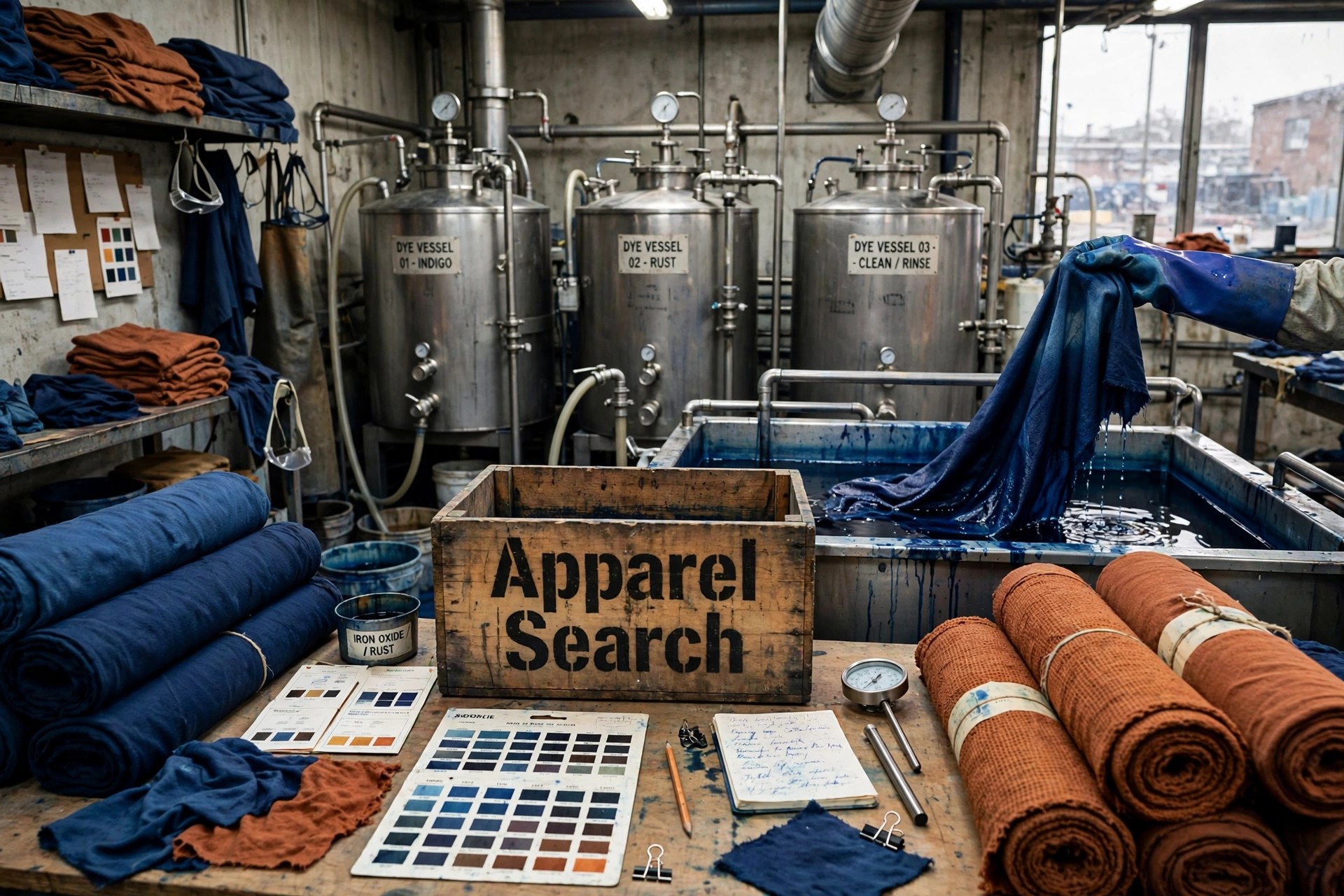
Dyeing starts before any colour is mixed. Cloth must be prepared — desized, scoured and often bleached — so it absorbs dye evenly; a fabric that enters the bath with spinning oils or size still on it dyes patchy, and no later step can fully rescue it. The dyer weighs dyes and auxiliaries against a recipe, usually developed from lab dips approved by the customer, scaling grams in a beaker to kilograms in a production vessel without losing the shade. Fibre decides chemistry: cotton and viscose take reactive or direct dyes, wool and nylon take acid dyes, polyester needs disperse dyes at high temperature, and blends may need two dye classes in one bath.
Shade matching is the dyer's daily judgment. Production samples are dried and checked against the standard under controlled lighting, because a match under factory fluorescents can fail in daylight. The dyer adjusts the recipe — a touch more blue, a fraction less yellow — and re-dyes or tops the batch until it passes. Experienced dyers read a wet sample's dry-down instinctively; everyone else learns, batch by batch, how far a shade will shift as it dries and cools.
Running the Dye Process
Production dyeing runs on machines matched to the goods: winch and jet machines for knitted fabric, jiggers and continuous ranges for wovens, hank and package machines for yarn, and paddle machines for garments. The dyer loads the batch, sets the liquor ratio, temperature curve and time, adds chemicals in sequence — salt, alkali, levelling agents, fixing agents — and samples the bath as it runs. After dyeing comes washing off, soaping and finishing treatments that lock in fastness, then hydro-extraction and drying.
The work carries real responsibility beyond colour. Dyehouses use large volumes of water and chemicals, so dyers work to effluent rules, dose accurately to avoid waste, and follow safety procedures for hot liquor, pressurised machines and chemical handling. Records matter: every batch's recipe, machine, times and results are logged, because when a customer queries a shade three months later, the batch record is the only honest answer. Output is checked for levelness, shade, staining and fastness before the cloth moves to finishing or cutting.
Piece dyeing, yarn dyeing and garment dyeing place different demands on the same craft. Yarn dyed before weaving gives woven checks and stripes their depth; piece dyeing colours finished cloth quickly and economically, which suits solid-colour fashion shades that change each season; garment dyeing colours the made garment, giving a soft, lived-in character and letting brands commit to colour late. A versatile dyer understands all three routes, because the choice of when colour is applied shapes cost, lead time and the faults to watch for.
Skills and Abilities the Work Requires
Colour vision is the non-negotiable skill — dyers are commonly screened for colour-vision deficiency, because the job is judging differences most people cannot see. Layered on it is practical chemistry: understanding dye classes, pH, temperature and auxiliaries well enough to predict what a change will do, and to troubleshoot the classic faults — uneven dyeing, creases marks, shade bars across a piece, poor fastness — back to their causes. Numeracy for recipes and ratios, and physical stamina for a hot, wet, standing job, complete the foundation.
Dyeing rewards patience and punishes hurry. A batch cannot be rushed past its temperature curve, and a dyer who cuts corners on preparation inherits the faults at the end of the process when they are most expensive. The best dyers keep meticulous notes, distrust their memory, and build a personal library of what each fibre and dye combination actually does — knowledge that makes them fast as well as accurate, because they start each new shade closer to the answer.
Training, Qualifications and Career Path
Dyers usually train on the job, starting as dyehouse assistants or machine helpers and learning preparation, loading and sampling before being trusted with recipes and shade decisions. Textile technology and colouration courses — including the long-established colourist qualifications offered through textile institutes — strengthen the chemistry behind the craft and are often required for senior colourist roles in larger dyehouses. Forklift, chemical-handling and safety certifications are commonly part of the package.
Progression leads to senior dyer, shift colourist and dyehouse manager roles, where the work shifts from running batches to owning quality, recipes and output across a plant. Others move into laboratory and colour-matching roles, technical sales for dye and chemical suppliers, or quality assurance with the brands and mills the dyehouse serves. Craft dyers also build independent practices around garment dyeing, natural dyeing and small-batch work for designers — the same core skill, exercised at studio scale.
Common Questions
What is the difference between a dyer and a colourist?
The terms overlap. In many dyehouses the dyer runs production batches while the colourist (or lab colourist) develops recipes and approves shades in the laboratory. In smaller operations one person does both: matching the shade at lab scale, then dyeing the bulk to match it.
Why does dyed fabric sometimes fail colourfastness tests?
Usually because unfixed dye was not fully washed off after dyeing, the wrong dye class was chosen for the fibre, or the recipe was overloaded to force a deep shade. Proper dye selection, correct fixation and thorough soaping are what give a fabric its wash, rub and light fastness.
Is fabric dyeing hard on the environment?
It uses significant water and chemicals, which is why modern dyehouses run effluent treatment, low-liquor machines and precise dosing, and why buyers increasingly ask dyers about water recycling and chemical compliance. Skilled, accurate dyeing is itself an environmental control: a batch dyed right first time uses half the resources of a re-dye.
More to Explore
Dyeing Resources & Definitions
References & Further Reading
More Job Description Categories
- Buying Job Descriptions
- Design Job Descriptions
- Marketing & PR Job Descriptions
- Miscellaneous Job Descriptions
- Planning & Allocation Job Descriptions
- Production & Sourcing Job Descriptions (current)
- Sales & Selling Job Descriptions
- Transportation & Warehouse Job Descriptions