Apparel Manufacturing Jobs
The factory workforce that turns fabric into finished clothing — cutting, sewing, pressing, inspection and the paths between them
Apparel manufacturing jobs are the factory roles that physically turn fabric into finished clothing: spreading and cutting the cloth, sewing the pieces together, finishing, pressing, inspecting and packing the garments that shops sell. This page describes manufacturing work in the clothing industry as a whole — the main jobs on a factory floor, what each involves, and how people enter and progress — while the individual role descriptions elsewhere in this category go deep on single occupations such as the fabric cutter, the pattern maker and the production manager who organises the whole flow.
More Production Job Descriptions by Letter:
The Main Jobs on a Clothing Factory Floor
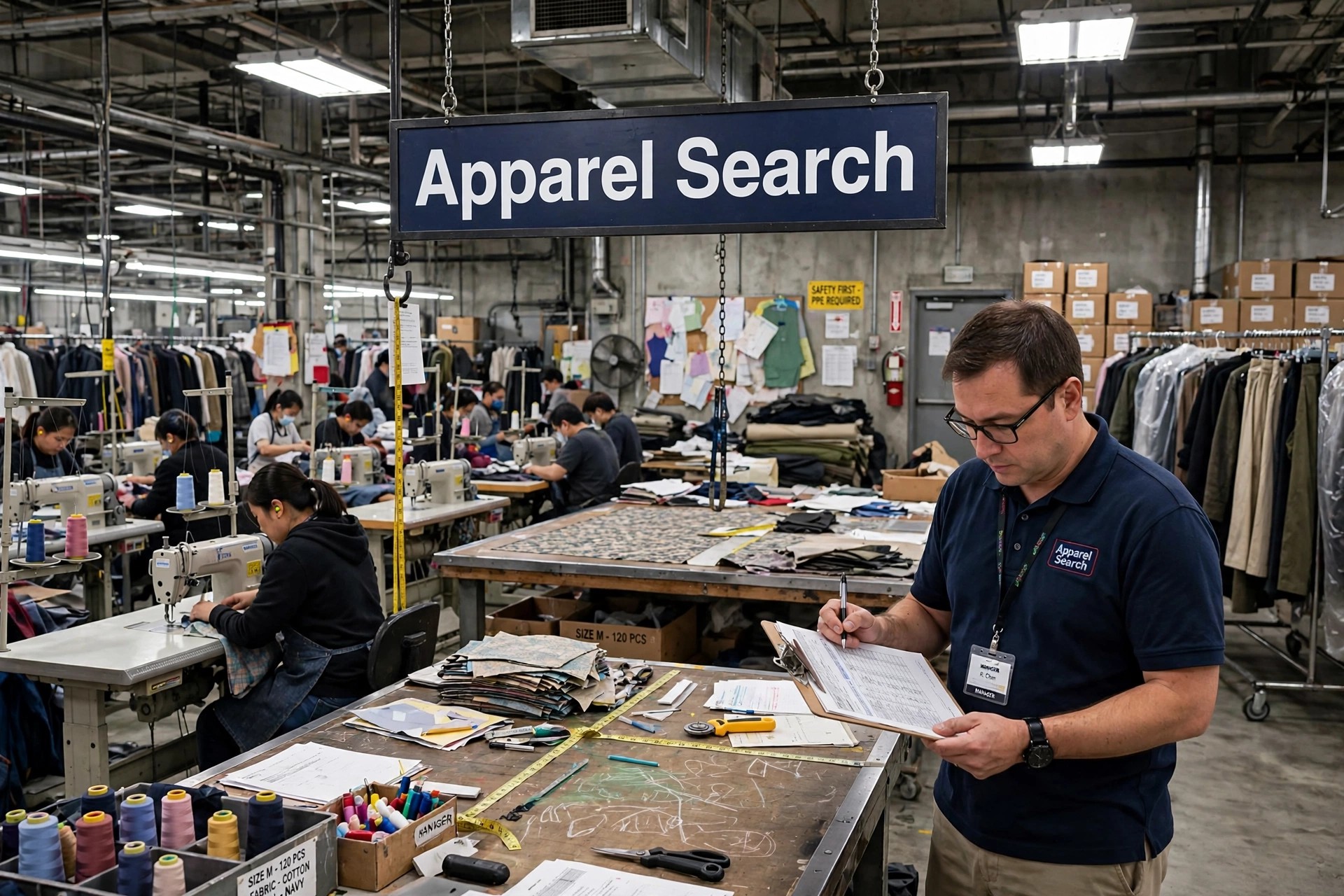
Production flows in a fixed order, and each stage is a job family. Cutting comes first: spreaders lay fabric in stacked lays, cutters cut the pattern pieces by hand-guided knife or computer-controlled cutter, and bundlers sort and ticket the cut parts so each sewing line receives complete work. Sewing is the largest family: machinists operate lockstitch, overlock, coverstitch and specialist machines, each performing operations — setting a collar, closing a side seam, attaching a waistband — that together assemble the garment, supervised by line supervisors who balance the work between stations.
After sewing come the finishing families: thread trimmers and hand finishers, pressers working form presses and hand irons, inspectors checking garments against the customer's standard, and packers folding, bagging, labelling and cartoning for shipment. Around the line sit the supporting trades — mechanics who keep hundreds of machines running, quality auditors, work-study and production clerks, and the warehouse hands who move fabric in and cartons out. A mid-size clothing factory employs all of these at once, which is why manufacturing offers more entry points than almost any other part of fashion.
What the Work Is Like Day to Day
Factory manufacturing runs on orders, and the day is shaped by the order book: styles change as one customer's production finishes and another's begins, targets are set per line per hour, and work is paced by the bundle system that moves cut parts station to station. Most apparel manufacturing is seated or standing machine work in production halls, with the noise, pace and repetition that implies — balanced, in well-run factories, by organised breaks, clear targets and piece-rate or bonus systems that let skilled machinists raise their earnings with speed and quality together.
Quality is personal in garment making in a way it is not in automated industries: each operation is visible in the finished garment, faults are traced back to the station that made them, and experienced workers develop reputations that follow them between employers. Seasonality shapes the year — factories race delivery dates before retail seasons, and overtime clusters ahead of shipping deadlines — while the growing premium and technical segments (tailoring, outdoor clothing, protective garments) offer steadier, higher-skilled production than basic high-volume work.
Skills and Abilities Employers Look For
For machinist and finishing roles, the screened skills are manual: dexterity, speed with accuracy, machine control, and the eyesight and concentration to hold quality at pace. Employers test them practically — a sewing test on an industrial machine says more than any interview — and train the rest, because factory-specific operations differ by product. Cutting roles add fabric knowledge and numerical care, since a cutting error multiplies across a whole lay; inspection roles add fault knowledge and the confidence to reject work; every role adds reliability, because a balanced line feels an empty station within the hour.
Progression skills layer on top: reading a specification and a work ticket, understanding construction well enough to spot an operation that will fail at the next stage, and, for those heading toward supervision, the ability to teach an operation, balance a line and keep records. Language and paperwork skills matter more than newcomers expect — production documents, quality forms and delivery notes are the factory's memory — and computer-controlled cutting, automatic sewing units and production tracking systems steadily raise the technical content of floor roles.
Training, Entry Routes and Career Paths
Apparel manufacturing remains one of fashion's most open doors: many roles are entered with no formal qualification, through factory training schools, short machining courses at further-education colleges, or apprenticeships in garment technology where they run. Employers train new machinists on their own machines and products, typically over weeks, with earnings rising as speed and the range of operations grow. Vocational qualifications in garment production, cutting or textiles strengthen applications and speed promotion, but the industry's senior floor staff are still predominantly people who came up from the machines.
The career paths fan out widely. Skilled machinists become sample machinists — the factory's most versatile sewers, making the prototypes every order begins from — then line supervisors, production managers and factory managers. Cutters progress to cutting-room management and marker making; inspectors to quality management; mechanics to engineering supervision. Manufacturing experience is also the classic foundation under technical, production-office and sourcing careers elsewhere in this category: people who have made garments judge factories, specifications and prices differently from those who have only seen the finished product.
Common Questions
What are the main jobs in apparel manufacturing?
Cutting (spreaders, cutters, bundlers), sewing (machinists on the production lines, supervised by line supervisors), and finishing (trimmers, pressers, inspectors, packers), supported by mechanics, quality staff, clerks and warehouse hands.
Do you need qualifications to work in clothing manufacturing?
For many floor roles, no formal qualification is required: employers test practical machine skills and train on their own products. Vocational garment-production qualifications and apprenticeships help, and matter more for cutting, quality and supervisory paths.
Where can a factory sewing job lead?
Sample machining, line supervision, production and factory management are the direct line; manufacturing experience also underpins technical, quality, production-office and sourcing careers across the wider industry.
More to Explore
- Fashion Employment Agencies
- Employment Search Engines
- Fashion Job Description Directory
- Fashion Directory
- Fashion Industry News
- Fashion Schools and Education
- Fashion Careers
- Apparel Industry Links
- Clothing Manufacturers and Factories
- Apparel Production Manager Job Description
- Apparel Manufacturing Engineer Job Description
Manufacturing Resources
Production Directory Pages by Letter
References & Further Reading
More Job Description Categories
- Buying Job Descriptions
- Design Job Descriptions
- Marketing & PR Job Descriptions
- Miscellaneous Job Descriptions
- Planning & Allocation Job Descriptions
- Production & Sourcing Job Descriptions (current)
- Sales & Selling Job Descriptions
- Transportation & Warehouse Job Descriptions