Logistics Coordinator Job Description
The order-level engine of apparel movement — booking, tracking, documents and problem-solving, shipment by shipment
A logistics coordinator analyses and coordinates the logistical functions of a firm across the entire life cycle of a product — acquisition, distribution, internal allocation, delivery and final disposal of resources. In an apparel company that definition becomes very concrete: this is the person who books the shipment, tracks it, chases it and fixes it, order by order. Styles are worthless in the wrong country, the wrong warehouse or the wrong week, and the coordinator is the connective tissue between factories, freight forwarders, customs brokers, distribution centres and stores that keeps each order moving on the date the season needs it.
More Transportation & Warehouse Job Descriptions by Letter:
Booking, Tracking and Chasing: The Day's Shipments
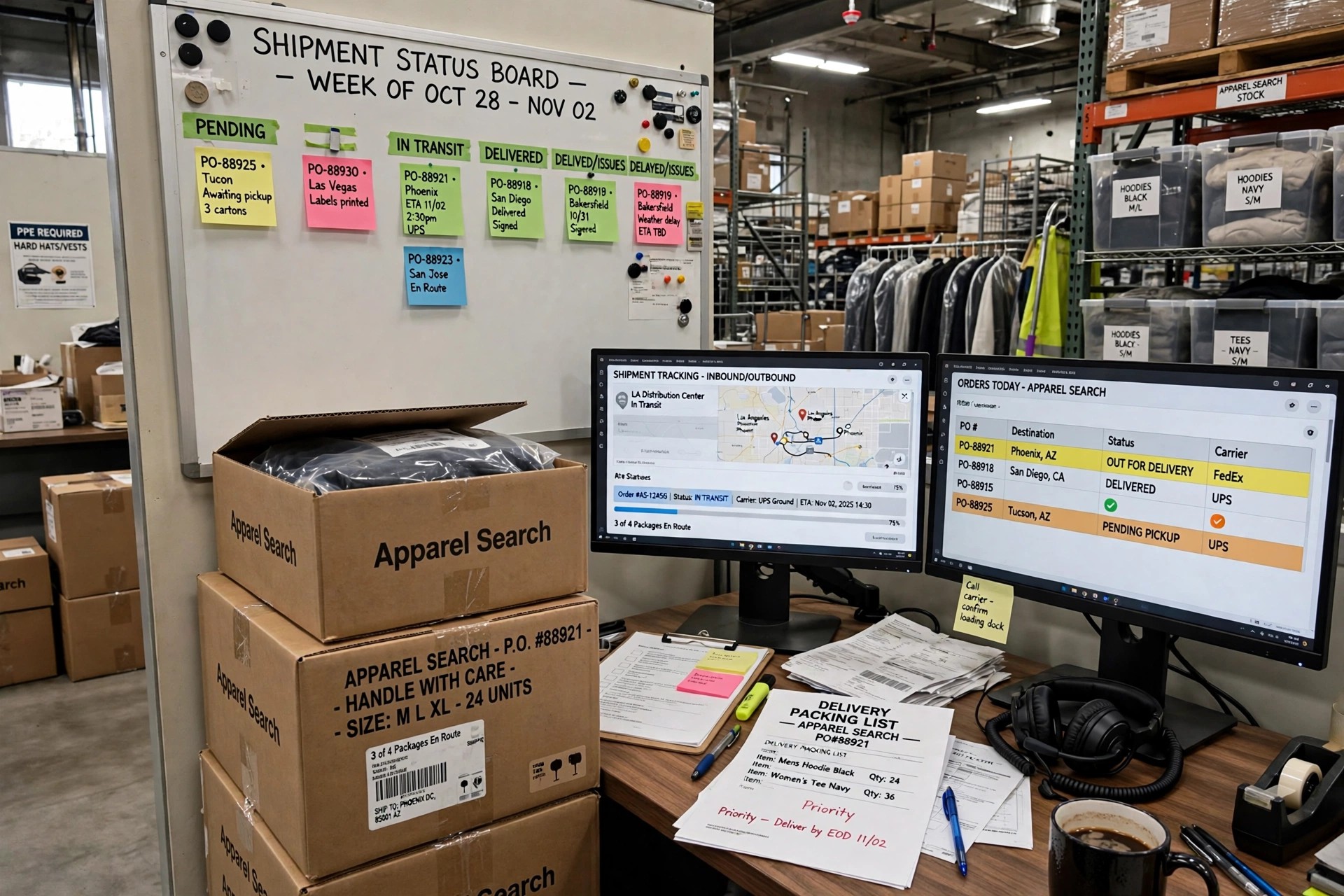
The core of the day is a board full of live shipments, each at a different stage. Inbound orders are booked with forwarders and carriers against ready dates confirmed with factories; space is requested, routings confirmed and pickup arranged. Once goods move, the coordinator tracks them milestone by milestone — departed, arrived at port, cleared, out for delivery — updating the systems the rest of the business reads, so that merchandisers, warehouses and stores are planning from the same facts rather than from hope.
Tracking is an active verb in this job. A shipment that misses a milestone gets chased the same day: the forwarder asked for the real position, the factory asked whether the goods actually left, the broker asked what the clearance is waiting on. The coordinator learns each lane's normal rhythm well enough to spot the shipment that is quietly wrong — still showing at origin days after its sailing — before it becomes the shipment that is loudly late.
Documents and Details: The Paperwork Behind Each Load
Freight moves on documents, and errors in them stop goods as surely as a missed vessel. The coordinator prepares, collects and checks the paperwork of each movement: commercial invoices and packing lists from factories, bills of lading and airway bills from carriers, certificates and declarations the destination requires, and the internal records that let the warehouse receive the goods and finance pay for them. Quantities, weights, carton counts and style details are checked against the purchase order, because a packing list that disagrees with the cartons is a problem the coordinator finds at a desk or the warehouse finds at a dock — at ten times the cost.
Inside the company, the same care applies to allocation and delivery instructions. Store orders and e-commerce replenishment are released with the right routing, labelling and delivery-window instructions for each destination; advance notices go to receiving warehouses so labour and space are ready when the truck arrives. The coordinator's accuracy is largely invisible when it works — goods simply arrive where the system said they would — which is why experienced coordinators are valued precisely for the crises that never happen.
Problems at Order Level: Delays, Shortages and Fixes
Something goes wrong every week: a factory finishes late, a vessel rolls a booking to the next sailing, a carton count comes up short, a delivery misses its window and a store promotion opens without its featured style. The coordinator's craft is the response at order level — rebooking on the next service, splitting a shipment so the urgent styles fly and the balance sails, diverting stock between warehouses, or escalating to the logistics supervisor or manager with a clear statement of options, costs and consequences while there is still time to choose.
Judgement about escalation is part of the role's skill. Small problems are absorbed quietly and fixed within the day; the ones that threaten a season, a promotion or a major account are raised early, in plain language, with the facts assembled. Coordinators also keep the records that let the business learn: which factory's ready dates slip, which lane's transit times drift, which forwarder's confirmations prove optimistic — the pattern evidence the manager uses when contracts and routings are reviewed.
Skills, Qualifications and Career Path
Employers look for organised, numerate people who stay calm inside a moving problem: experience in shipping, freight forwarding, importing or warehouse administration is the usual foundation, with working knowledge of transport documents, Incoterms-style delivery terms at a practical level, and the tracking and order systems the company runs on. Clear written communication matters more than in most operational roles, because the job is conducted in messages to factories, forwarders and colleagues in several time zones at once. A qualification in logistics or supply chain is helpful, but demonstrated accuracy with live shipments is the credential hiring managers trust.
The coordinator sits between two neighbours in this directory, and the distinctions are real. The logistics supervisor supervises people — the team and the shift — where the coordinator coordinates shipments. The logistics manager owns budgets, carrier contracts and service levels above both. A strong coordinator's natural steps are to senior coordinator, to supervisor, or toward the manager track as their remit widens from orders to lanes to the whole operation.
Common Questions
What does a logistics coordinator do day to day?
Books, tracks and chases individual shipments: confirming ready dates with factories, booking space with forwarders and carriers, checking invoices, packing lists and transport documents, sending receiving notices to warehouses, and fixing delays and shortages at order level.
How is a logistics coordinator different from a logistics supervisor?
The coordinator coordinates shipments and information; the supervisor supervises people — assigning the team's work, covering shifts and owning team performance. Coordinators typically report through the supervisor to the logistics manager.
What experience leads to a logistics coordinator job?
Shipping, forwarding, import or warehouse administration experience, document accuracy, practical knowledge of freight terms and tracking systems, and clear written communication across time zones. Logistics qualifications help; a record of accurate work with live shipments counts most.
More to Explore
Logistics Resources
Transportation & Warehouse Directory Pages by Letter
References & Further Reading
More Job Description Categories
- Buying Job Descriptions
- Design Job Descriptions
- Marketing & PR Job Descriptions
- Miscellaneous Job Descriptions
- Planning & Allocation Job Descriptions
- Production & Sourcing Job Descriptions
- Sales & Selling Job Descriptions
- Transportation & Warehouse Job Descriptions (current)