Warehouse Management Manager Job Description
Ownership of the whole warehouse building — its operations, inventory, security, layout, budget and people
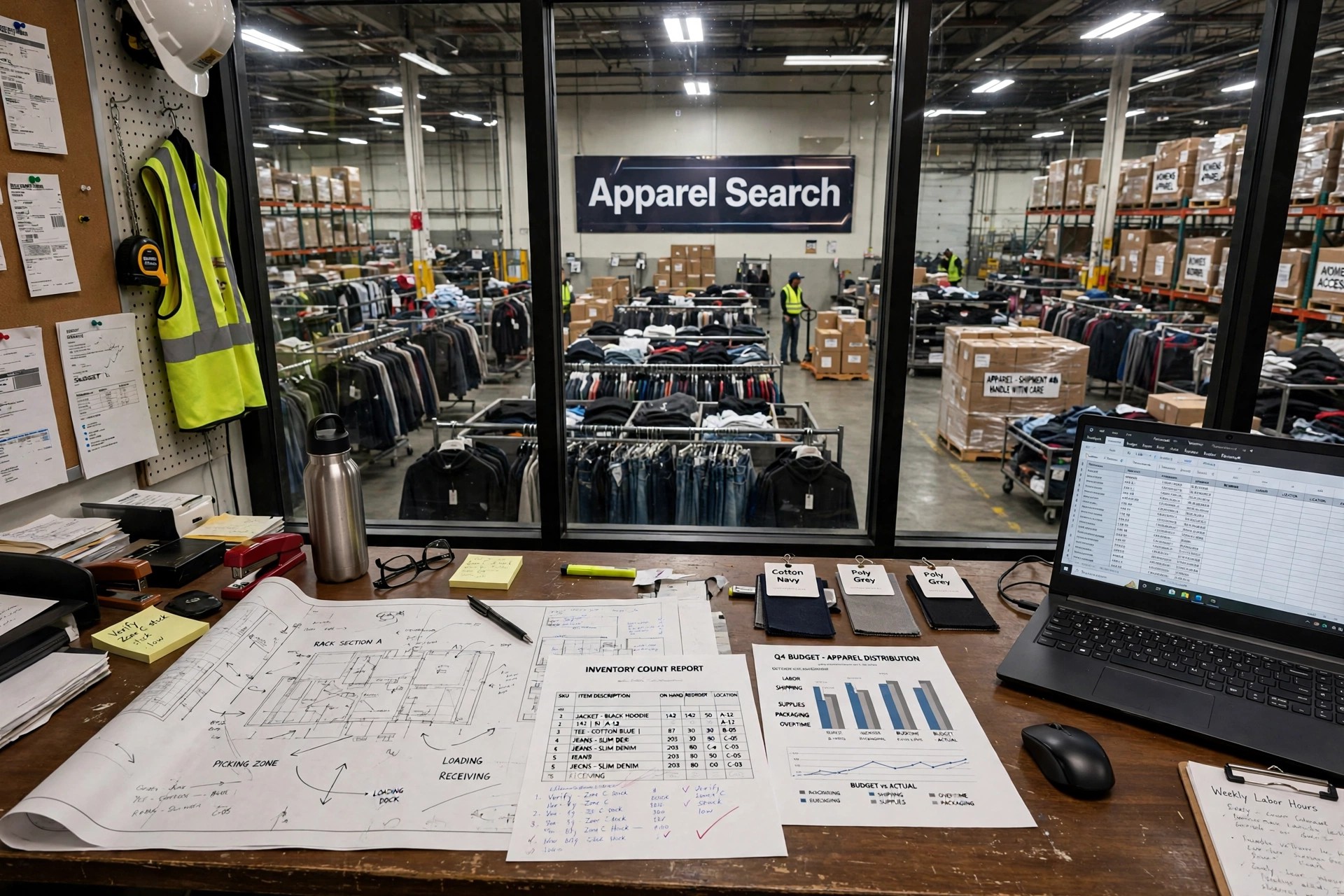
The warehouse management manager — the warehouse manager — is the key management role in any fashion warehouse: the person who owns the building as an operation. Receiving, warehousing and distribution all run under this desk, which maintains them by initiating, coordinating and enforcing the program, operational and personnel policies and procedures the building works by. Where supervisors lead shifts and workers move the stock, the manager answers for the whole result — service, accuracy, security, cost and the condition of the building itself.
More Transportation & Warehouse Job Descriptions by Letter:
Running the Whole Building: Operations and Policy
The manager's first responsibility is the operating system of the warehouse: how goods are received, checked, stored, picked, processed and despatched, and the policies and procedures that make those flows consistent whoever is on shift. That means setting the receiving standards suppliers are held to, the put-away and location rules the inventory system assumes, the order cut-offs despatch is planned against, and the personnel policies — scheduling, conduct, training requirements — that govern the workforce. When a procedure fails in practice, revising it is the manager's work, not the floor's improvisation.
Day to day, the manager completes the warehouse's operational requirements by scheduling and assigning employees and following up on work results: labor matched to the week's intake and despatch profile, supervisors briefed on priorities, output and problems reviewed while they are still correctable. The manager is also the building's face to the rest of the company — the desk merchandising calls about a late intake and retail calls about a missed delivery — and those conversations are honest because this role holds the whole picture.
Inventory, Security and the Physical Plant
Inventory control is exercised physically, not just on a screen. The manager controls inventory levels by conducting physical counts and reconciling them with the data storage system, investigating the variances that reveal where the building's discipline leaks — a receiving shortcut, a mis-pick pattern, a location habit — and fixing the cause rather than merely adjusting the number. In an apparel warehouse holding size-and-color matrices for whole seasons, the difference between system stock and real stock is the difference between promises kept and orders shorted.
The building and its contents are safeguarded by establishing and monitoring security procedures and protocols: access control, stock-movement rules, despatch verification and the investigation of losses. The physical plant itself is also this role's: maintaining the physical condition of the warehouse by planning and implementing new design layouts as the stock profile changes, inspecting equipment, issuing work orders for repair and requisitions for replacement — so racking, trucks and conveyors are assets managed on a plan, not failures discovered at peak.
The Budget and the People
The manager achieves the warehouse's financial objectives by preparing an annual budget, scheduling expenditures, analyzing variances and initiating corrective actions. Warehouse cost is read per unit handled and per order despatched, and the manager knows its drivers intimately: labor hours per task, overtime habits, packaging consumption, equipment costs, and the expensive expedients — emergency freight, re-processing, error correction — that better planning makes unnecessary. A budget miss is explained from evidence, with the correction already under way.
People complete the picture. The manager hires and develops the building's structure — supervisors who lead the shifts, specialists in receiving, inventory and despatch — reviews the performance of the whole operation person by person and department by department, and plans staffing for the peaks the fashion calendar guarantees. The culture of the building, its safety and fairness, is set here: supervisors take their standards from what the manager inspects, praises and tolerates.
Skills, Qualifications and Career Path — One Building, Owned Whole
Employers appoint warehouse managers from senior warehouse, distribution or logistics supervision, looking for the full combination: operational knowledge of every warehouse function, inventory control and physical-count discipline, budget ownership, layout and equipment literacy, security awareness, and the standing to represent the warehouse to the rest of the business. Warehouse and inventory systems fluency is assumed. A logistics, supply chain or business qualification supports an application, but the decisive credential is a record of running a building, or a major part of one, through its peaks.
The boundaries in this letter define the role by contrast. The warehouse supervisor leads a shift and a team inside the building; the management manager owns the building — budget, layout, security and results. The assistant warehouse manager under A deputizes within that ownership rather than holding it. Above the building sits the VP distribution under V, who owns the network of sites; a strong warehouse manager, proven on one building's numbers, is exactly the profile from which network leadership is promoted.
Common Questions
What does a warehouse management manager do?
Owns the warehouse as an operation: maintaining receiving, warehousing and distribution through enforced policies and procedures, safeguarding the building and its contents, controlling inventory by physical counts reconciled to the system, planning layouts and equipment work, preparing the annual budget, and scheduling and assigning employees.
How is a warehouse management manager different from a warehouse supervisor?
Ownership versus shift leadership. The supervisor leads a team through a shift — assignments, priorities, standards. The manager owns the whole building — its budget, layout, security, inventory accuracy and results — and the supervisors report to the manager.
What qualifications does a warehouse manager need?
Senior warehouse or distribution supervision with a record of running operations through peak seasons, inventory-control and budgeting experience, systems fluency, and team leadership. Logistics or business qualifications help; demonstrated building-level results count most.
More to Explore
Warehouse Management Resources
Transportation & Warehouse Directory Pages by Letter
References & Further Reading
More Job Description Categories
- Buying Job Descriptions
- Design Job Descriptions
- Marketing & PR Job Descriptions
- Miscellaneous Job Descriptions
- Planning & Allocation Job Descriptions
- Production & Sourcing Job Descriptions
- Sales & Selling Job Descriptions
- Transportation & Warehouse Job Descriptions (current)