Men's Athletic Fit Jeans Guide
More thigh, more seat, same clean ankle: athletic fit is the pattern answer for men whose legs come from training, not from the standard block.
Shop Men's Athletic Fit Jeans Now
Shop Men's Athletic Fit Jeans on Amazon Shop Men's Athletic Fit Jeans on eBayThe Amazon and eBay links on this page are affiliate links. If you make a purchase through them, Apparel Search may earn a commission.
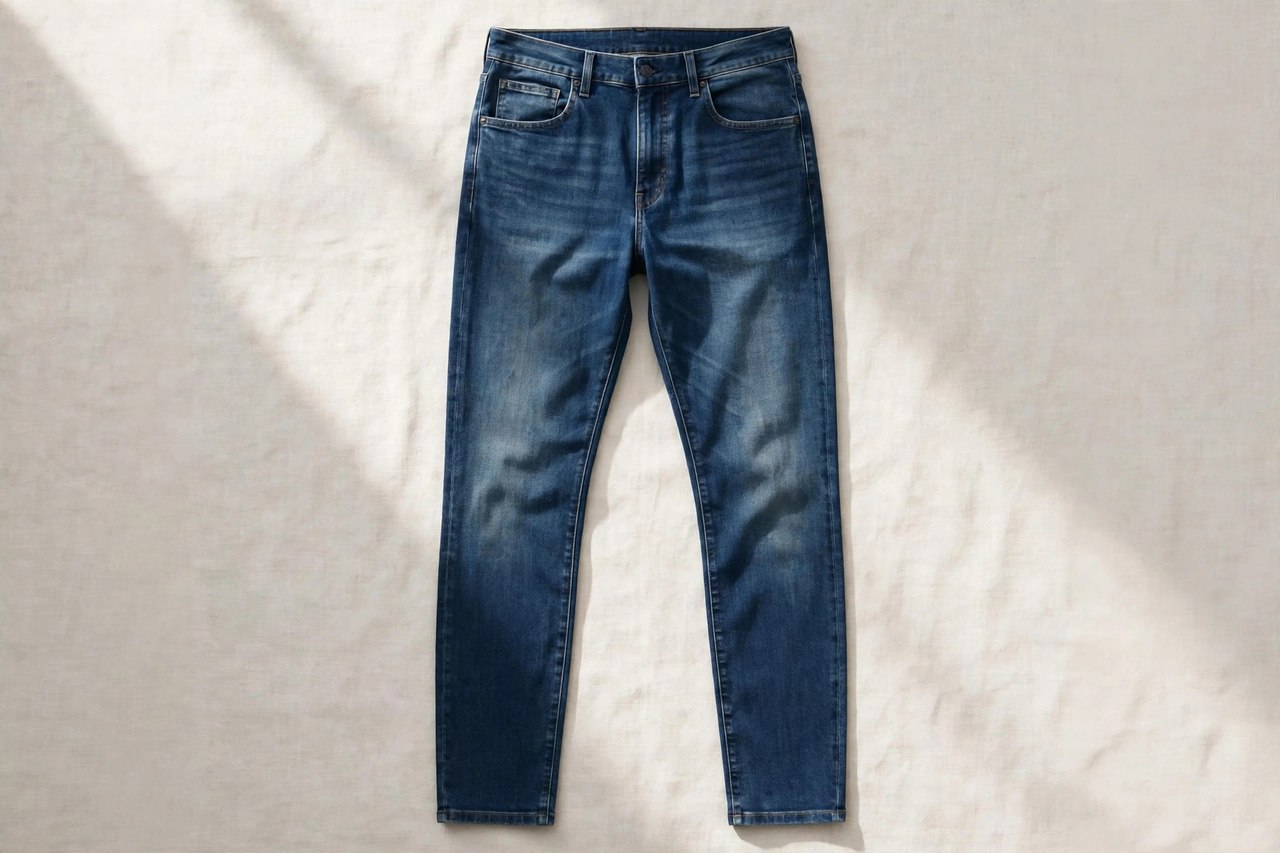
Athletic fit exists because of a recurring fitting-room failure: a man whose waist takes a 32 finds the thigh of a 32 unwearable, and the 34 that fits his thigh swims at his waist. The athletic block resolves it by decoupling the measurements — a true waist, a seat and thigh cut one to two sizes more generous, and then a taper from the knee to a normal, clean hem. It is the most engineered fit in our men's denim fits guide, and for lifters, cyclists, footballers and anyone built with leg muscle, it is frequently the first jean that has ever simply fit.
A placement note: this is a jean fit, unrelated to athletic apparel. What its wearers share is not a sport but a geometry — a thigh-to-waist ratio the standard blocks were never drafted for. Most major denim brands now cut a version of it.
Athletic Versus Relaxed Versus Tapered
The three roomy-top fits divide by intention. Relaxed adds general ease at the seat and thigh and finishes with an ordinary leg. Tapered starts from a regular top block and narrows. Athletic starts from the most generous top block — thigh measurements can run an inch or more beyond the relaxed equivalent at the same waist — with a higher back rise and a shaped seat, and then tapers decisively, often to a 13 to 14-inch hem. The athletic is the only one drafted around a muscular leg's actual shape, including the calf, which its slope accommodates instead of strangling.
The waist is the fit's signature test. On a standard block, a muscular man sizes up and belts the excess — the bunching waistband and dropped crotch that result are the before-picture of every athletic-fit advertisement. On an athletic block the waistband closes at his true size and sits flat while the thigh runs free. If you have been buying jeans by thigh and tailoring or belting the waist, this pattern was invented for you, and the saving in alterations is part of its value.
The Seat, the Rise and the Calf
Athletic patterns spend their cloth wisely: extra room is placed at the front thigh and through the seat, with a back rise cut higher so that a developed seat does not pull the waistband down when sitting or squatting. Many versions add a gusset or a shaped yoke. Judge those claims functionally — a deep squat in the fitting room should be unremarkable, with the waistband staying level. If the back dives even on an athletic block, the rise, not the thigh, is your remaining mismatch, and a higher-rise version is the fix.
The calf is where athletic fits diverge from one another. The leg's slope is drawn for a leg that is large at the top and stays substantial: a strong taper over a big calf can catch and creep, as it does on any tapered jean. Look for the gentler athletic tapers — a 14 to 15-inch hem — or a percent of stretch in the fabric if your calves are part of the build. The stretch also serves the thigh: one percent elastane takes the strain off seams at the exact point of maximum circumference.
Fit Checks and Buying Strategy
Fit-check in this order: waistband closes flat at your true size; thigh allows a firm pinch but no pull lines across the front when seated; squat and lunge without the seat or waistband protesting; hem sits cleanly over your shoe with the taper's slope unbroken. Photograph the seat — athletic fits live or die there, and the mirror lies about backs. If the seat shows horizontal strain lines under the yoke, the block is still too small where it counts, whatever the label promises.
Because brands calibrate the generosity differently, your first athletic purchase is a calibration exercise: order or try two brands' versions in your waist size and compare thigh measurements against the pair that passes the squat test. Once calibrated, an athletic block that works tends to become a man's default jean across washes and rises. Wash cold, dry hung, and expect the thigh, under its daily load, to be the first place the denim eventually thins.
Common Questions
What is athletic fit in men's jeans?
A block cut with a true-to-size waist but a seat and thigh one to two sizes more generous than standard, with a higher back rise and a taper from the knee to a normal-width hem. It is designed for muscular, larger thighs, solving the classic problem of jeans that fit the thigh only by being too big at the waist.
Are athletic fit jeans just relaxed jeans?
No. Relaxed fit adds moderate ease at the seat and thigh and finishes with a regular leg. Athletic fit adds more thigh and seat room, shapes it for muscle with a higher back rise, and tapers deliberately to a clean 13 to 15 inch hem. The athletic is both roomier at the top and neater at the ankle than a relaxed jean.
How should athletic fit jeans fit at the waist?
Exactly — at your true waist size, closing flat without a belt doing structural work. That is the fit's whole purpose: the generosity is in the thigh and seat, not the waist. If the waist is loose, size down; if the thigh still pulls when you sit at the correct waist, try another brand's more generous block rather than sizing up.
More Men's Denim Fit Guides
The other fits and rises in this cluster, in alphabetical order:
Looking for Men's Clothing Stores?
This guide helps you choose men's athletic fit jeans. To browse where to buy, visit our mens clothing store directory, where you can find retailers that carry them.