Men's High-Rise Jeans Guide
Eleven inches and up, at the natural waist: the high rise keeps a shirt tucked, covers the midsection, and is the oldest rise in the jean's own history.
Shop Men's High-Rise Jeans Now
Shop Men's High-Rise Jeans on Amazon Shop Men's High-Rise Jeans on eBayThe Amazon and eBay links on this page are affiliate links. If you make a purchase through them, Apparel Search may earn a commission.
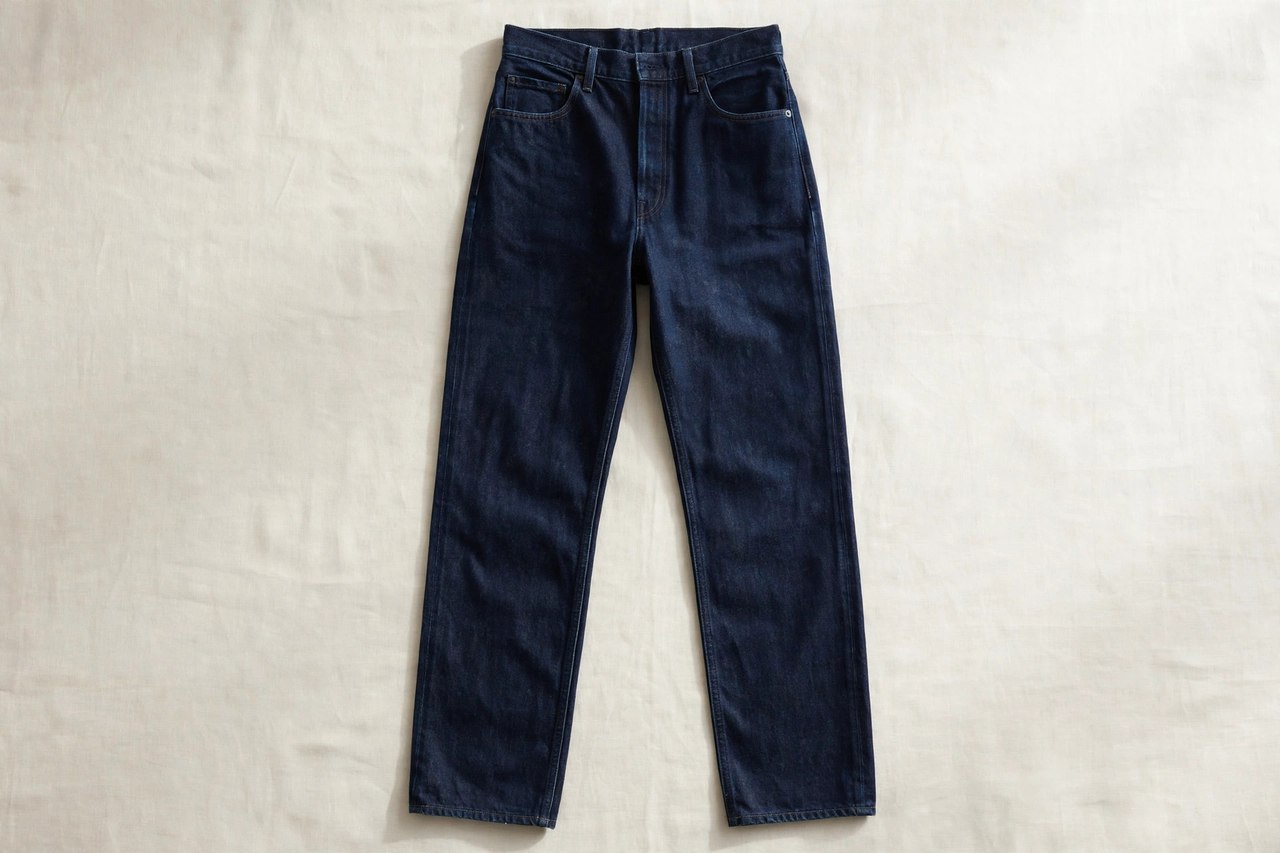
Men's high-rise jeans put the waistband where trousers used to put it: at the natural waist, with a front rise of eleven inches and more. Before the low-rise decades, this was simply where a jean sat — work jeans were cut to be worn with braces and to stay up through labour. Its return to men's ranges, documented alongside the other fits on our men's denim fits guide, is driven by function as much as fashion: nothing tucks, covers or stays put like a tall rise.
The high rise divides opinion because it is honest: it shows the waist you have. Fitted well, it gives a man a longer leg line, a covered midsection when he bends, and jeans that behave like tailored trousers. Fitted badly — wrong height for the torso, band a size off — it is uncomfortable in a way a mid rise never manages. The fitting is the subject of this guide.
Height Is Personal: Finding Your High Rise
Eleven inches is the doorway, not the destination. The correct height is the one that lands the band on your natural waist — the narrow point above the hip bones — and torso length decides what that takes: a long torso may need twelve inches to arrive; a short torso may find eleven already past the waist and into the ribs. Try rises, not labels: sit in each candidate, because a tall band reveals its excess the moment you bend, folding at the front if it has nowhere to go.
Back rise must grow with the front. A proper high-rise block carries a back rise around two inches longer than the front and a shaped yoke, which is how the band stays level and seated. Beware fashion versions that simply extend the front of a mid-rise pattern: they produce the tall front and the diving back of a bad high rise, and they are the source of most men's one bad experience with the style.
What the High Rise Does for an Outfit
Tucking is the headline. A shirt tucked into a high rise stays tucked — more shirt below a higher, firmer band — and the waistband line it creates is the proportion tailored clothing is built on: longer legs, defined waist. That is why high-rise straights and tapers in dark washes are the jeans that substitute for trousers most convincingly, under a blazer or a knit polo. Untucked tops should be shorter or open, since a long shirt over a high waist hides the rise and shortens the torso visually.
The rise also rebalances builds. Men with longer legs and shorter torsos gain torso; men whose midsection has grown find the band sits at the narrowest available point rather than under the stomach, where a mid rise can roll. Braces, historically the high rise's partner, remain a legitimate and comfortable option with the button-fly, workwear end of the family — the original system, still functional.
Comfort, Sitting and Care
Judge the high rise after a minute seated and a bend to the floor. Even pressure around the band is right; a hard fold at the front means too tall or too tight, and a band that slides down to become a bad mid rise means too loose — this rise cannot be rescued by a belt without looking rescued. Rigid high-rise denim moulds notably over the first month, so a firm-but-fair first fitting is correct, and it is why enthusiasts prize the fit: it becomes personal in a way lower rises never do.
Buy your high-rise waist exactly — it is measured at a different place from your mid-rise waist, and many men take a different size. Wash cold, inside out, and dry hung by the waistband, checking that the tall band dries fully. Retire or tailor a pair when the band loses its recovery; on a high rise the waistband is load-bearing, and once it goes, the whole architecture goes with it.
Common Questions
What rise counts as high-rise in men's jeans?
A front rise of about eleven inches or more, placing the waistband at the natural waist. The exact right height depends on torso length: the band should arrive at your natural waist without continuing up toward the ribs. Back rise should be roughly two inches longer than the front for the band to stay seated.
Are high-rise jeans comfortable for men?
Yes, when the height matches the torso and the waist is exact: the band distributes pressure at the natural waist and stays put, which most men find more comfortable over a day than a band that migrates. Discomfort comes from a rise taller than the torso — it folds when seated — or a waist sized by habit from mid-rise jeans.
Do high-rise jeans suit shorter men?
They can help: starting the leg at the natural waist lengthens the leg line, especially with a straight or tapered leg hemmed with little break and the waistband visible. The caution is proportion — choose the lower end of high rise so the band does not crowd a shorter torso, and keep tops tucked or short.
More Men's Denim Fit Guides
The other fits and rises in this cluster, in alphabetical order:
Looking for Men's Clothing Stores?
This guide helps you choose men's high-rise jeans. To browse where to buy, visit our mens clothing store directory, where you can find retailers that carry them.